TD Bank Appoints Georgia Stavridis to Strengthen Financial Crimes Oversight

TD Bank has appointed Georgia Stavridis as vice president of financial crimes risk management, a newly created role aimed at bolstering the institution’s compliance measures, according to three sources familiar with the matter. Stavridis, who previously served as HSBC Bank Canada’s chief compliance officer in 2020, joined Royal Bank of Canada (RBC) earlier this year after its $10 billion acquisition of HSBC’s Canadian operations.

In her new position, Stavridis will oversee strategy, performance, and results for TD’s Canadian financial intelligence unit, reflecting the bank’s commitment to enhancing its compliance and risk management programs.

This appointment follows TD Bank’s recent legal challenges. In October, TD became the largest U.S. bank in history to plead guilty to violating anti-money laundering laws, resulting in over $3 billion in penalties. As part of its remedial measures, TD has aggressively recruited top talent for its compliance and risk teams. These include Herb Mazariegos, previously with BMO, as its chief global anti-money-laundering officer, and several former officials from the FBI, U.S. Department of Homeland Security, and Citi.

Stavridis’ prior experience will be critical in navigating TD’s ongoing compliance transformation. HSBC Bank Canada, where she was previously chief compliance officer, faced its own regulatory challenges in 2013 when its parent company, HSBC Holdings Plc, paid $1.92 billion in fines for breaching anti-money-laundering and sanctions regulations in the U.S.

RBC has seen multiple departures from HSBC executives following the expiration of a six-month retention guarantee post-acquisition. This trend reflects a broader reshuffling of talent in the Canadian banking sector as institutions focus on strengthening regulatory compliance and financial crime prevention.


China’s Factory Activity Expands for Second Month Amid Stimulus and Trade Uncertainty

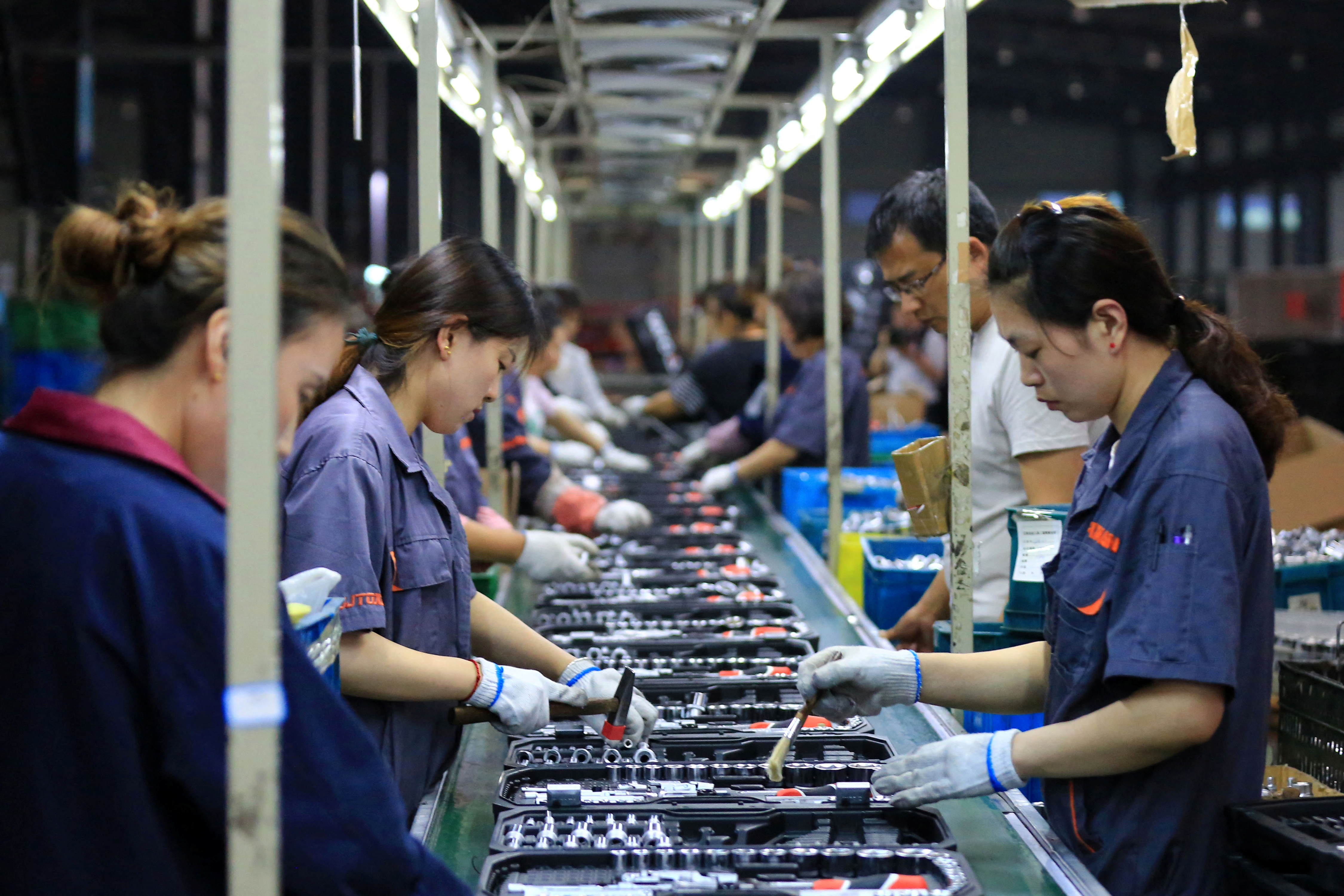
China’s manufacturing sector showed modest growth for the second consecutive month in November, with the official purchasing managers’ index (PMI) rising to 50.3, a seven-month high, up from October’s 50.1. This figure, released by the National Bureau of Statistics, exceeded expectations of 50.2 from a Reuters poll, signaling a recovery in the world’s second-largest economy. A reading above 50 indicates expansion, while below that signals contraction.

This improvement follows months of a sluggish manufacturing environment, where tumbling producer prices and declining orders weighed heavily on factory output. Two consecutive months of expansion suggest that Beijing’s recent stimulus measures are beginning to boost confidence across factory floors. However, potential trade tensions with the U.S., led by President-elect Donald Trump, cast uncertainty over the outlook for 2024.

Trump recently announced plans to impose a 10% tariff on Chinese goods, aiming to pressure Beijing to curb the production of chemicals used in fentanyl manufacturing. During his campaign, he also hinted at even steeper tariffs of up to 60%, presenting significant risks for China’s export-dependent industrial sector.

In October, Chinese exports surged unexpectedly, a rise attributed to factories accelerating shipments in anticipation of further U.S. and EU tariffs. Analysts fear that such preemptive gains may not translate into long-term stability.

Stimulus Boost but Demand Remains Insufficient
Economists point to fiscal and monetary policy adjustments since the Politburo meeting in late September as contributing to the improved PMI figures. Zhang Zhiwei, president of Pinpoint Asset Management, noted that these measures have provided temporary stabilization but cautioned that the 2025 outlook remains unclear.

“The looming trade war will delay corporate investment decisions, and while fiscal stimulus is expected, its scale and focus remain uncertain,” Zhang said. A key policy meeting in December may provide more clarity on China’s economic strategies for 2024.

The November PMI data revealed a mixed picture: total new orders grew for the first time in seven months, but export orders contracted for the seventh consecutive month. Zhang Liqun, an analyst at the China Logistics Information Center, highlighted that insufficient demand continues to constrain production. He emphasized the need for stronger government-driven public investments to stimulate enterprise orders.

Non-manufacturing PMI, which encompasses construction and services, dropped to 50.0 in November from 50.2 in October. While services sector activity showed modest growth for the second month, the overall trend underscores lingering weaknesses in the broader economy.

Government Stimulus and Signs of Recovery
China has introduced substantial stimulus packages to support its economy. A 10 trillion yuan ($1.38 trillion) debt program was unveiled earlier in November to address municipal financing challenges. The central bank’s September intervention, marking its largest since the pandemic, was aimed at steering the economy toward the government’s growth target of around 5%.

Early signs of economic recovery are emerging. Retail sales posted their strongest growth since February, while property sector declines began to narrow. However, industrial output slowed slightly in October, and industrial profits continued to decline, reflecting persistent challenges for businesses.

China’s November composite PMI, which includes manufacturing and services activity, remained steady at 50.8, further hinting at stabilization. Analysts await the private-sector Caixin factory survey, set to be released Monday, which is expected to edge up to 50.5.

Despite these signs of improvement, economic vulnerabilities persist. Policymakers are reportedly considering maintaining the 5% growth target for 2024 and implementing additional measures to bolster domestic demand.


 

123 Bodies Discovered in England’s Historic Leicester Cathedral: Key Details Revealed

In a significant archaeological discovery near Leicester Cathedral, the remains of 123 individuals have been uncovered, offering a rare glimpse into the past. The burial site, believed to date back over 800 years to the early 12th century, is one of the largest mass graves from the medieval period found in England. The scale of the find has puzzled researchers, particularly as no evidence of violence or battle injuries was detected among the remains. This has led experts to consider alternative explanations for the deaths, such as famine or disease, though the exact cause remains unclear.

The excavation, led by Mathew Morris from the University of Leicester Archaeological Services, revealed that the bodies were deposited in a series of three rapid layers. According to Morris, it appears that the bodies were delivered in cartloads and quickly dropped into a burial pit over a short span of time. The discovery is striking, as these 123 individuals may represent about 5 percent of the population of Leicester during the medieval era, underscoring the potential scale of whatever crisis led to their deaths.

Initially, some speculated that the mass grave could be linked to the Black Death, the devastating plague that swept through Europe in the 14th century. However, radiocarbon dating of the remains placed the burial site firmly in the 12th century, long before the Black Death occurred. This new information has left historians and archaeologists with more questions than answers, as there are no clear historical records detailing what might have caused such a large-scale loss of life.

The ongoing research surrounding the site could provide invaluable insights into the social and environmental conditions of medieval England. While the exact cause of death remains uncertain, the excavation is helping to piece together the lives of those who lived in Leicester more than 800 years ago, shedding light on a time in history that was marked by unknown challenges and crises.