Senator Mullin Urges Release of Ethics Report on Matt Gaetz Amid Attorney General Nomination

Background of Controversy

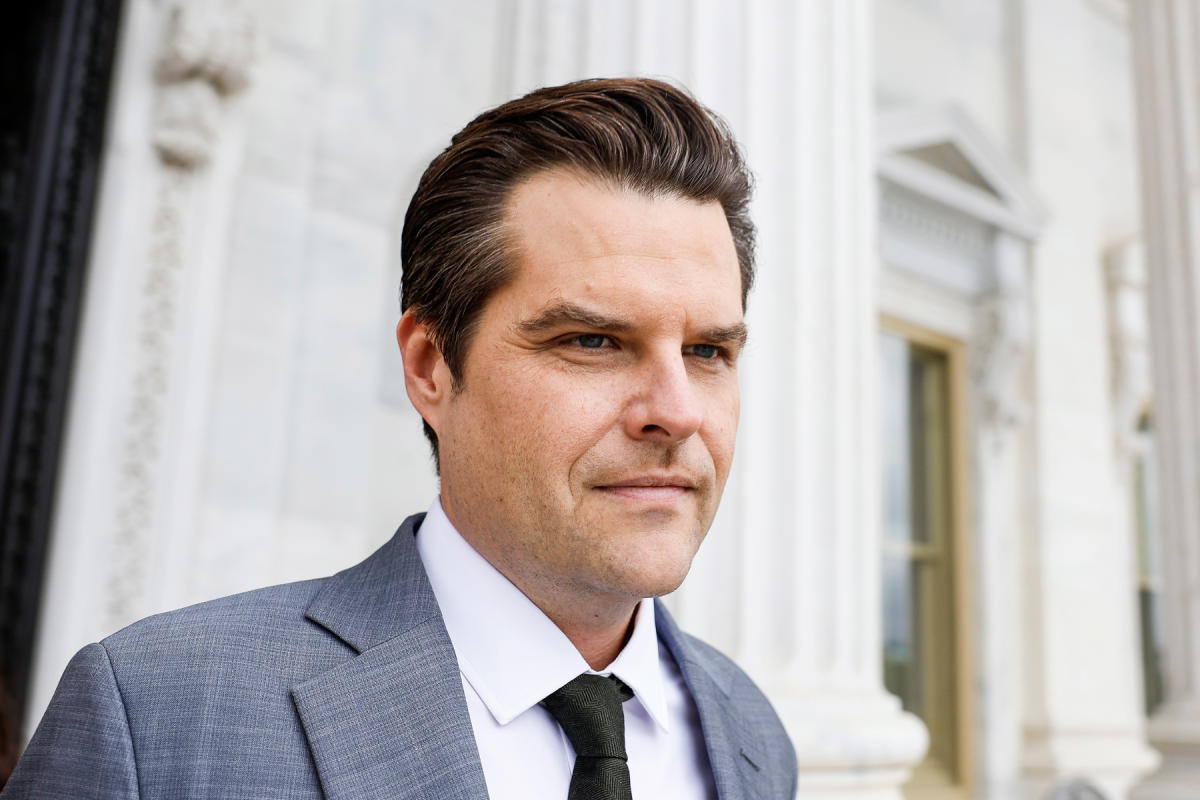
Republican Senator Markwayne Mullin has called on the House of Representatives to release an unreleased ethics report involving allegations of sexual misconduct against Matt Gaetz, President-elect Donald Trump’s nominee for attorney general. The report also examines allegations of illegal drug use.

Gaetz, 42, resigned from the Republican-controlled House last Wednesday, hours after his nomination was announced and just two days before the House Ethics Committee was expected to release its findings. While Gaetz has denied any wrongdoing, the investigation reportedly revisits earlier claims of sexual misconduct involving a 17-year-old girl, allegations that had already been reviewed by the Justice Department without resulting in criminal charges.


Mullin’s Stance on Transparency

Mullin, speaking on NBC’s Meet the Press, emphasized the Senate’s need to access the report before deciding on Gaetz’s confirmation.

  • “The Senate should have access to that,” said Mullin, while remaining undecided on whether the report should be made public.
  • Mullin, a previous critic of Gaetz, highlighted the importance of the nominee’s background, stating, “The background of Matt Gaetz does matter.”

Despite these concerns, Mullin maintained he would give Gaetz a fair evaluation during the confirmation process.


House Speaker and Ethics Report

House Speaker Mike Johnson has opposed the release of the ethics report, arguing that it would set a problematic precedent. On Sunday, he reiterated this stance during a CNN interview, asserting, “We don’t want to go down that road.”

  • Johnson lacks direct authority to prevent the Ethics Committee from releasing its findings but has strongly influenced the narrative within the House.
  • Meanwhile, the lawyer representing the teenager involved in the allegations has called for the report to be made public.

Senate Confirmation Challenges

Trump’s nomination of Gaetz has sparked mixed reactions in the Senate, which holds the constitutional responsibility to confirm high-level appointments.

  • With Republicans holding a majority of at least 52 seats in the 100-seat Senate, Gaetz’s confirmation depends on securing party support.
  • Several Republican senators have expressed skepticism about Gaetz’s qualifications and suitability for the role.
  • Democratic Senator Chris Coons voiced strong opposition, stating that the Senate must exercise its “advice and consent” role to ensure nominees meet high standards of character and capability.

Potential Use of Recess Appointments

Mullin signaled openness to a controversial alternative should the Senate fail to confirm Gaetz. This approach, known as a recess appointment, allows a president to bypass Senate confirmation by appointing officials during congressional recesses.

  • Trump has advocated for this option, calling on Republican lawmakers to enable him to bypass potential confirmation roadblocks.
  • Mullin described the option as an “absolute last resort,” while Democrats warned that such a move would undermine the Senate’s constitutional role.

Implications for the Justice Department

If confirmed, Gaetz would oversee the Department of Justice, a position requiring substantial legal and ethical oversight capabilities. Critics, including Senate Democrats, argue that the allegations and controversies surrounding Gaetz raise serious questions about his fitness for such a critical role.

The controversy highlights tensions within the Republican Party and between the Senate and the incoming Trump administration, as lawmakers grapple with balancing political loyalty, transparency, and ethical governance.

Trump Names Brendan Carr FCC Chair Amid Controversy Over Big Tech and Free Speech

Brendan Carr’s Appointment

President-elect Donald Trump has announced Brendan Carr as his pick to chair the Federal Communications Commission (FCC), signaling a potential shift in telecommunications policy under the new administration. Carr, 45, currently serves as the FCC’s senior Republican member and has been a vocal critic of the Biden administration’s telecom policies and major technology companies.

In his statement on Sunday, Trump praised Carr as a defender of free speech and a critic of regulatory practices that he argues have stifled economic growth.


Carr’s Stance on Policy and Industry Oversight

Carr has been at the forefront of several contentious debates, including:

  • Broadband Subsidies: He criticized the FCC’s decision to withhold nearly $900 million in broadband subsidies for Elon Musk’s SpaceX Starlink program.
  • Biden’s Broadband Program: Carr has opposed the $42 billion broadband infrastructure initiative championed by the Commerce Department, citing concerns about inefficiency.
  • Spectrum Policy: He has also clashed with the Biden administration over its spectrum management strategy.
  • Big Tech Accountability: Carr recently accused companies like Meta, Google, Apple, and Microsoft of censoring American voices, calling for FCC intervention to “restore free speech rights.”

These positions have drawn both praise and criticism, with some hailing Carr as a leader against Big Tech’s influence while others, like Democratic Senator Ed Markey, argue his approach threatens regulatory neutrality.


Carr’s Approach to Media and Licensing

Carr’s appointment has also raised questions about the FCC’s role in overseeing media and broadcasting:

  • Broadcast Licenses: Trump has previously suggested revoking broadcast licenses of networks like ABC, NBC, and CBS, though the FCC’s authority in this area is limited to individual station licenses.
  • Ownership Rules: Carr has advocated for loosening ownership restrictions on radio and TV stations in single markets to promote competition.
  • Media Oversight: He has been critical of networks like NBC for their perceived partisanship, such as allowing Vice President Kamala Harris to appear on “Saturday Night Live” before the election.

The National Association of Broadcasters praised Carr’s appointment, highlighting his support for policies that enable local broadcasters to compete against Big Tech.


Carr’s Record and Views on China

A staunch critic of China, Carr was the first FCC commissioner to visit Taiwan in 2022 and has supported a hardline stance on Chinese telecom companies. He has also opposed the Biden administration’s efforts to reinstate net neutrality rules, arguing they impose unnecessary government oversight on internet operations.


Challenges Ahead for the FCC

The incoming Trump administration faces hurdles in solidifying FCC control. With two Republican commissioners currently seated, the administration must nominate a third to achieve majority control on the five-member panel.

  • Under Biden, Democrats only gained full FCC control in September 2023, over two years into his term.
  • Carr’s nomination is expected to intensify debates over the FCC’s role in regulating free speech, Big Tech, and media operations.

Reactions and Implications

Carr’s appointment underscores Trump’s focus on challenging Big Tech, expanding free speech protections, and reducing regulatory oversight. While supporters view him as a “warrior for free speech,” critics argue his approach could blur the lines between regulatory oversight and political influence.

Carr’s tenure is expected to bring significant changes to FCC policies, potentially reshaping the telecom and media landscape in the United States.


1,000 Days of War in Ukraine Spurs Unprecedented Automation Boom

Battlefield Challenges Drive Technological Innovation

As Russia’s invasion of Ukraine enters its 1,000th day, the conflict has evolved into a “war of robots,” with both sides heavily investing in automation, drones, and artificial intelligence to reduce human risk and increase battlefield efficiency.

The turning point came after Ukraine’s summer 2023 counteroffensive struggled against Russia’s extensive drone operations, fortified positions, and landmines. This spurred a surge in demand for advanced technologies like drone signal jammers and unmanned systems.

  • Drone Production: Ukraine and Russia are on track to produce approximately 1.5 million drones each in 2024. These are mostly low-cost, first-person-view drones used for reconnaissance and direct attacks.
  • Electronic Warfare (EW): Ukrainian companies, including startups like Unwave, now manufacture thousands of systems monthly to disrupt drone communications and counter Russian aerial dominance.

Shift Toward Automation

The exhaustion of human resources has pushed both Ukraine and Russia to rely increasingly on unmanned systems. Ukrainian innovation is leading the charge:

  • Unmanned Ground Vehicles (UGVs): Over 160 Ukrainian firms now produce UGVs for supply delivery, casualty evacuation, and remote combat.
  • Automated Weapons: Frontline units are employing remotely operated machine guns, allowing operators to strike from safer, remote locations.
  • AI and Remote Warfare: Automation and AI integration are becoming central to Ukraine’s defense strategy. Herman Smetanin, Ukraine’s arms minister, described this shift as the foundation for a future “war of robots.”

Economic and Industrial Transformation

Ukraine’s defense sector has undergone rapid expansion, with over 800 companies—mostly founded post-2022—emerging to meet wartime demands.

  • Investment and Growth: The government has poured $1.5 billion into upgrading defense manufacturing, growing the sector’s capacity from $1 billion in 2022 to $20 billion in 2024.
  • Challenges: Despite this growth, Ukraine can afford to utilize only half of its defense manufacturing output due to funding constraints. Additionally, strict profit margin limits, insufficient long-term procurement contracts, and a ban on arms exports hinder further expansion.

The Future of Warfare and Defense

As automation reshapes the battlefield, Ukraine hopes its defense innovations will fuel economic recovery post-conflict. However, significant challenges remain:

  • Workforce Shortages: A lack of qualified staff has led some companies to consider relocating operations abroad.
  • Export Restrictions: Wartime bans on arms exports prevent companies from generating capital, despite growing international demand.

President Volodymyr Zelenskyy has acknowledged these issues and promised reforms to address industry concerns.


Conclusion

The war in Ukraine has become a proving ground for rapid technological advancement, with automation and drones playing pivotal roles. While these innovations protect lives and enhance combat capabilities, they also highlight the evolving nature of modern warfare, where machines increasingly replace humans on the frontlines.