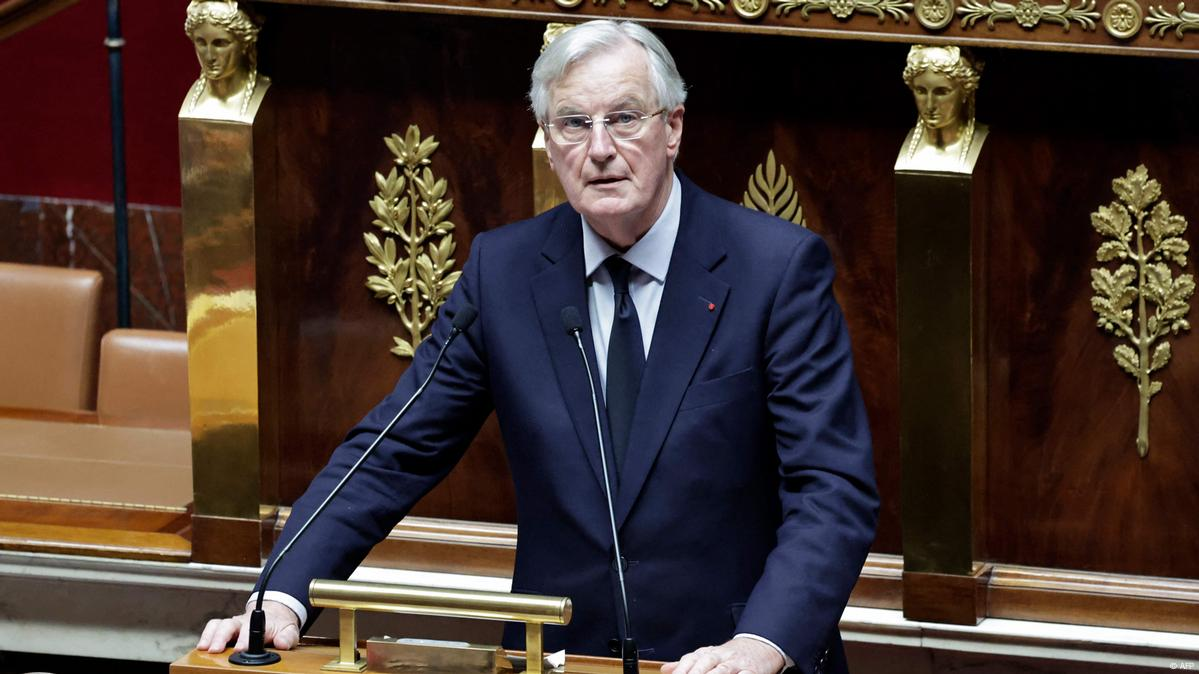
French Prime Minister Michel Barnier Resigns Amid Deepening Political Crisis

French Prime Minister Michel Barnier announced his resignation on Thursday following a no-confidence vote by far-right and left-wing lawmakers, further plunging France into political turmoil. His tenure will be the shortest in modern French history, ending as he formally submits his resignation at 10 a.m. local time (0900 GMT).

The no-confidence vote was a response to Barnier’s attempt to push through a controversial budget proposal without parliamentary approval. The proposed budget aimed to cut €60 billion ($63 billion) to reduce France’s widening deficit, a move criticized by Marine Le Pen’s far-right National Rally for disproportionately impacting working-class citizens.

A Crisis in Leadership

Barnier’s resignation marks a historic political moment, with no French government losing a confidence vote since Georges Pompidou’s administration in 1962. The crisis highlights growing divisions within French politics, as well as the diminished authority of President Emmanuel Macron, who has faced mounting calls to step down. An online poll conducted after the vote revealed that 64% of voters believe Macron should resign, though his mandate extends until 2027, and he cannot be forced out of office.

The political chaos stems from Macron’s contentious decision to call a snap election in June, leaving the current parliament fractured and unruly. Marine Le Pen blamed Macron for the ongoing instability, saying, “The dissolution [of parliament] and censorship [of the government] are the consequence of his policies and the considerable divide between him and the French.”

Economic and Political Fallout

The no-confidence vote has left France without a stable government or an approved budget for 2025. While the constitution allows for special measures to prevent a government shutdown, uncertainty over leadership is expected to weigh heavily on the economy. French sovereign bonds and stocks have already felt the impact, with the risk premium on French debt reaching its highest level in over 12 years.

Analysts at Société Générale warned that prolonged political uncertainty could dampen investment and consumer spending. “Until potential new elections, ongoing political uncertainty is likely to keep the risk premium on French assets elevated,” the analysts noted.

Xavier Bertrand, a prominent conservative politician, expressed frustration over the situation. “It’s as if the two extremes, [the hard-left] France Unbowed and the National Rally, have become the center of political life,” he remarked.

A Race to Restore Stability

President Macron is reportedly aiming to appoint a new prime minister swiftly, with sources suggesting an announcement could come before Saturday’s Notre-Dame Cathedral reopening ceremony, which U.S. President-elect Donald Trump is scheduled to attend. However, any new premier will face the same challenges in navigating a deeply divided parliament, where new elections cannot be held until July.

The broader implications extend beyond France, as the political upheaval adds to the European Union’s existing challenges, including Germany’s coalition government collapse. With critical economic policies on hold and widespread voter dissatisfaction, the crisis underscores the growing polarization in France’s political landscape.

Bitcoin Surges Past $100,000 Amid Trump-Driven Crypto Optimism

Bitcoin crossed the $100,000 mark for the first time on Thursday, signaling a historic milestone for digital assets. The surge followed U.S. President-elect Donald Trump’s nomination of pro-crypto advocate Paul Atkins to lead the Securities and Exchange Commission (SEC), propelling Bitcoin to a record high of $103,619 before settling at $102,650.

The cryptocurrency market, now valued at nearly $3.8 trillion according to CoinGecko, has doubled in size this year, rivaling the market capitalization of tech giant Apple. Bitcoin, often viewed as the face of decentralized finance, has doubled its value in 2024 and surged more than 50% in the four weeks since Trump’s election victory, which brought a wave of crypto-friendly lawmakers into Congress.

Institutional Adoption and Regulatory Momentum

Industry experts describe this moment as a “paradigm shift” for digital assets. Mike Novogratz, CEO of Galaxy Digital, highlighted factors such as institutional adoption, tokenization advancements, and clearer regulatory frameworks as drivers of Bitcoin’s mainstream integration.

Trump’s campaign promises to make the U.S. a global leader in cryptocurrency, coupled with his pledge to accumulate a national Bitcoin reserve, have bolstered market optimism. Pro-crypto policies and the nomination of Atkins, known for his work on digital asset best practices, signal a more favorable regulatory landscape. The Blockchain Association praised Atkins as a key figure in ushering a “new wave of American crypto innovation.”

Institutional and Market Drivers

Institutional investors have played a significant role in Bitcoin’s rally. U.S.-listed Bitcoin exchange-traded funds (ETFs), approved in January 2024, have attracted over $4 billion since the election, accounting for approximately 3% of Bitcoin’s total supply this year. The normalization of digital assets in financial markets is becoming evident, with trading desks for cryptocurrencies emerging alongside traditional asset classes such as foreign exchange and commodities.

Bitcoin’s journey into six-figure territory also marks a dramatic recovery from its 2022 lows of under $16,000, following the collapse of the FTX exchange. Analysts note that the launch of Bitcoin futures in 2017 and the strong performance of BlackRock’s Bitcoin ETF options in November 2024 further demonstrate the financialization of the asset.

Crypto-related stocks have surged alongside Bitcoin’s rise. Companies like MARA Holdings and Coinbase saw their shares climb 65% in November, while MicroStrategy, which holds over 402,000 bitcoins, has gained 540% this year.

Criticism and Resilience

Despite its success, the cryptocurrency industry faces ongoing criticism. Concerns over energy consumption, crypto-related crime, and unfulfilled promises of transformative financial technology persist. On Wednesday, U.S. and U.K. authorities disrupted a cryptocurrency-based global money laundering ring tied to Russian elites and drug traffickers.

Still, Bitcoin’s resilience has drawn attention. Russian President Vladimir Putin remarked that its decentralized nature makes it immune to prohibition. Economists like Shane Oliver of AMP acknowledge Bitcoin’s momentum but admit its value remains difficult to assess, adding, “As time goes by, it’s proving itself as part of the financial landscape.”

The Road Ahead

As the Trump administration prepares to take office, the cryptocurrency market appears poised for further growth. Trump’s launch of World Liberty Financial in September, along with Elon Musk’s continued advocacy for digital assets, underscores the increasing prominence of cryptocurrencies in shaping future financial systems.