
Did Our Sun Once Have a Twin? Exploring the Mystery of a Lost Stellar Sibling

Our Sun may have once had a companion, a twin star, orbiting the galaxy together in a binary system. While the Sun is currently an isolated star, recent findings suggest that it might have formed in a stellar pair. The big question remains: where did this potential companion go?

The Sun’s position in the Milky Way is solitary; it orbits in one of the galaxy’s spiral arms, and its nearest neighbor, Proxima Centauri, is a distant 4.2 light-years away. Yet, binary stars—pairs of stars that orbit each other—are quite common in the galaxy. In fact, some studies suggest that most stars could have originally formed in pairs. This raises an intriguing question: could our Sun have once had a stellar sibling?

For many years, astronomers have explored the possibility that our Sun formed as part of a binary system, but it lost its companion over time. According to Gongjie Li, an astronomer at the Georgia Institute of Technology, this hypothesis is “very interesting” and warrants further investigation. Fortunately, the absence of a companion star today is beneficial for life on Earth, as a companion’s gravitational influence could have disrupted the orbit of our planets, potentially creating extreme temperature swings that would have been inhospitable for life.

While theories like the existence of a faint “Nemesis” star circling the Solar System have faded due to lack of evidence, early star formation processes suggest that the Sun could have had a twin. Stars form from vast clouds of gas and dust that collapse under gravity, and it is believed that stars often form in pairs or multi-star systems. In 2017, astrophysicist Sarah Sadavoy found that star formation might preferentially produce protostars in pairs, known as a fragmentation process. These binary systems could remain bound together, or, over time, the stars could drift apart.

If the Sun did have a companion, some researchers propose that it may have left behind clues in the outer regions of the Solar System. For example, Amir Siraj, an astrophysicist at Harvard University, suggests that the Oort Cloud—an icy shell surrounding the Solar System beyond Pluto—may hold evidence of the Sun’s former twin. He argues that a companion star could explain the large number of objects in the Oort Cloud and even the possible existence of a distant, undiscovered planet, often referred to as “Planet Nine.”

On the other hand, Konstantin Batygin of the California Institute of Technology believes that the Oort Cloud’s structure could be explained without invoking a binary companion. He suggests that the Sun may have formed in a dense star cluster, and the gravitational influence of Jupiter and Saturn could have caused the ejection of objects into the Oort Cloud.

Another potential signature of the Sun’s early binary relationship is its slight tilt of about seven degrees relative to the plane of the Solar System. Batygin believes this tilt could be due to the gravitational pull of a now-absent companion star. Although the search for our Sun’s missing twin is challenging, some believe that the Vera Rubin Observatory, set to begin operations in 2024, could help map the Oort Cloud and reveal whether a binary companion once existed.

Interestingly, the Sun’s formation in a star cluster might also provide clues. In 2018, scientists discovered a “twin” star located less than 200 light-years from the Sun. However, because stars in the same cluster often have similar compositions, it is difficult to pinpoint whether this star could have been our Sun’s companion.

Despite the uncertainty, the idea that the Sun once had a twin opens up fascinating possibilities for understanding exoplanetary systems. In fact, many exoplanets are found orbiting binary stars, and such systems can feature planets that orbit one of the two stars or both. While a binary companion could have caused some disruption in planetary orbits, it might not have prevented the formation of life on Earth. The mystery of the Sun’s potential twin may remain unresolved, but as scientists continue to study the outer reaches of the Solar System, they might uncover more signs of its stellar sibling.
 

Whooping Cough Cases Surge in the US, Reaching a Decade High

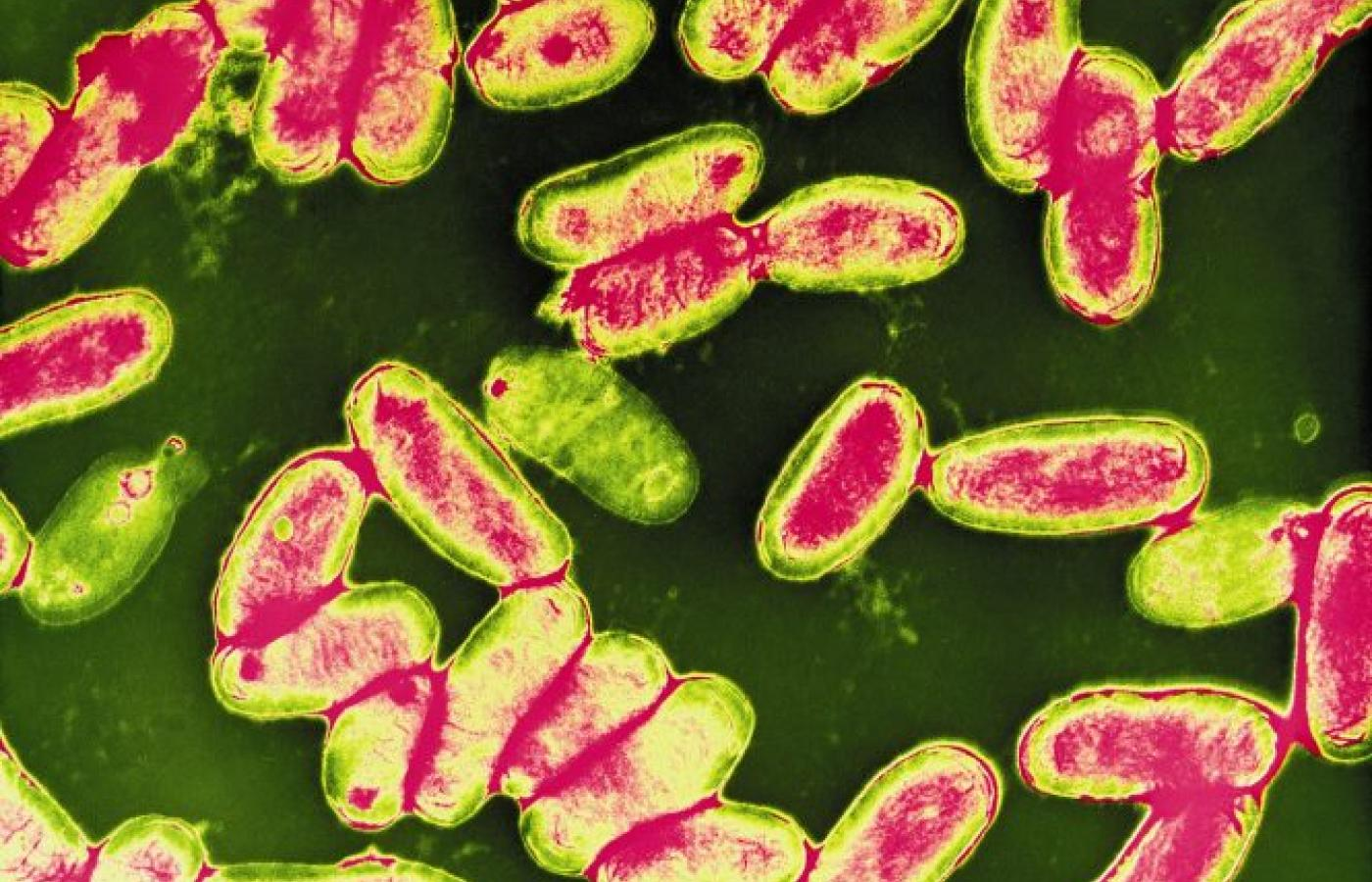
Whooping cough, or pertussis, has seen a significant resurgence in the United States, with the latest data from the Centers for Disease Control and Prevention (CDC) indicating no signs of slowing down. As of mid-December, more than 32,000 cases have been reported this year — a figure six times higher than at the same time last year and the highest since 2014.

Pertussis is a highly contagious respiratory illness that often starts with mild cold-like symptoms, such as a runny nose, sneezing, low-grade fever, and a tickly cough. However, after a week or two, a severe coughing fit develops, which can be so intense that it causes vomiting or even broken ribs. These coughing fits are often accompanied by a “whooping” sound as the person struggles to breathe. The cough can persist for weeks or even months, and infected individuals can spread the bacteria for weeks after the cough begins, even if their symptoms are mild enough to go unnoticed.

During the pandemic, cases of whooping cough were significantly reduced due to social distancing measures and precautions taken against Covid-19. However, the CDC notes that whooping cough tends to peak in cycles, and the current surge in cases appears to reflect a return to pre-pandemic patterns. The number of cases has risen sharply in recent months, more than doubling since mid-September. Notably, a quarter of the cases have been reported in the Midwest, including Illinois, Indiana, Michigan, Ohio, and Wisconsin, with Pennsylvania leading all states in reported cases.

While pertussis can be serious for people of all ages, it is particularly dangerous for infants under 1 year old, whose immune systems are still developing. Babies who haven’t yet received their full vaccination schedule are especially vulnerable. Vaccination is the best defense against the disease, with the CDC recommending the DTaP vaccine for children and the TDaP vaccine for adolescents and adults.

Unfortunately, vaccination rates have fallen. For the 2023-2024 school year, only about 92% of kindergartners received the DTaP vaccine, which is below the 95% federal target. This leaves thousands of schoolchildren unprotected, and the immunity provided by the vaccine can also wane over time, making individuals more susceptible to infection.

Antibiotics can effectively treat whooping cough if administered within the first few weeks of infection, before the severe coughing stage sets in. After that, the only treatment options focus on comfort care, including rest and fluids, while the infection runs its course.

As the U.S. enters the winter season, respiratory illnesses like Covid-19 and the flu are starting to rise, though overall respiratory illness activity remains moderate.


Generic Version of Liraglutide Approved, Offering Lower-Priced GLP-1 Option

The U.S. Food and Drug Administration (FDA) recently approved a generic version of the daily injectable GLP-1 medication liraglutide for the treatment of type 2 diabetes. This approval opens the door for more affordable options, helping to address an ongoing shortage of the drug. Liraglutide, sold under the brand name Victoza, is in the same class as semaglutide, the active ingredient in Ozempic, both of which are marketed by Danish pharmaceutical giant Novo Nordisk.

The generic version of liraglutide will be produced by Hikma Pharmaceuticals USA, which plans to make it available nationwide by the end of the year. While the company did not disclose the exact price, it confirmed that the generic would be priced lower than the branded version, which can range from $500 to $815 per package, depending on dosage.

According to Dr. Harlan Krumholz, a cardiologist at Yale University, the availability of the generic will benefit many patients currently using liraglutide. However, he points out that newer GLP-1 medications, such as Ozempic, Wegovy, Mounjaro, and Zepbound, which are given as weekly injections, have shown stronger benefits, particularly for patients with obesity. These medications, which cost upwards of $1,000 per month without insurance, are not yet available as generics, which may create a two-tier system in which lower-income patients only have access to drugs with less robust evidence of effectiveness.

In addition to this new generic, Teva Pharmaceuticals had introduced an authorized generic version of liraglutide in June 2024, as part of a settlement with Novo Nordisk. The authorized generic is priced about 14% lower than branded Victoza but is identical in formulation, produced by Novo Nordisk and distributed by Teva.

While authorized generics are essentially branded drugs sold without the brand name, true generic drugs like the newly approved liraglutide are manufactured by other companies and are designed to be more affordable alternatives. The FDA has emphasized that generics provide patients with additional, more cost-effective treatment options, especially for drugs in shortage.

Experts, including Dr. Aaron Kesselheim from Harvard Medical School, caution that it often takes multiple generic manufacturers entering the market before prices significantly drop. Typically, prices may decrease by 50-60% when four or more generics are available. However, the approval of the first generic liraglutide marks a positive step toward more competitive pricing in the market.

Liraglutide has been in shortage in the U.S. since July 2023, with the FDA prioritizing the assessment of generic drug applications for drugs in shortage to improve patient access. Dr. Jody Dushay, an endocrinologist at Beth Israel Deaconess Medical Center, expressed hope that the generic version will be significantly cheaper than the brand-name drugs and that it will quickly become available to patients.