
Close Menu
  • Home
  • Technology
  • Devices
  • Business
  • Science
  • Gadgets
  • Startups
Ayaksız
  • Home
  • Technology

    Lucid and Bolt Plan 25,000 Robotaxis for Europe

    Eylül 18, 2026

    AMD Gives PC Builders More Choice With New Ryzen 5 Desktop Chips

    Eylül 11, 2026

    Apple Expands Device Protection With a $49.99 Family Plan

    Eylül 11, 2026

    Snapdragon 8 Elite Extreme Gen 6 Reportedly Beats MediaTek’s Next Flagship Chipset

    Eylül 11, 2026

    Pinterest CFO Julia Donnelly to Step Down in October

    Ağustos 30, 2026
  • Devices

    Projector Setup: Separate Placement, Lens Shift, Zoom, and Keystone

    Kasım 18, 2026

    Router Mode or Access Point Mode? Give Each Network Device a Clear Job

    Kasım 18, 2026

    Scanner Feeder or Glass? Choose According to the Original

    Kasım 13, 2026

    Borderless Printing: Why the Edges of Your Photo Can Disappear

    Kasım 12, 2026

    Camera AE Lock: Recompose a Scene Without Letting Exposure Drift

    Kasım 11, 2026
  • Business

    Google Pixel 11 Pro Leaked Renders Indicate It Might Sport Thinner Bezels Than the Pixel 10 Pro

    Mart 30, 2026

    Motorola Edge 70 Debuts With Snapdragon 7 Gen 4, Ultra-Slim 5.99mm Body

    Kasım 5, 2025

    Samsung Galaxy S26 Series Could See Price Increase Amid Rising Component Costs: Report

    Kasım 4, 2025

    Amazon’s AWS Partners with NBA to Power New AI Basketball Platform

    Ekim 4, 2025

    Billionaire-Backed Bitcoin Firm OranjeBTC to List on Brazil’s B3 Exchange

    Ekim 4, 2025
  • Science

    Double Rainbows: Why the Outer Arc Reverses Its Colors

    Kasım 18, 2026

    Why Ice Floats—and Why Water Behaves Differently Near Freezing

    Kasım 13, 2026

    Air Pressure and Altitude: Why Two Weather Readings May Not Be Comparable

    Kasım 12, 2026

    A Light-Year Measures Distance: Understanding the Scale Behind Space Headlines

    Kasım 11, 2026

    Why the Sky Is Blue—and Why the Same Atmosphere Produces Red Sunsets

    Kasım 10, 2026
  • Gadgets

    Tripod Center Columns: Extra Height Comes with a Stability Tradeoff

    Kasım 18, 2026

    E Ink Ghosting: Match the Refresh Mode to the Task

    Kasım 13, 2026

    Camera Lens Hoods: Choose the Right Shape and Check the Whole Frame

    Kasım 12, 2026

    Pop Filters and Windscreens: Match Microphone Protection to the Noise

    Kasım 12, 2026

    USB Hub Power: Check Where Your Connected Devices Get Their Energy

    Kasım 11, 2026
  • Startups

    Cache-Control for Startups: No-Cache and No-Store Solve Different Problems

    Kasım 18, 2026

    Dead-Letter Queues: Investigate Before Replaying Failed Messages

    Kasım 13, 2026

    Database Connection Pools: Budget Across Every Application Replica

    Kasım 13, 2026

    Startup Staging Sites: Separate Search Visibility from Access Control

    Kasım 12, 2026

    API Idempotency Keys: Keep a Retry Connected to the Original Operation

    Kasım 11, 2026
Ayaksız
Anasayfa » Blog » Did Our Sun Once Have a Twin? Exploring the Mystery of a Lost Stellar Sibling
Science

Did Our Sun Once Have a Twin? Exploring the Mystery of a Lost Stellar Sibling

By ayaksızAralık 26, 2024Yorum yapılmamış4 Mins Read
Facebook Twitter Pinterest LinkedIn Tumblr Email
Share
Facebook Twitter LinkedIn Pinterest Email

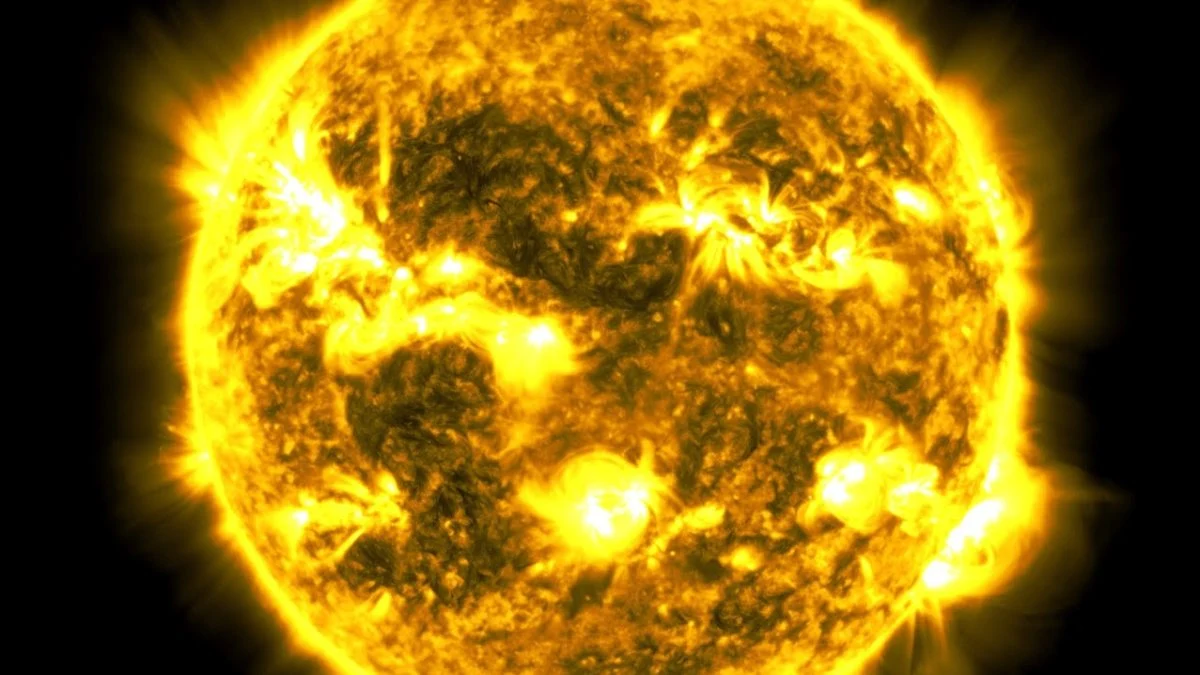
Our Sun may have once had a companion, a twin star, orbiting the galaxy together in a binary system. While the Sun is currently an isolated star, recent findings suggest that it might have formed in a stellar pair. The big question remains: where did this potential companion go?

The Sun’s position in the Milky Way is solitary; it orbits in one of the galaxy’s spiral arms, and its nearest neighbor, Proxima Centauri, is a distant 4.2 light-years away. Yet, binary stars—pairs of stars that orbit each other—are quite common in the galaxy. In fact, some studies suggest that most stars could have originally formed in pairs. This raises an intriguing question: could our Sun have once had a stellar sibling?

For many years, astronomers have explored the possibility that our Sun formed as part of a binary system, but it lost its companion over time. According to Gongjie Li, an astronomer at the Georgia Institute of Technology, this hypothesis is “very interesting” and warrants further investigation. Fortunately, the absence of a companion star today is beneficial for life on Earth, as a companion’s gravitational influence could have disrupted the orbit of our planets, potentially creating extreme temperature swings that would have been inhospitable for life.

While theories like the existence of a faint “Nemesis” star circling the Solar System have faded due to lack of evidence, early star formation processes suggest that the Sun could have had a twin. Stars form from vast clouds of gas and dust that collapse under gravity, and it is believed that stars often form in pairs or multi-star systems. In 2017, astrophysicist Sarah Sadavoy found that star formation might preferentially produce protostars in pairs, known as a fragmentation process. These binary systems could remain bound together, or, over time, the stars could drift apart.

If the Sun did have a companion, some researchers propose that it may have left behind clues in the outer regions of the Solar System. For example, Amir Siraj, an astrophysicist at Harvard University, suggests that the Oort Cloud—an icy shell surrounding the Solar System beyond Pluto—may hold evidence of the Sun’s former twin. He argues that a companion star could explain the large number of objects in the Oort Cloud and even the possible existence of a distant, undiscovered planet, often referred to as “Planet Nine.”

On the other hand, Konstantin Batygin of the California Institute of Technology believes that the Oort Cloud’s structure could be explained without invoking a binary companion. He suggests that the Sun may have formed in a dense star cluster, and the gravitational influence of Jupiter and Saturn could have caused the ejection of objects into the Oort Cloud.

Another potential signature of the Sun’s early binary relationship is its slight tilt of about seven degrees relative to the plane of the Solar System. Batygin believes this tilt could be due to the gravitational pull of a now-absent companion star. Although the search for our Sun’s missing twin is challenging, some believe that the Vera Rubin Observatory, set to begin operations in 2024, could help map the Oort Cloud and reveal whether a binary companion once existed.

Interestingly, the Sun’s formation in a star cluster might also provide clues. In 2018, scientists discovered a “twin” star located less than 200 light-years from the Sun. However, because stars in the same cluster often have similar compositions, it is difficult to pinpoint whether this star could have been our Sun’s companion.

Despite the uncertainty, the idea that the Sun once had a twin opens up fascinating possibilities for understanding exoplanetary systems. In fact, many exoplanets are found orbiting binary stars, and such systems can feature planets that orbit one of the two stars or both. While a binary companion could have caused some disruption in planetary orbits, it might not have prevented the formation of life on Earth. The mystery of the Sun’s potential twin may remain unresolved, but as scientists continue to study the outer reaches of the Solar System, they might uncover more signs of its stellar sibling.


binary star Exoplanets gravitational influence Nemesis Oort Cloud Planet Nine solar system star formation Sun Vera Rubin Observatory
Share. Facebook Twitter Pinterest LinkedIn Tumblr Email
ayaksız
  • Website

Related Posts

Double Rainbows: Why the Outer Arc Reverses Its Colors

Kasım 18, 2026

Why Ice Floats—and Why Water Behaves Differently Near Freezing

Kasım 13, 2026

Air Pressure and Altitude: Why Two Weather Readings May Not Be Comparable

Kasım 12, 2026
Add A Comment

Comments are closed.

Recent Posts
  • Projector Setup: Separate Placement, Lens Shift, Zoom, and Keystone
  • Cache-Control for Startups: No-Cache and No-Store Solve Different Problems
  • Tripod Center Columns: Extra Height Comes with a Stability Tradeoff
  • Double Rainbows: Why the Outer Arc Reverses Its Colors
  • Router Mode or Access Point Mode? Give Each Network Device a Clear Job
Tags
AI AI Chips AI Infrastructure Amazon Android Apple Artificial Intelligence Bitcoin ChatGPT China Cryptocurrency Cybersecurity data centers DeepSeek Donald Trump Electric Vehicles Elon Musk Ether Generative AI Google Huawei India Investment Iphone Meta Microsoft NASA National Security Nvidia OnePlus OpenAI Oppo Realme Samsung semiconductor industry Social media Sony SpaceX Technology Tesla Tether TikTok Vivo WhatsApp Xiaomi
Ayaksız
Instagram
© 2026 Ayaksız.

Type above and press Enter to search. Press Esc to cancel.