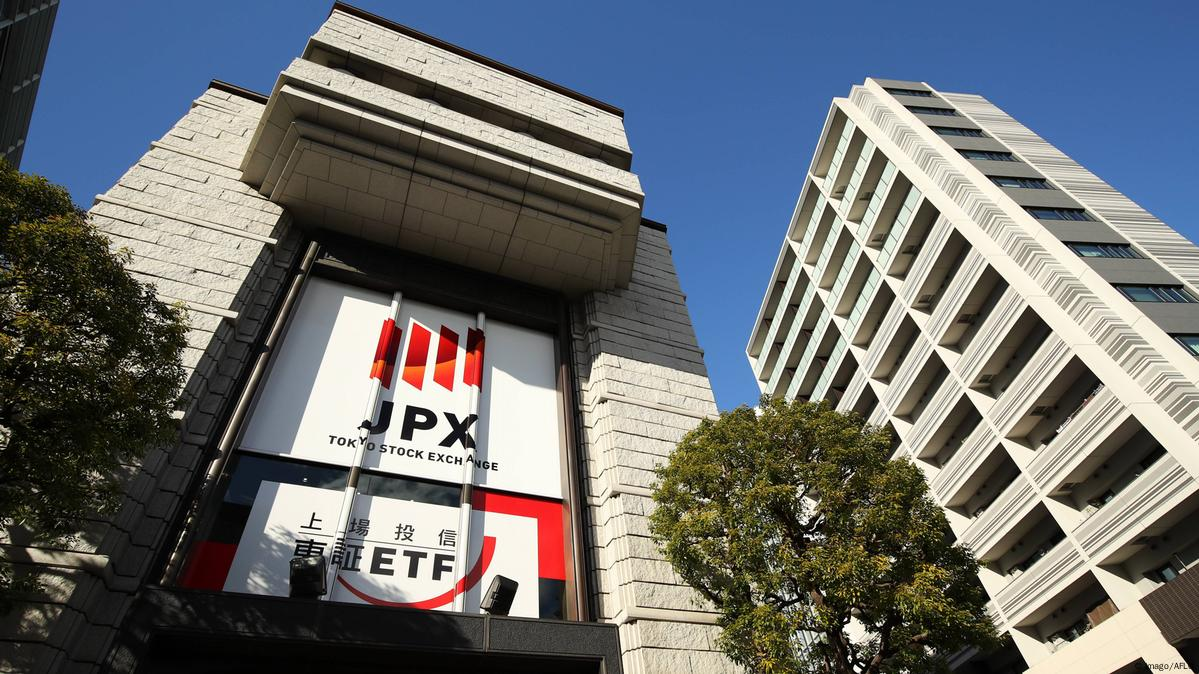
Japan Stocks Gain Amid Record Budget Proposal; Asia-Pacific Markets Mixed

Japan’s Nikkei 225 rose 1.12% to close at 8,220.9 on Thursday, while the Topix index added 1.20%, ending at 2,766.78. The gains followed reports that the Japanese government plans to propose a record ¥107 trillion ($735 billion) budget for the fiscal year starting in April, reflecting increased allocations for social security and debt-servicing expenses, according to a draft reviewed by Reuters.

The Bank of Japan’s Governor Kazuo Ueda also expressed optimism on Wednesday, stating that Japan’s economy is likely to achieve sustainable and stable 2% inflation accompanied by wage growth by 2025. The 10-year Japanese government bond yield edged up 1.3 basis points to 1.078%, while the yen strengthened to 157.16 against the dollar, indicating market anticipation of potential interest rate hikes.

Among Japanese stocks, automakers Nissan and Honda surged 6.58% and 3.84%, respectively, as both companies initiated formal merger talks earlier this week. If successful, the merger would create the world’s third-largest carmaker by sales. Conversely, Japan Airlines slipped 0.24% after a cyberattack caused delays to domestic and international flights, although its systems have since returned to normal.

Elsewhere in the Asia-Pacific region, South Korea’s Kospi dipped 0.44% to 2,429.67, and the Kosdaq fell 0.66% to 675.64. Political tensions intensified as the opposition Democratic Party submitted a bill to impeach acting President Han Duck-soo, with voting expected on Friday. E-Mart shares gained 5.45% following reports that Alibaba Group Holding is nearing a deal to integrate its South Korean business with E-Mart’s e-commerce platform.

China’s CSI 300 posted slight gains, closing at 3,987.48, after the World Bank raised its GDP growth forecast for the country to 4.9% for 2024 and 4.5% for 2025, citing recent policy adjustments. The Chinese government also reaffirmed its commitment to stabilizing the real estate market, announcing measures to control the supply of commercial housing.

Singapore’s manufacturing output grew 8.5% year-on-year in November, driven by robust performance in the electronics sector. However, the figure fell short of Reuters’ 10% growth forecast, and on a month-on-month basis, output contracted by 0.4%, missing expectations for a 0.8% increase.

Markets in Australia, New Zealand, and Hong Kong were closed for the Boxing Day holiday, while U.S. markets were also closed overnight for Christmas. On Christmas Eve, U.S. stocks rallied, with the S&P 500 climbing 1.1% to 6,040.04, the Dow Jones Industrial Average adding 0.91%, and the Nasdaq Composite advancing 1.35%, supported by Tesla’s 7.4% surge.

The rally marked the beginning of the “Santa Claus rally,” a period typically associated with gains during the final trading days of December and the first two in January.

 

Iran Lifts Ban on WhatsApp and Google Play Amid Internet Reforms

Iranian authorities have officially lifted the ban on WhatsApp and Google Play, signaling a potential easing of the country’s stringent internet restrictions, according to Iranian state media on Tuesday.

Iran has long maintained some of the strictest controls on internet access globally, including bans on major U.S.-based platforms like Facebook, Twitter, and YouTube. Despite these restrictions, tech-savvy Iranians often bypass such measures using virtual private networks (VPNs).

The announcement followed a meeting chaired by President Masoud Pezeshkian, where a “positive majority vote” was reached to restore access to certain popular platforms, according to the state-run IRNA news agency. Iran’s Minister of Information and Communications Technology, Sattar Hashemi, stated, “Today the first step in removing internet limitations… has been taken.”

Social media platforms like WhatsApp have been extensively used by Iranians for communication and mobilization, particularly during anti-government protests. This development comes amid heightened scrutiny over Iran’s digital censorship, with the United States urging tech companies in September to assist in circumventing online restrictions in heavily censored countries, including Iran.

While the unblocking of WhatsApp and Google Play is a significant move, many other popular platforms remain restricted, and it is unclear whether further reforms will follow.


CATL Unveils “Bedrock” EV Chassis, Emphasizing Safety and Efficiency

China’s CATL (300750.SZ), the world’s leading electric vehicle (EV) battery manufacturer, introduced its new “panshi” EV chassis on Tuesday, highlighting safety as its primary feature. The chassis can reportedly endure a 120-kph (75-mph) frontal collision without catching fire or exploding, setting a new safety benchmark in the EV industry.

The Bedrock platform integrates a battery with a range of approximately 1,000 kilometers (621 miles) per charge. It also shortens the vehicle production timeline to 12-18 months, compared to the traditional 36-month period, CATL stated.

CATL targets premium automakers with its Bedrock chassis, offering a solution to speed up EV development while lowering costs. “This is a groundbreaking approach, as no other new energy vehicle has previously attempted a 120km/h frontal pole impact test,” said Ni Jun, CATL’s chief manufacturing officer. Notably, the standard frontal impact speed in China’s New Car Assessment Program is 56 km/h.

Avatr, a Chinese EV brand co-owned by CATL, Changan Auto, and Huawei, will be the first to utilize this chassis. While Avatr’s president, Chen Zhao, did not disclose a specific launch date, the Bedrock chassis is set to play a key role in upcoming models.

The EV platform, also known as a “skateboard chassis,” integrates electric motors, batteries, control systems, and suspensions into a single flexible platform. Other companies, such as Xpeng (9868.HK) and Shanghai-based Launch Design, are also exploring similar technologies.

The Bedrock chassis supports CATL Chairman Robin Zeng’s vision of diversifying the company’s offerings. Besides EV platforms, CATL is advancing micro power grids and battery-swapping services. With a global EV battery market share of 37%, according to SNE Research, CATL is poised for further growth.

Zeng has indicated that the panshi platform could reduce EV development costs from billions to $10 million, enabling smaller EV firms to become profitable with sales of just 10,000 units annually. This innovation could attract new entrants in regions lacking established automakers. CATL has reportedly demonstrated the Bedrock chassis to Porsche and investors in the UAE, who are considering its potential for luxury and local EV brands.

Since 2020, CATL has been integrating batteries directly into EV chassis, forming collaborations with automakers such as Vinfast, BAIC, and Neta. These partnerships have helped develop EV models using CATL’s advanced platform over the past two years.