German Court Orders Signify to Recall Products Over Patent Infringement Claims

The Düsseldorf Regional Court in Germany has ruled that Dutch lighting company Signify (LIGHT.AS) must recall and destroy specific products sold since 2017, citing patent infringement claims by South Korean firm Seoul Semiconductor (046890.KQ). The court’s decision includes the imposition of a fine of up to €250,000 ($259,925) for each violation of the order, according to a statement released by Seoul Semiconductor on Thursday.

Signify, the world’s largest lighting manufacturer and a spinoff from Philips in 2016, has not yet responded to requests for comment.

Seoul Semiconductor, known for its extensive patent portfolio and active litigation against multinational companies, emphasized its commitment to innovation. The company invests approximately 10% of its revenue in research and development and holds over 18,000 patents related to light-emitting diode (LED) technology.

This ruling highlights the competitive nature of the global lighting industry, where firms frequently protect their technological advancements through legal channels.


Toyota’s Global Production Declines for 10th Month Despite Rising Sales

Toyota Motor Corporation reported a decline in global production for the 10th consecutive month in November, manufacturing 869,230 vehicles worldwide—a 6.2% drop compared to the same month in the previous year. This decrease was more pronounced than October’s 0.8% dip. Despite production challenges, Toyota’s global sales grew for the second consecutive month, driven by strong demand in key markets like the United States and China.

In the U.S., Toyota’s production fell by 11.8% in November. The company began to recover after a four-month production halt on models like the Grand Highlander and Lexus TX SUVs, with production resuming in late October.

China also experienced a slight production decline of 1.6%, an improvement compared to the 9% drop in October. Toyota attributed the better performance to increased local sales of its Granvia and Sienna minivans and its electric sedan, the bZ3, co-developed with Chinese automaker BYD. To enhance its position against growing competition from Chinese brands like BYD, Toyota plans to establish an independent manufacturing plant in Shanghai, aiming to produce electric Lexus vehicles by 2027, according to the Nikkei newspaper.

In its domestic market of Japan, which accounts for about a third of its global output, Toyota’s production decreased by 9.3%. This was partly due to a two-day halt in operations at its Fujimatsu and Yoshiwara plants.

Despite the production declines, Toyota achieved record sales for November, with a 1.7% increase to 920,569 vehicles globally. However, year-to-date figures from January to November indicate a 5.2% drop in global production to approximately 8.75 million vehicles and a 1.2% decrease in global sales compared to the same period last year.

The production and sales figures include Toyota’s Lexus brand but exclude contributions from its group companies, Hino Motors and Daihatsu.


BYD Contractor Denies Brazilian Authorities’ ‘Slavery-Like Conditions’ Claims

Jinjiang Group, a contractor for Chinese electric vehicle maker BYD, rejected accusations from Brazilian authorities that 163 Chinese nationals working on a construction site in Bahia state were subjected to “slavery-like conditions.” In a statement on Thursday, Jinjiang argued that the allegations were based on misunderstandings stemming from cultural differences and translation errors.

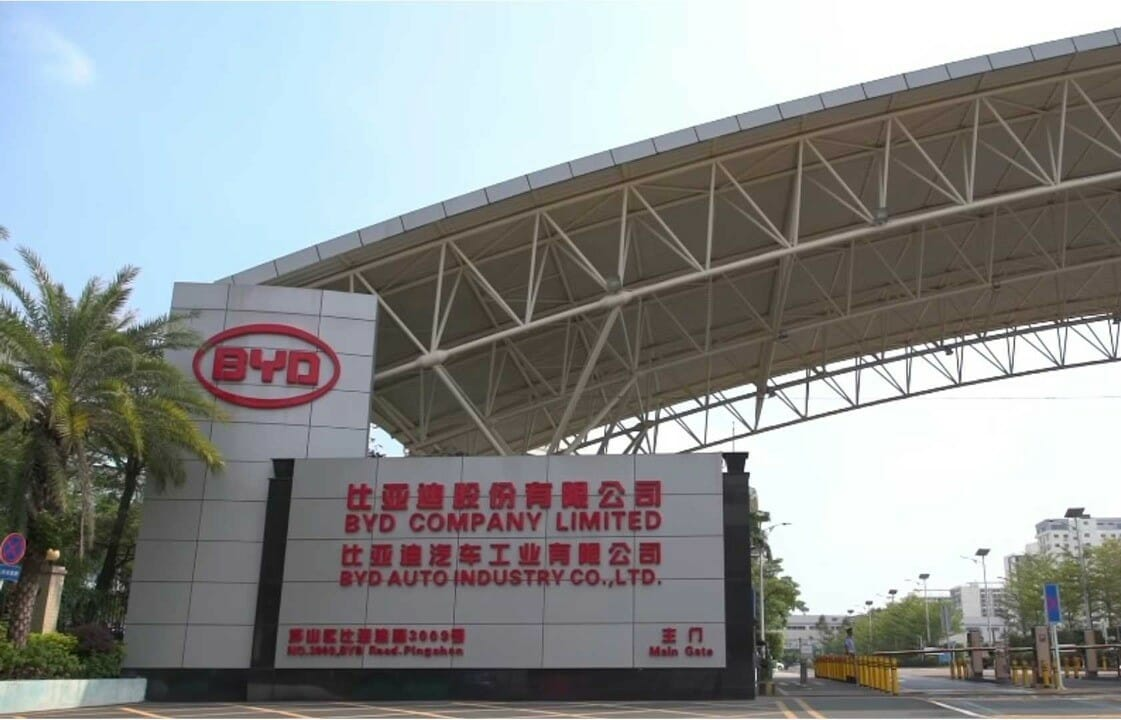
Brazilian labor authorities had reported finding workers in exploitative conditions at a site for a BYD-owned factory. In response, BYD stated it had severed ties with the firm responsible for hiring the workers and was cooperating with authorities.

Jinjiang defended its practices, stating, “Being unjustly labeled as ‘enslaved’ has insulted the dignity and human rights of our employees and hurt the pride of the Chinese people.” The company also claimed the questioning by Brazilian inspectors was “suggestive” and shared a video of workers disputing the claims.

In the video, workers clarified that 107 individuals had voluntarily handed over their passports to the company for assistance in obtaining temporary ID certificates, countering Brazilian authorities’ assertion that their documents were withheld. A worker in the video expressed satisfaction with their work conditions and highlighted their commitment to the completion of the factory, which is expected to begin production in late 2024 or early 2025.

BYD has positioned Brazil as a key market, with the factory aiming to produce 150,000 cars annually. However, the incident adds strain to China-Brazil relations, as China’s foreign ministry confirmed that its embassy in Brazil is in communication with local counterparts to address the matter.

BYD’s General Manager of Branding, Li Yunfei, accused “foreign forces” and some media outlets of attempting to tarnish Chinese brands and undermine ties between China and Brazil. The controversy also arises as Brazil plans to raise tariffs on imported electric vehicles from 18% to 35% by July 2026, further underscoring the importance of domestic production.

Jinjiang reiterated its commitment to compliance, stating that cultural misunderstandings had been at the root of the controversy and affirming its intention to support the success of Brazil’s largest new energy vehicle project.