European Carmakers Raise Petrol Prices, Discount EVs Amid Stricter Emissions Rules

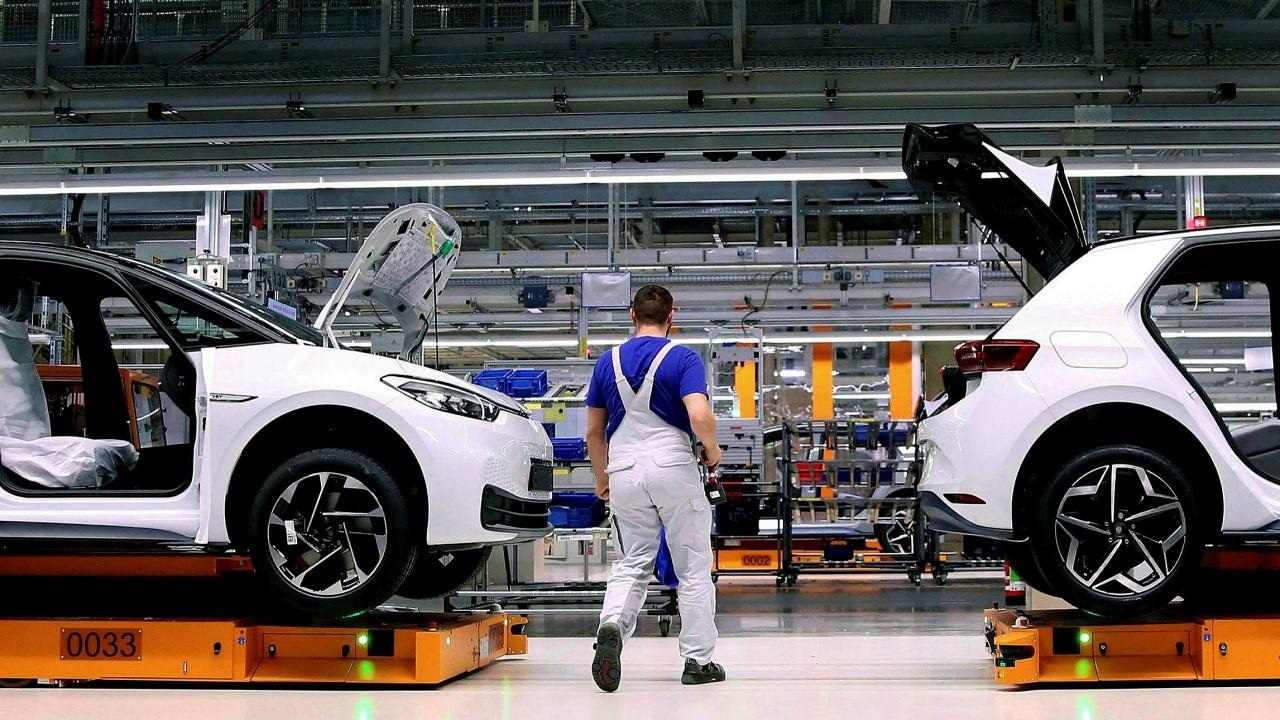
Europe’s automakers are adjusting pricing strategies ahead of stricter EU emissions rules set to take effect on January 1, raising prices on petrol cars while offering discounts on electric vehicles (EVs) to close the sales gap and avoid significant fines.

Looming Challenges: New Emission Targets

The European Union will impose lower carbon dioxide (CO₂) emission caps next year, requiring at least 20% of automakers’ sales to be EVs. This marks a sharp increase, as EVs currently account for just 13% of all vehicle sales in the region, according to data from the European Automobile Manufacturers’ Association (ACEA).

The stricter rules arrive at a difficult time for the industry, with carmakers battling overcapacity, stagnant demand, and rising competition from Chinese automakers. Executives have raised alarms over the impact on profits. Stellantis CEO Carlos Tavares‘s recent resignation partially stemmed from disagreements about managing these challenges.

Automaker Response: Price Hikes and Discounts

Volkswagen, Stellantis, and Renault have increased the prices of petrol engine vehicles in recent months while keeping electric models stable or discounted. Analysts suggest this move aims to nudge consumers toward EVs to meet CO₂ targets and avoid billions in potential fines.

For instance:

  • Stellantis’s Peugeot raised prices on non-EV models in France by up to 500 euros.
  • Renault added 300 euros to some petrol models, such as the Clio SCE 65, while keeping hybrid prices unchanged.
  • Volkswagen lowered the price of its ID.3 compact EV in multiple markets, bringing it below 30,000 euros in Germany.

While this strategy may steer demand, industry insiders warn it could backfire. Raising petrol car prices could reduce production volumes, further straining suppliers and the value chain without guaranteeing sufficient EV sales growth.

Profit Pressure and Discounts

The price hikes are expected to indirectly fund EV discounts, which are seen as critical to boosting adoption but will erode automaker margins. Analysts at S&P Global note that combustion-engine buyers effectively subsidize EV buyers through these pricing shifts.

In the UK alone, automakers anticipate EV-related targets will cost around £6 billion this year, with £4 billion attributed to discounts alone.

Pooling Emissions to Avoid Fines

To sidestep fines, some carmakers are turning to “pooling” strategies, where companies with high emissions buy credits from brands with stronger EV portfolios.

  • For example, Japan’s Suzuki partnered with Geely-owned Volvo to meet 2025 targets, significantly lowering Suzuki’s exposure to penalties.

This approach, while less costly than heavy discounts, remains another strain on profits.

Industry Pushback

Amid these mounting pressures, automakers are urging EU policymakers to reconsider the aggressive targets. Luc Chatel, president of French car lobby PFA, expressed frustration: “I can’t sell enough electric vehicles and I’m going to be penalized on my thermal vehicles. What do they want me to make, horse-drawn carriages?”

Looking Ahead

While EU regulators show little sign of easing rules, EV sales are forecast to climb significantly. GlobalData projects a 41% jump in EV sales across Europe next year, reaching 3.1 million units in 2025. Still, automakers face a balancing act of steering consumer demand, protecting margins, and avoiding fines.
 

VW and Unions in Prolonged Talks to Seal Cost-Cut Deal Before Christmas

Negotiations between Volkswagen management and labor representatives entered a second marathon day on Tuesday, with talks expected to extend late into the night, signaling significant differences over cost-cutting measures in Germany.

Protracted Negotiations and Strike Threats

After a 13-hour session on Monday failed to yield an agreement, unions remain steadfast in opposing management plans to cut wages, reduce capacity, and possibly shut down plants in Germany for the first time in Volkswagen’s history. If the two sides fail to reach a compromise, labor leaders have threatened to escalate strikes in January.

Around 100,000 workers have already staged two separate warning strikes over the past month, marking the largest labor action ever seen at the automaker. If talks collapse, union representatives at individual plants could vote for 24-hour strikes or even open-ended walkouts next year.

A union spokesperson reiterated that no decisions on further strikes would be made until negotiations conclude this week. The labor representatives insist any resolution must exclude plant closures, while Volkswagen management maintains that closures cannot be entirely ruled out given the company’s financial challenges.

Financial Pressures and Rising Competition

Volkswagen, Europe’s largest carmaker, is grappling with falling demand, rising operational costs, and increasing competition from low-cost Chinese rivals. These pressures have strained the historically cooperative relationship between Volkswagen’s Works Council Chief Daniela Cavallo and CEO Oliver Blume.

Workers Facing an Uncertain Holiday

Cavallo, speaking to union members before Monday’s talks, expressed the emotional toll on workers: “Workers don’t want to go into Christmas in fear.” The urgency to strike a deal before the holidays underscores the importance of avoiding prolonged uncertainty for Volkswagen’s workforce.

Both sides had anticipated these “last-ditch” discussions to stretch over several days, with hopes of achieving a resolution before Christmas. However, as the two sides remain far apart, the conflict threatens to drag into 2024 if an agreement is not reached.


Teva and Sanofi’s IBD Drug Achieves Primary Targets in Phase 2 Study

Israel’s Teva Pharmaceutical Industries and French drugmaker Sanofi announced that their jointly developed drug for treating ulcerative colitis and Crohn’s disease has successfully met its primary goals in a Phase 2b clinical trial.

The drug, named duvakitug, demonstrated strong efficacy across patient subgroups. In the 14-week trial, 36.2% of patients receiving the low dose and 47.8% receiving the high dose achieved clinical remission, compared to 20.45% of those on a placebo. The study, conducted across the U.S., Europe, and Israel, marks the first randomized, placebo-controlled trial to assess a TL1A antibody treatment for Crohn’s disease.

Promising Results and Market Potential

Eric Hughes, Teva’s head of global R&D, said, “The results from the study have exceeded our expectations.” Similarly, Houman Ashrafian, Sanofi’s head of R&D, highlighted duvakitug’s potential as a transformative treatment: “If the magnitude of effect persists in the Phase 3 program, we believe we will have a differentiated medicine for IBD patients who are in urgent need of new options.”

The drug was generally well-tolerated, with no safety signals identified in patients with both ulcerative colitis and Crohn’s disease. Full results of the study will be presented at a scientific forum in 2025.

Next Steps: Phase 3 Development

Teva and Sanofi plan to move forward with Phase 3 development of duvakitug, pending discussions with regulatory authorities. Both companies noted that inflammatory bowel disease (IBD) currently has no cure, underscoring the urgent need for innovative treatments.

Under the partnership agreement, Teva received a $500 million upfront payment from Sanofi and stands to earn up to $1 billion in development and launch milestones. The companies will equally share development costs and split net profits and losses in major markets.

Commercialization Strategy

Sanofi will take the lead on commercialization in North America, Japan, Asia, and other global regions, while Teva will oversee the European, Israeli, and selected markets.

Market Reaction and Investor Sentiment

Following the announcement, U.S.-listed shares of Teva surged 19%, while Sanofi’s shares climbed 4% in early trading. Analysts, including Jefferies’ Glen Santangelo, said the positive trial results will ease investor concerns that had weighed on Teva’s shares after its third-quarter performance.

Both companies remain optimistic that duvakitug could become a blockbuster drug, generating annual sales exceeding $1 billion, and offering new hope to millions of patients suffering from ulcerative colitis and Crohn’s disease worldwide.