Teaching Rats to Drive Reveals How Anticipating Joy Can Improve Lives
A groundbreaking experiment involving rats driving tiny cars has provided fresh insights into how anticipating joyful experiences can positively influence behavior and brain function. What started as a quirky research project has evolved into a deeper exploration of the emotional well-being of animals, revealing lessons that may apply to humans as well.
The Project: Rats Behind the Wheel
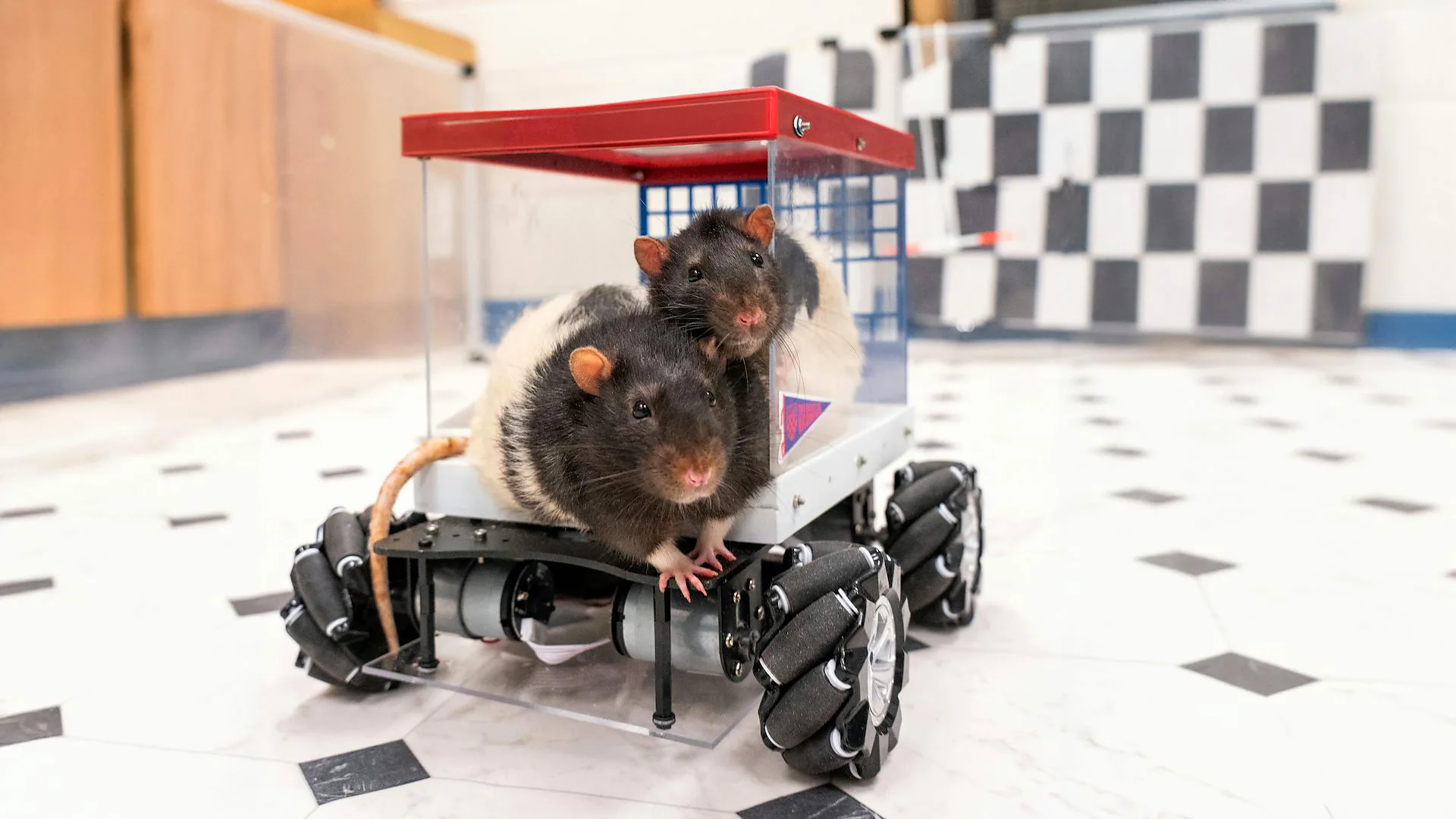
The study began with an innovative idea: to teach rats how to drive a small vehicle. Using a modified plastic cereal container, researchers created a “rat-operated vehicle” (ROV), where the rats could move the car forward by pressing a lever resembling a gas pedal. The goal was to see if rats could learn new skills in an enriched environment—something that could potentially shed light on how complex learning impacts brain function.
The rats learned quickly, particularly those raised in enriched environments with more space, toys, and social interactions. This group showed faster learning, suggesting that a stimulating environment enhances neuroplasticity—the brain’s ability to adapt and change in response to new experiences.
Unanticipated Joy and Motivation
The rats’ eagerness to drive the vehicles took researchers by surprise. Not only did they learn how to drive with surprising precision, but they also showed significant enthusiasm before starting their driving lessons. The researchers hypothesized that the rats were experiencing something akin to excitement or joy—emotions that had previously been difficult to study in non-human animals.
The observation led to an unexpected shift in the research focus, particularly during the emotional isolation of the 2020 pandemic. The rats’ heightened excitement for their driving sessions sparked an inquiry into how positive emotions—specifically, the anticipation of good experiences—affect behavior.
Anticipation and Positive Emotion: The “Wait For It” Study
Building on the concept of operant conditioning, where animals are trained by reinforcement (such as food rewards), researchers began exploring the impact of delayed gratification. In their “Wait For It” experiment, rats were made to wait before receiving their reward—a Froot Loop treat. This study, called Upers (Unpredictable Positive Experience Responses), was designed to see how waiting for something positive influenced the rats’ behavior.
Preliminary results were promising. Rats who had to wait before receiving rewards exhibited more optimistic behavior and performed better on cognitive tasks than those who received rewards immediately. The study linked these findings to the concept of “behaviourceuticals,” suggesting that positive experiences, like anticipating something enjoyable, could alter brain chemistry in ways similar to pharmaceuticals.
The Role of Dopamine in Anticipation
One fascinating discovery came when researchers noticed that the rats trained to anticipate rewards displayed a unique tail posture—a S-shaped curve that resembled the effects of dopamine on the brain. This behavior, known as “Straub tail,” is often associated with the release of dopamine, a chemical that plays a crucial role in both pleasure and reward. It’s a visual marker of the rats’ emotional state, which had been elevated by their anticipation of a positive experience.
Insights into Human Behavior
The implications of these findings go beyond rat behavior. Researchers believe that understanding how anticipation shapes brain function could help humans manage stress and improve well-being. In our modern world, where instant gratification often dominates, the rats’ ability to enjoy the journey toward a reward rather than just the reward itself offers valuable lessons in emotional resilience.
This research also ties into broader themes in neuroscience, particularly studies that show how stress and positive experiences can physically alter the brain. Neuroscientists have long known that the brain’s reward systems, such as the nucleus accumbens, play a significant role in how animals (and humans) process positive reinforcement and motivation.
Broader Research and Positive Emotions in Animals
The driving rat project fits within a larger body of research on the emotional lives of animals. For instance, neuroscientist Jaak Panksepp demonstrated that rats experience joy when tickled, and Curt Richter’s research indicated that rats can even experience hope—an emotion that drives persistence in the face of adversity. These findings challenge the traditional view that animals are primarily motivated by negative emotions such as fear and stress.
The driving rats, too, may offer a model for understanding how positive emotions and anticipation help humans cope with life’s unpredictability. By anticipating the joys ahead, whether big or small, we may better navigate the challenges of daily life.
Conclusion: The Power of Anticipation
Ultimately, the rat-driving experiment has provided unexpected insights into the power of positive experiences. For both rats and humans, anticipating something good—not just immediate rewards—can enhance motivation, learning, and overall well-being. As the study of animal emotions continues to unfold, these findings serve as a reminder that joy, anticipation, and the journey toward something better can shape our brains and our lives in profound ways.