Study Links Climate Change to Decreased Rice Quality in East Asia

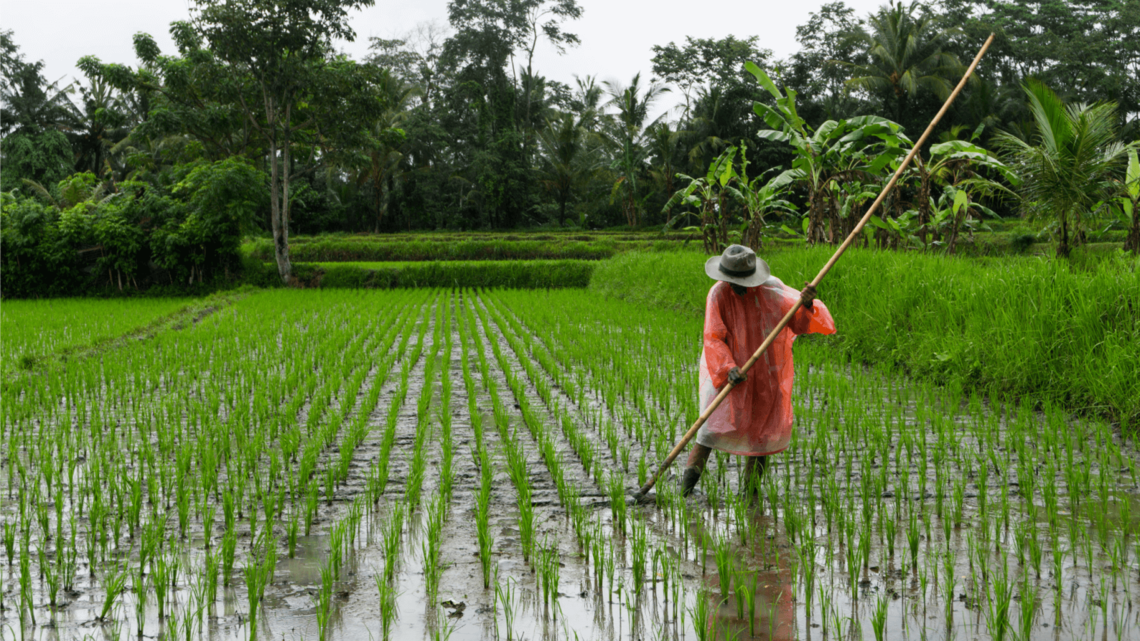
A recent study published in Geophysical Research Letters has linked climate change to a significant decline in rice quality across East Asia, a region where rice is a crucial dietary staple. Led by Dr. Xianfeng Liu of Shaanxi Normal University in China, the research examines how rising temperatures, particularly during critical growth stages, affect the “head rice rate” (HRR)—a key indicator of rice quality that measures the proportion of intact grains after milling. The study used 35 years of data from Japan and China to analyze how climate factors have impacted HRR, revealing a concerning trend for rice production in the region.

The study identified nighttime warming as the primary factor behind the observed decline in rice quality. In Japan, the HRR began to decline when nighttime temperatures surpassed 12°C, while in China, the threshold was slightly higher at 18°C. During the flowering and grain development stages, elevated nighttime temperatures were found to hinder the rice plants’ ability to perform essential processes such as photosynthesis and starch accumulation. This disruption leads to weaker grains, making them more likely to break during milling, ultimately affecting the overall quality of the rice.

In addition to nighttime warming, the study also found that solar radiation played a significant role in reducing rice quality. Increased solar radiation was linked to lower HRR, suggesting that the intensity of sunlight during key growth phases may stress the rice plants, impacting grain development. Other factors, such as reduced precipitation and an increased vapor pressure deficit (VPD) during the day, were also found to contribute to HRR decline. Specifically, HRR decreased when the daytime VPD exceeded 0.5–1 kPa, further exacerbating the negative effects of climate change on rice quality.

The findings of this study highlight the vulnerability of rice production to climate change, which could have far-reaching implications for food security in East Asia, where millions of people rely on rice as a primary food source. The researchers stress the importance of understanding these climate factors to develop adaptive strategies that could help mitigate the impact of warming temperatures on rice crops. As the region continues to grapple with climate change, efforts to safeguard rice quality will be essential for maintaining the sustainability of this vital crop


James Webb Telescope Unveils Fourth Planet in Kepler-51 Star System

A groundbreaking discovery has been made in the Kepler-51 planetary system, renowned for hosting three “super-puff” planets with extremely low densities. According to a study published in The Astronomical Journal, researchers have identified a fourth planet in the system, designated Kepler-51e. This discovery was led by Dr. Jessica Libby-Roberts of Penn State’s Centre for Exoplanets and Habitable Worlds and Dr. Kento Masuda from Osaka University. The newly found planet sheds light on previously unexplained variations in the transit timings of the known planets, suggesting a gravitational influence from Kepler-51e that had gone unnoticed until now.

The discovery came about during an effort to study Kepler-51d using NASA’s James Webb Space Telescope (JWST). Researchers observed an unexpected anomaly when Kepler-51d transited its star two hours earlier than predicted. This significant deviation prompted a deeper analysis, utilizing data from multiple sources, including the Kepler and TESS space telescopes, the Hubble Space Telescope, and ground-based facilities such as the Apache Point Observatory and Palomar Observatory. Ultimately, the team determined that only a four-planet model could account for the irregularities in the transit timing variations (TTVs), leading to the confirmation of Kepler-51e.

The newly identified planet Kepler-51e is estimated to have a mass comparable to the other planets in the system and follows a relatively circular orbit with a period of approximately 264 days. However, the exact characteristics of Kepler-51e remain elusive, as no transits have been detected to determine its radius or density. This limitation leaves its classification as a “super-puff” uncertain. Meanwhile, the inner three planets, famed for their cotton-candy-like densities, continue to intrigue researchers. Accounting for the gravitational effects of Kepler-51e has slightly adjusted the estimated masses of the inner planets, but their extremely low densities remain a defining feature of this extraordinary system.

The discovery of Kepler-51e marks an important step forward in understanding multi-planet systems and the dynamics of ultra-low-density exoplanets. It also highlights the value of combining observational data from a range of telescopes, both space- and ground-based, to uncover hidden complexities in planetary systems. As researchers continue to investigate the Kepler-51 system, they hope to uncover more about the origins and evolution of these enigmatic planets, deepening our understanding of exoplanetary diversity across the galaxy.

Intel Reportedly Considers CEO Candidates, Including Ex-Board Member Lip-Bu Tan

Intel has begun evaluating external candidates for its chief executive officer position following the departure of Pat Gelsinger, a company veteran whose leadership tenure was cut short amidst mounting challenges for the iconic American chipmaker. Among the individuals approached is Lip-Bu Tan, a former Intel board member and a respected figure in the semiconductor industry. According to sources familiar with the matter, Tan has been contacted by Intel’s board in recent days to gauge his interest in taking on the top role, though discussions remain confidential at this early stage.

Lip-Bu Tan is widely recognized as a prominent leader in the semiconductor world and has long been viewed as a potential candidate to steer Intel through its ongoing transformation. In addition to Tan, Intel’s board is reportedly considering other high-profile outsiders, including Matt Murphy, the current CEO of Marvell Technology. By focusing on external candidates, Intel appears intent on seeking fresh perspectives to navigate its complex turnaround strategy, which has faced criticism for its slow execution under Gelsinger’s leadership.

The decision to replace Gelsinger, who served as CEO for less than four years, signals growing impatience from Intel’s board as the company struggles to reclaim its leadership in the semiconductor industry. Gelsinger had embarked on an ambitious and expensive plan to revitalize Intel’s manufacturing capabilities and re-establish its dominance over rivals like AMD, NVIDIA, and Taiwan’s TSMC. However, the board reportedly felt the pace of progress was insufficient to address Intel’s competitive and financial challenges. Gelsinger stepped down on Monday after being given the option to retire or be removed.

Intel’s search committee, formed to identify a permanent CEO, is expected to finalize its decision in the coming months. In the interim, Chief Financial Officer David Zinsner and senior executive Michelle Johnston Holthaus have been appointed as co-CEOs to oversee day-to-day operations. As Intel seeks new leadership, industry observers are closely watching to see if the company can find a visionary capable of accelerating its recovery and regaining its footing in a rapidly evolving and fiercely competitive semiconductor landscape.