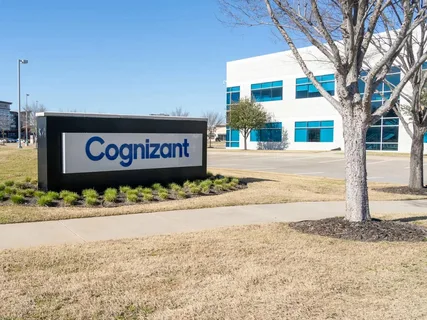
Cognizant Predicts Lower 2025 Revenue as IT Spending Tightens

Cognizant Technology Solutions (CTSH.O) revised its 2025 revenue forecast downwards on Wednesday, citing the impact of ongoing uncertainty about future interest rate cuts, which is prompting businesses to reduce their spending on IT services and consultancy. The company warned that while demand for AI-related investments remains strong, persistent high capital costs are leading enterprises to reconsider their IT spending strategies.

Despite the cautious outlook for the upcoming year, Cognizant saw a positive fourth quarter, driven by a surge in demand from the financial services sector. The company secured more large deals compared to the previous year, helping its quarterly revenue exceed Wall Street’s expectations.

Jatin Dalal, Cognizant’s finance chief, noted a strong pipeline of transformation and modernization projects, particularly within North America’s insurance sector and select areas of banking and financial services. This helped the company achieve fourth-quarter revenue of $5.08 billion, surpassing analysts’ projections of $5.07 billion. Additionally, Cognizant’s adjusted earnings for the quarter came in at $1.21 per share, beating analysts’ average estimate of $1.12.

For the first quarter of 2025, Cognizant forecasts revenue to range between $5 billion and $5.1 billion, slightly above analysts’ expectations of $5.06 billion. However, the company expects its 2025 annual revenue to be between $20.30 billion and $20.80 billion, which is lower than the $20.89 billion forecasted by analysts. The projected adjusted earnings per share for 2025 are expected to fall between $4.90 and $5.06, with the midpoint of $4.98 per share, in line with analysts’ estimates of $4.99.


Google Sets Ambitious Five-Year Timeline for Quantum Computing Breakthroughs

Google has set an ambitious goal to release commercial quantum computing applications within the next five years, presenting a challenge to Nvidia’s more conservative prediction of a 20-year wait for practical uses. Hartmut Neven, the founder and lead of Google Quantum AI, expressed optimism in a statement, asserting that “real-world applications that are only possible on quantum computers” will arrive in the next five years.

The applications Google envisions are groundbreaking, particularly in fields like materials science, where quantum computers could help develop superior batteries for electric vehicles, discover new drugs, and even explore alternative energy sources. This prediction stands in stark contrast to the broader uncertainty surrounding quantum computing’s timeline, with experts and investors differing widely on when the technology will deliver tangible results. While some predictions lean towards several years, others expect a much longer wait—potentially up to two decades.

Quantum computing has long been a subject of fascination in the scientific community. Unlike traditional computers that process information one bit at a time, quantum computers leverage qubits, which can represent multiple states simultaneously, allowing them to perform calculations at vastly accelerated speeds. This potential for power has captured the attention of governments and businesses, particularly regarding its potential impact on cybersecurity, finance, and healthcare.

In many ways, quantum computing’s development mirrors the early days of artificial intelligence. Before breakthroughs like OpenAI’s ChatGPT in 2022, AI was understood mainly by scientists, with no clear indication of when it would become commercially viable. Quantum computing, similarly, has made substantial advances, but the timeline for practical applications remains a topic of debate.

Nvidia’s CEO, Jensen Huang, has taken a more cautious stance, predicting that it could take up to 20 years before quantum computers are truly useful in commercial applications. At the CES trade show in Las Vegas earlier this year, Huang stated that while a 15-year horizon could be considered optimistic, a 30-year timeframe would be overly pessimistic, with 20 years being a reasonable estimate for the realization of practical quantum computing applications.

Despite Huang’s more reserved prediction, Google’s recent progress has fueled optimism in the field. In December, Google announced a breakthrough in quantum computing with new chips that enabled the resolution of a complex problem in minutes—something a classical computer would require longer than the age of the universe to solve. Google has been working on quantum computing since 2012, designing and building quantum chips as part of its efforts to tackle some of the most challenging problems in the field.

In another significant step toward commercializing quantum computing, Google’s scientists recently published a paper in the journal Nature, revealing a new approach to quantum simulation. This discovery brings the company closer to achieving its goal of practical quantum computing applications within the next five years.


Amazon’s Cloud Business Faces Crucial Test After Rivals Microsoft and Google Struggle

Amazon is under intense pressure as it prepares to report its fourth-quarter results on Thursday, with high expectations surrounding its cloud business amid growing concerns over Big Tech’s investments in artificial intelligence (AI). After disappointing earnings from Microsoft and Google, which fueled investor concerns about the costs of AI, Amazon’s performance could be a pivotal moment in the tech sector.

Shares of major tech companies surged in recent years, driven by the belief that the AI boom and its massive data center needs would sustain growth. However, these expectations were rattled when DeepSeek, a Chinese AI startup, announced breakthroughs at a fraction of the cost, causing a selloff in tech stocks.

Despite these challenges, Amazon may be in a stronger position than its rivals, analysts say. Amazon Web Services (AWS), the world’s largest cloud services provider, is poised to report a 19.3% revenue growth, its highest increase in eight quarters. The company is also expected to benefit from its early embrace of DeepSeek’s AI models and plans to release its generative AI voice service, Alexa, later this month.

While Microsoft and Google face slowing cloud growth, Amazon has maintained optimism about its cloud business. Some analysts believe that Amazon has regained ground in the AI race, thanks to its increased investment in companies like Anthropic and a broad selection of AI models available through AWS. “We believe AWS is regaining share,” said Gil Luria, an analyst at D.A. Davidson, highlighting Amazon’s strength in AI despite initial slower growth compared to Microsoft and Google.

Amazon’s valuation remains higher than its competitors, with a forward price-to-earnings ratio of nearly 39, compared to Microsoft’s 29 and Alphabet’s 22.4. This strong position could help Amazon surpass market expectations and emerge as a leader in the AI-driven cloud market.

In addition to its cloud growth, Amazon is benefiting from a strong retail performance. Analysts expect Amazon’s North American sales to rise 9% in the fourth quarter, fueled by a successful holiday shopping season. Increased consumer spending, particularly in e-commerce, and Amazon’s expansion into groceries, pharmacy, and fashion are expected to propel its growth in the retail sector.

With a favorable holiday season and a competitive edge in AI, Amazon’s upcoming report could restore confidence in the tech giant, positioning it for long-term success.