ABB Confident in Data Center Growth Despite DeepSeek’s Energy-Efficient AI

ABB CEO Morten Wierod expressed confidence in the continued growth of the data center market, despite concerns over the impact of DeepSeek’s low-energy AI models. Speaking on Thursday after ABB reported its fourth-quarter results, Wierod reassured investors that demand for the company’s electrification products remains strong.

DeepSeek, a Chinese AI startup offering a more energy-efficient alternative to U.S. rivals, caused a selloff in tech stocks earlier in the week after surpassing OpenAI’s ChatGPT in downloads on Apple’s App Store. The AI model’s ability to operate with significantly fewer chips raised fears that it could reduce demand for data center infrastructure, impacting suppliers like ABB. ABB’s stock dropped nearly 6% on Monday amid these concerns.

However, Wierod said discussions with major partners and customers indicated that capital expenditure plans for data centers remain unchanged. ABB has significantly benefited from data center expansion, with its orders in this sector growing by an average of 23% per year between 2019 and 2023. The pace accelerated in 2024, with data center-related revenue now contributing 15% to ABB’s electrification business, up from 12% in 2023 and 8% in 2022.

While Wierod declined to provide a forecast for 2025, he emphasized ABB’s strong positioning in the industry, particularly in China. He also highlighted the company’s role in improving data center energy efficiency, an increasingly important factor as AI computing demand surges. ABB’s motors and variable speed drives can reduce electricity consumption by up to 60%, while its uninterrupted power supply systems operate at 97.4% efficiency when converting electricity.

The company also expects to benefit from the $500 billion AI infrastructure investment announced last week by U.S. President Donald Trump, reinforcing the long-term demand for data center solutions.

“The need for data centers and AI will be very strong in the coming years,” Wierod said. “I have no doubt.”

 

STMicroelectronics Cautious on 2025 Outlook Amid Weak Q1 Forecast

STMicroelectronics (STMicro), one of Europe’s leading semiconductor manufacturers, announced on Thursday that it is too early to provide full-year guidance for 2025, as market uncertainties and inventory corrections continue to weigh on its business. The company warned that sales would decline further in the first quarter, reflecting a prolonged downturn in key markets.

STMicro’s stock fell 6.8% to 22.18 euros by 1226 GMT, hitting its lowest level since June 2020. CEO Jean-Marc Chery told analysts that the company expects the first quarter to mark the low point for 2025 but refrained from offering a full-year outlook due to limited visibility in demand recovery.

The company forecast first-quarter revenue of $2.51 billion, a nearly 28% year-over-year drop, falling short of analysts’ expectations of $2.72 billion, according to LSEG’s IBES data. This follows an earlier warning in November about a steeper-than-usual seasonal revenue decline.

The broader semiconductor industry is facing headwinds, with Texas Instruments, a key competitor, also reporting weak first-quarter projections due to inventory buildup in the automotive and industrial sectors.

To manage the downturn, STMicro plans to significantly reduce production days across its fabrication plants, assembly, and test facilities. Finance chief Lorenzo Grandi stated that some manufacturing sites would undergo temporary closures in the first quarter, with additional reductions likely extending into the second quarter.

Despite these challenges, STMicro reported fourth-quarter net income of $341 million, exceeding analysts’ estimates of $326 million. Strong performance in personal electronics partially offset declining industrial sector revenues.

For 2025, the company plans to scale back capital expenditures, targeting an investment of $2 billion to $2.3 billion, compared to $2.53 billion in 2024 and $4 billion in 2023.


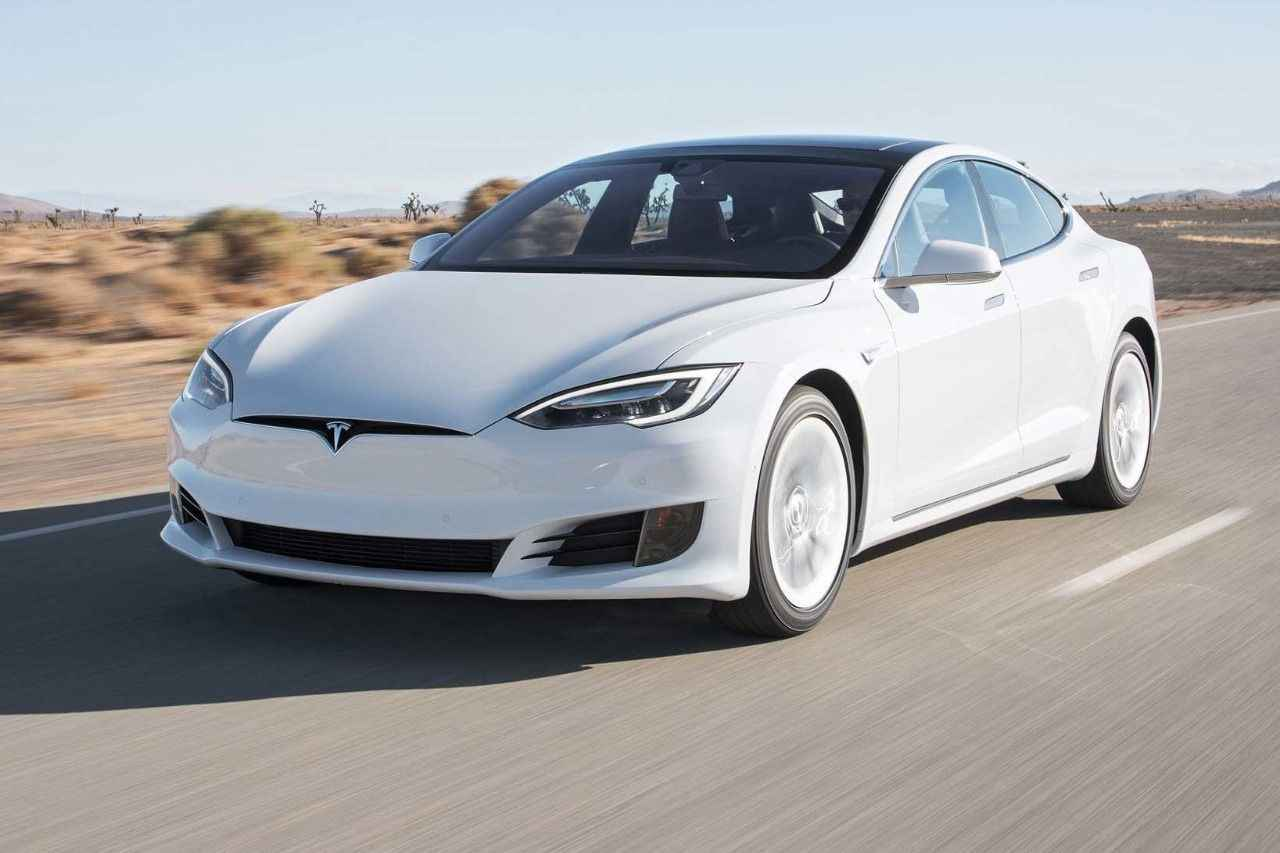
Tesla Shares Rise as Musk Promises Cheaper EVs and Autonomous Ride-Hailing

Tesla shares climbed more than 2% on Thursday after CEO Elon Musk announced plans to launch lower-cost electric vehicles (EVs) in the first half of 2025 and begin testing an autonomous ride-hailing service in June. These commitments helped investors look past a weaker-than-expected fourth quarter, which saw declining revenue and shrinking margins due to delayed model upgrades and rising competition.

Despite Tesla’s first annual decline in deliveries in 2024, the company assured investors that its vehicle business would return to growth in 2025. However, Tesla did not reaffirm Musk’s earlier forecast of a 20-30% sales increase for next year.

Morgan Stanley analysts noted that Tesla is shifting from being a traditional automotive company to a diversified player in AI and robotics. Investors remain optimistic, especially as Musk’s support for U.S. President Donald Trump could lead to more favorable regulatory conditions for Tesla’s robotaxi ambitions.

Musk revealed that Tesla will begin unsupervised testing of its autonomous ride-hailing service in Austin, Texas, though he did not provide specific details on how it would function. The company also did not share pricing details for its upcoming affordable EV models.

If Tesla’s stock gains hold, its market value could rise by approximately $28 billion. The stock surged 62.5% in 2024 and is currently trading at 118 times its 12-month forward earnings, significantly higher than Ford (6.07) and General Motors (4.48).

At least 19 brokerages have raised their price targets for Tesla stock, with a median target of $300, up from $278 at the end of December. Analysts believe that Tesla’s growth will be fueled by Full Self-Driving technology and the introduction of an affordable EV. However, some experts remain cautious about Musk’s timeline for launching robotaxis, citing regulatory challenges, particularly in Europe and China.

Tesla also announced an increase in its capital expenditure forecast, expecting to spend over $11 billion in 2025 and the following two fiscal years.