NASA-SpaceX Capsule Switch Poised to Bring Starliner Astronauts Home Days Sooner

NASA announced on Tuesday that it has swapped out the astronaut capsule initially planned for a routine flight to the International Space Station (ISS), a move that will expedite the return of two astronauts who have been aboard the station for longer than expected. The U.S. space agency decided to use a previously flown SpaceX Crew Dragon capsule, Endeavor, for its Crew-10 mission, replacing a new capsule whose production was delayed.

This change will bring the Crew-10 launch forward to March 12, moving up from the original March 25 date. NASA will still need to conduct a flight readiness assessment of the Endeavor capsule, which has already completed three previous missions.

The change in capsule is linked to the return of astronauts Butch Wilmore and Suni Williams, who have been on the ISS since last summer aboard Boeing’s Starliner capsule, which faced technical issues. Their return was contingent on the arrival of the Crew-10 crew to maintain the station’s normal staffing levels.

This shift in the launch schedule comes after a recent intervention by former President Donald Trump, who urged SpaceX CEO Elon Musk to bring Wilmore and Williams back “as soon as possible.” Trump had criticized President Joe Biden’s administration over the astronauts’ extended mission, despite Biden’s lack of involvement. Musk accepted Trump’s request and echoed similar sentiments, though the mission’s delays were largely attributed to Boeing’s engineering challenges.

While NASA’s statement did not specifically mention the intent to accelerate the return of Wilmore and Williams, the capsule swap will indeed bring them back earlier than initially planned. NASA’s Commercial Crew Program head, Steve Stich, acknowledged SpaceX’s flexibility in handling the unexpected changes.

The decision to switch capsules has also affected other planned SpaceX missions, including the Fram2 private astronaut mission and Axiom’s planned Crew Dragon flight for astronauts from India, Poland, and Hungary. The shift means that SpaceX will have to adjust its planned capsule allocations, impacting these missions.

SpaceX’s Crew Dragon capsule was developed with around $3 billion in funding from NASA’s Commercial Crew Program, which aims to develop private-sector capabilities for spaceflight, reducing costs and increasing competition. In contrast, Boeing’s Starliner capsule, which has struggled with engineering setbacks, is also part of the same program but has faced more significant challenges.
Four Ways DeepSeek Could Change Everything

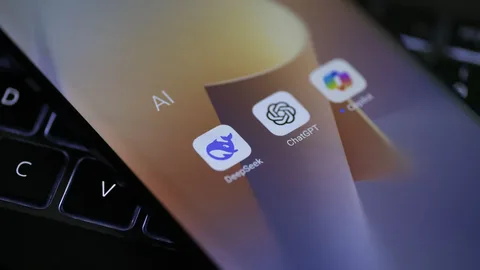
The release of DeepSeek’s highly effective and cost-efficient large language model has made waves in the AI industry, promising far-reaching implications for technology, trade, and U.S.-China economic relations. While the immediate market impact may have been brief, the long-term effects could be profound. Here are four predictions on how DeepSeek might shape the future:

  1. Artificial Intelligence Costs Will Continue to Plummet
    Innovations typically aim to achieve more with less, and AI is no different. Before DeepSeek’s release, the costs of leading AI models had already fallen by about 80% annually over the past two years. DeepSeek has accelerated this trend by making AI models 30 times cheaper compared to market leader OpenAI, through algorithmic advancements and aggressive pricing strategies. This deflationary trend is expected to persist as more research and competition in the AI field drive costs lower.

  2. The AI Economic Pie Will Get Bigger and Be Sliced Differently
    As AI becomes more affordable and accessible, demand is expected to grow, following the concept of Jevons paradox, which suggests that more efficient technology leads to greater consumption of resources. As foundational models become commoditized, the focus will shift to applications, pushing more resources toward the deployment of AI in specific tasks, or “inference,” rather than training models. This shift could spark increased demand for custom-designed chips like XPUs, optimized for specific AI applications, as opposed to traditional GPUs. Nvidia has already observed that demand for inference chips is growing faster than for training chips, signaling a broader industry shift.

  3. U.S. Chip Export Controls Will Deserve Careful Reassessment
    DeepSeek’s success came from utilizing less advanced and fewer chips than its U.S. counterparts, illustrating how innovation can thrive even under constraints. Despite ongoing U.S. export controls that may limit DeepSeek and other Chinese companies in the short term, these restrictions are unlikely to halt their progress. The U.S. risks isolating its chip technologies from China’s market, potentially on a permanent basis. Additionally, the export controls may undermine U.S. efforts to address trade imbalances with China, as the country may opt to focus on developing its own capabilities rather than relying on U.S. imports.

  4. U.S. and Chinese Tech Leaders’ Interests May Align
    While initially concerning to U.S. investors, DeepSeek’s breakthrough and its open-source model have been embraced by many major U.S. tech companies. Cloud platforms like Microsoft, AWS, and Hugging Face are already incorporating models based on DeepSeek’s R-1, noting that cheaper large language models should increase demand for their cloud services, boosting their revenue streams. In the long run, businesses across both countries could benefit from the productivity gains and cost savings that AI applications offer. This could foster potential collaboration between U.S. and Chinese tech leaders, despite existing tensions. The evolution of AI presents a tremendous opportunity for both superpowers to collaborate, especially as they pursue artificial general intelligence, though ongoing geopolitical conflicts could limit this cooperation.

LVMH Media Unit Drops Lawsuit Against Musk-Owned X

LVMH-owned newspaper group Les Echos-Le Parisien has opted not to proceed with a lawsuit against Elon Musk’s platform X, sources revealed on Tuesday. Initially, the group had joined French media in a legal effort to secure compensation for content that was used on the platform without payment. However, according to court officials and four media industry sources, Les Echos-Le Parisien will no longer participate in the case.

The lawsuit, originally announced in November, aimed to pressure X to pay for content from French publications displayed on the platform. Under EU copyright rules, digital platforms are required to compensate news publishers for using their content to generate traffic and revenue. The move had set the stage for a legal battle between LVMH, its CEO Bernard Arnault, and Musk, the world’s richest man.

In recent developments, sources confirmed that Les Echos-Le Parisien informed other media groups that it would not pursue the lawsuit, although no official reason for the change in decision has been provided. A spokesperson for Les Echos-Le Parisien confirmed that previous discussions had taken place, but declined to offer further details.

The French media groups involved, including Le Monde and Le Figaro, proceeded with their legal actions against X. These groups had secured a fast-track court order in May 2024, compelling X to release traffic data and advertising revenue figures to help determine fair compensation for their content. However, Les Echos-Le Parisien was not part of this court filing.

Les Echos is recognized as France’s leading business newspaper, while Le Parisien is a popular general news outlet. In November, CEO Pierre Louette emphasized that X, like any platform benefiting from their content, must adhere to EU copyright laws, stating it was crucial to protect quality information, which is fundamental to democracy.

While Les Echos-Le Parisien has withdrawn from the X lawsuit, it continues to pursue similar actions. Last month, the group joined other newspapers in filing a lawsuit against LinkedIn, Microsoft’s professional networking platform, with no court date yet set.