Rivian Expands Commercial Van Sales to All Fleet Sizes in U.S.

Rivian (RIVN.O) has announced the expansion of its commercial van sales to fleets of all sizes in the United States, marking a shift from its previous exclusive agreement with Amazon (AMZN.O). This move comes more than a year after the electric vehicle maker ended its exclusivity deal with the e-commerce giant.

Known for its R1S SUVs and R1T pickup trucks, Rivian has experienced growing demand for its commercial delivery vans beyond Amazon. The company has been testing its vans with large fleets, which have helped refine the fleet management process and paved the way for broader sales. The van sales, along with the upcoming launch of Rivian’s smaller, more affordable R2 SUVs in 2026, will be crucial for the company’s growth, especially as the overall demand for EVs has softened amid rising borrowing costs.

Rivian’s move to open sales to a wider range of fleets follows the end of its exclusive deal with Amazon in late 2023. However, the company remains committed to fulfilling Amazon’s order of 100,000 vans by 2030, with Amazon currently operating 20,000 Rivian vans in its fleet. U.S. wireless carrier AT&T (T.N) was the first company to purchase Rivian vans after the exclusive deal ended, although details regarding the number of vans and financial terms were not disclosed.

The announcement follows Rivian’s resolution of component shortages that previously hindered production of its vans and other vehicles, alongside its success in cutting costs through renegotiated supplier contracts and process improvements. Rivian exceeded analysts’ expectations for fourth-quarter deliveries and is set to report its fourth-quarter financial results on February 20.
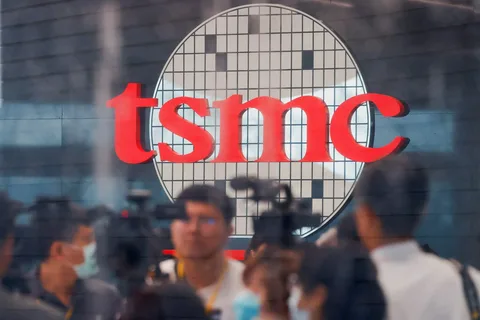
TSMC Revises First-Quarter Revenue Forecast Due to January Earthquake Impact

Taiwan Semiconductor Manufacturing Co. (TSMC), the world’s leading contract chipmaker, revised its first-quarter revenue outlook on Monday, indicating that it would be closer to the lower end of its guidance. This revision comes after the company reported an estimated $161 million loss from the earthquake that struck southern Taiwan in late January.

TSMC, which supplies major companies such as Apple and Nvidia, calculated the losses from the earthquake at approximately NT$5.3 billion ($161 million), accounting for insurance claims. Despite the financial setback, the company clarified that there was no structural damage to its production facilities, and operations have resumed as usual.

The earthquake resulted in the destruction of some semiconductor wafers, affecting production. However, TSMC is actively working to recover the lost output and confirmed that its full-year outlook remains unchanged. The revised first-quarter revenue forecast now expects to fall within the range of $25 billion to $25.8 billion, closer to the lower end of the initial estimate.

Capgemini CEO Criticizes EU’s AI Regulations as Too Restrictive

Aiman Ezzat, CEO of Capgemini, expressed concerns that the European Union has overreached with its artificial intelligence regulations, making it more challenging for global companies to deploy AI in the region. In an interview, Ezzat highlighted the difficulties businesses face as they navigate different AI laws across multiple countries. His remarks come ahead of the AI Action Summit in Paris and amidst growing frustration from the private sector regarding AI regulations.

The EU’s AI Act, which is touted as the world’s most comprehensive AI law, has been criticized by some companies for stifling innovation. Ezzat commented, “In Europe, we went too far and too fast on AI regulation,” emphasizing that the absence of global AI standards has made the regulatory landscape increasingly complex.

Capgemini, one of Europe’s largest IT services firms, partners with major companies like Microsoft, Google Cloud, and Amazon Web Services (AWS), and serves clients such as Heathrow Airport and Deutsche Telekom. At the upcoming summit in Paris, AI policy frameworks are expected to be discussed, and Ezzat anticipates efforts to align global policy on AI.

While the AI Act won’t be fully implemented for several years, concerns have already arisen regarding privacy law violations by AI actors. Several European data protection authorities are reviewing DeepSeek, a Chinese startup that has drawn attention for its ability to compete with U.S. companies at a fraction of the cost. Despite DeepSeek’s open-source model, Ezzat noted its transparency limitations, such as the lack of access to the datasets used to train the models.

Capgemini is in the early stages of exploring the integration of DeepSeek’s models with clients, according to Ezzat.