Giant Ancient Blobs in Earth’s Mantle Could Be Over a Billion Years Old

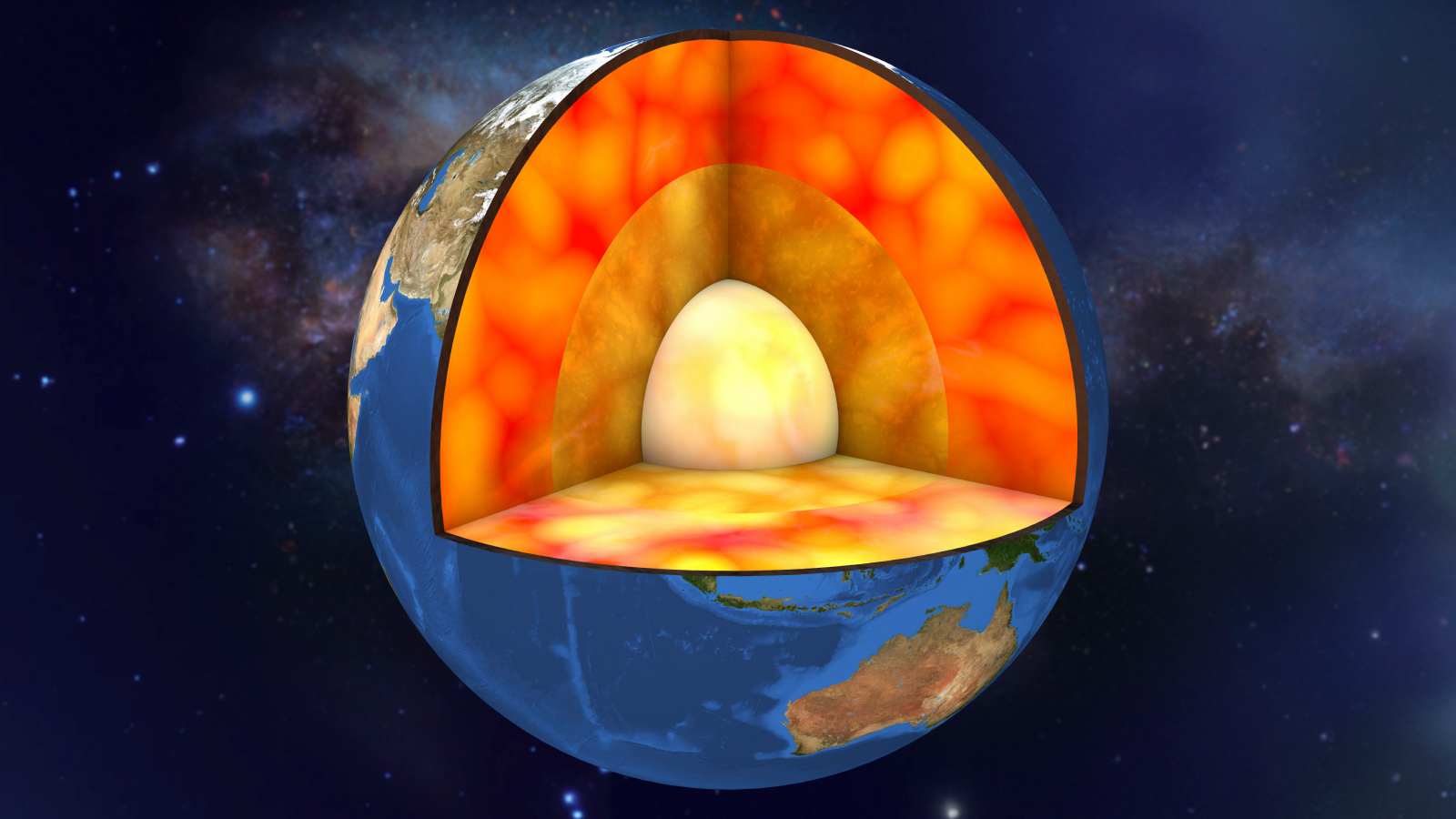
Massive continent-sized structures buried deep within Earth’s mantle may be more than a billion years old, shedding new light on the planet’s internal dynamics. Known as large low-seismic-velocity provinces (LLSVPs), these formations are distinct from the surrounding mantle due to their unique physical and chemical properties. Located at the boundary between the mantle and the outer core, roughly 3,000 kilometers beneath the surface, these enigmatic structures have intrigued scientists for decades. Their ability to slow down seismic waves suggests they are compositionally different, possibly containing denser or hotter materials than the rest of the mantle.

A recent study published in Nature analyzed seismic data from over 100 significant earthquakes to investigate these deep-mantle structures. As reported by Space.com, Utrecht University seismologist Arwen Deuss explained that while it was well known that seismic waves slow down in these regions, an unexpected finding was that the waves also lose less energy than anticipated. This suggests that temperature alone cannot account for the properties of LLSVPs, indicating that other factors—such as mineral composition or internal structure—play a role in their formation and persistence over geological time.

One of the key insights from the study is the role of crystal size in influencing how seismic waves behave within LLSVPs. Computer simulations suggest that seismic energy is affected by the grain boundaries between crystals, with smaller crystals leading to greater energy loss and larger crystals allowing waves to pass with less resistance. Deuss noted that while the surrounding mantle consists of fragmented tectonic plates that have broken down over time, the LLSVPs appear to have remained relatively undisturbed, preserving their larger crystal structures for over a billion years.

These findings offer a new perspective on the deep interior of Earth and its geological evolution. Understanding LLSVPs is crucial for unraveling the processes that shape mantle convection, plate tectonics, and even volcanic activity at the surface. Further research into these massive formations could help explain the role they have played in Earth’s history, including their potential connection to supercontinent cycles and deep-mantle plumes that drive hotspot volcanism.
New Research Indicates Intelligent Life Could Be More Widespread Than Previously Believed

A groundbreaking study challenges the long-held belief that intelligent life is an exceedingly rare phenomenon, proposing instead that human-like evolution could be a natural outcome in the right planetary conditions. The research counters the “hard steps” theory, which suggests that the emergence of complex life is an unlikely event due to a series of improbable evolutionary leaps. Instead, the study’s findings argue that life evolves in response to changes in a planet’s environment, making the development of intelligent civilizations more probable than previously thought. This shift in perspective comes from a team of astrophysicists and geobiologists who emphasize the critical role of Earth’s environmental factors in shaping the timeline of complex life.

Published in Science Advances, the study posits that the likelihood of intelligent life evolving on other planets is higher than traditionally believed. Led by Dan Mills, a postdoctoral researcher at The University of Munich, the research suggests that key evolutionary steps are not random occurrences but are driven by planetary changes. Mills explained that factors such as atmospheric oxygen levels, nutrient availability, and oceanic conditions were crucial in determining when complex organisms could thrive. He argued that Earth’s history has been shaped by a series of “windows of habitability” that allowed life to progress in a predictable manner, rather than by chance.

This new perspective represents a major departure from the “hard steps” model, introduced by physicist Brandon Carter in 1983, which has dominated discussions on the rarity of intelligent life. According to Carter’s theory, intelligent beings like humans are extremely rare because Earth’s evolutionary timeline is relatively long compared to the lifespan of our Sun. However, Mills and co-author Jennifer Macalady, a Professor of Geosciences at Pennsylvania State University, challenge this view. They argue that life evolves on a planetary timescale rather than one governed by astrophysical events, suggesting that geological factors, not astronomical ones, should be the focus when considering the potential for life on other worlds.

This shift in perspective opens up new possibilities for the search for extraterrestrial life. Instead of relying on complex astronomical models, scientists could focus more on the environmental conditions that would allow for life to evolve. By understanding how life develops in response to planetary changes, researchers can refine their approach to identifying habitable exoplanets and better assess the potential for intelligent civilizations beyond Earth. The study has profound implications for astrobiology and may reshape our search for life in the cosmos.

Curiosity Rover Discovers Signs of Ancient Liquid Water on Mars, Redefining Habitability

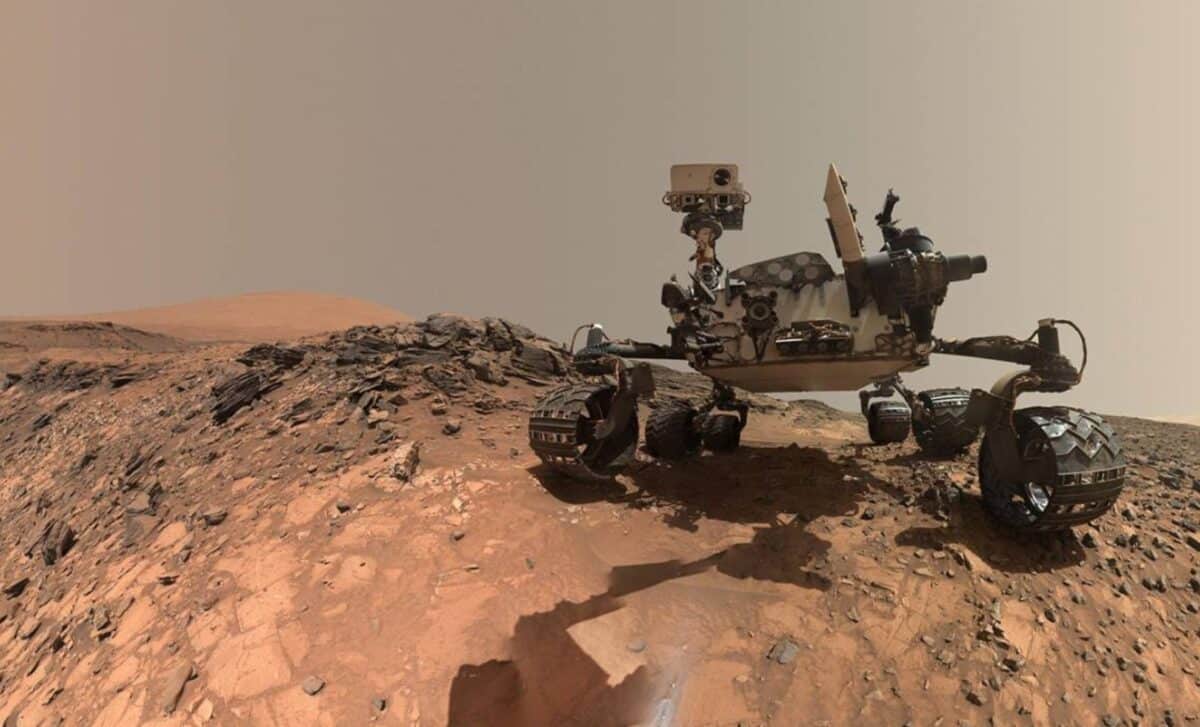
NASA’s Curiosity rover has uncovered new evidence suggesting that liquid water once flowed openly on Mars, extending the planet’s window of habitability. The rover captured images of distinct ripple patterns in Gale Crater, indicating that Martian lakes were not always trapped beneath ice but were exposed to the atmosphere. This discovery challenges previous theories that water on Mars was primarily subterranean or locked in ice sheets, offering fresh insights into the planet’s ancient climate and its potential to support microbial life.

The study, published in Science Advances, details how these formations resemble wave ripples commonly found in lakebeds on Earth. Curiosity documented the patterns in two different regions of Gale Crater, where it has been exploring since 2012. The structures measure about six millimeters in height and are spaced four to five centimeters apart, suggesting that they were shaped by interactions between wind and water in a shallow Martian lake. This evidence indicates that Mars once had standing bodies of water that were not completely frozen, reshaping scientists’ understanding of its hydrological history.

Claire Mondro, a sedimentologist at Caltech and the study’s lead author, emphasized that the ripples could only have formed in a lake where liquid water was exposed to the atmosphere and influenced by wind. This suggests that Mars once had a denser atmosphere capable of sustaining surface water for longer than previously thought. The presence of open water could have provided more stable conditions for potential microbial life, reinforcing the idea that ancient Mars was more Earth-like than once believed.

These findings add to growing evidence that Mars underwent multiple climate shifts in its past, transitioning between cold, icy periods and warmer, wetter phases. Understanding these changes is crucial for future exploration missions, as it may help scientists identify regions where signs of past life could be preserved. As Curiosity continues its mission, researchers hope to uncover additional clues about the Red Planet’s evolving environment and its potential to have once supported life.