Nvidia to Launch Quantum Computing Lab in Boston in Partnership with Top Universities

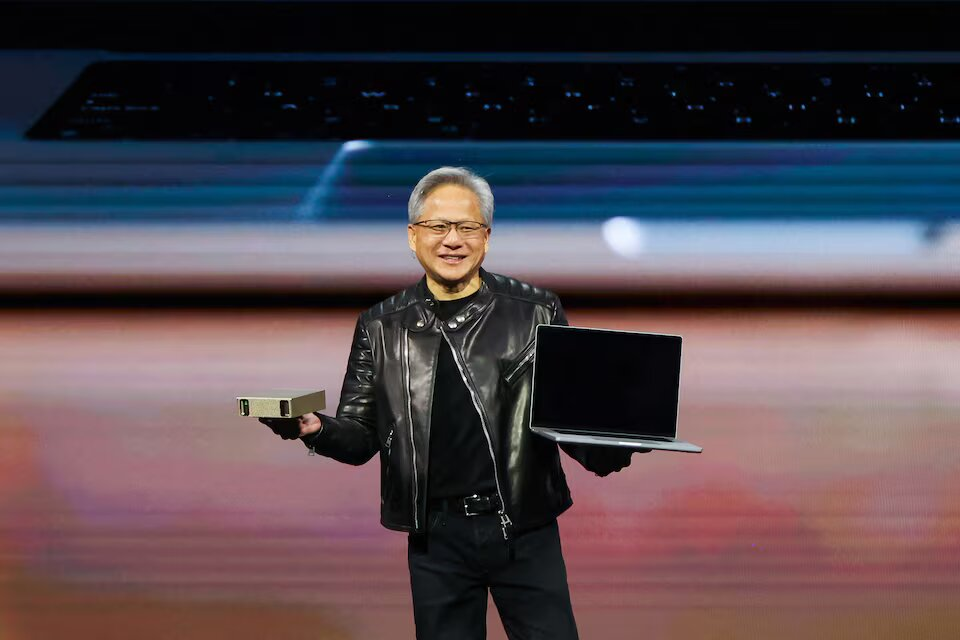
Nvidia has announced plans to open a quantum computing research lab in Boston, aiming to collaborate with leading academic institutions such as Harvard University and the Massachusetts Institute of Technology (MIT). CEO Jensen Huang revealed the initiative during Nvidia’s annual software developer conference in San Jose, California, where the company held a dedicated day for quantum computing discussions.

The new lab, named the Nvidia Accelerated Quantum Research Center (NVAQC), will foster partnerships with prominent quantum computing firms, including Quantinuum, Quantum Machines, and QuEra Computing. The center is set to begin operations later this year. Huang’s announcement followed his earlier statement in January, where he suggested that practical quantum computers could still be two decades away—comments he sought to clarify during the event.

The quantum computing industry, which is still in its early stages, sees companies like Quantinuum and IonQ exploring commercial applications of quantum technology. Even though some quantum machines may eventually outperform Nvidia’s renowned graphics processing units (GPUs) in tasks like simulating atomic interactions, industry leaders emphasized that quantum computers are unlikely to replace classical systems. Instead, quantum and classical computing will likely work in tandem.

Huang highlighted the continued importance of Nvidia’s GPUs in current computational tasks, with quantum machines complementing traditional systems, not replacing them. He expressed optimism about the future of quantum computing, indicating that Nvidia’s involvement would further accelerate the industry’s growth.
Perplexity AI in Talks to Raise Funds at $18 Billion Valuation Amid AI Boom

Perplexity AI, an emerging player in the AI search tool market, is in discussions to raise funds at a new valuation of $18 billion, a significant increase from its previous $9 billion valuation in November. The startup, which is backed by Nvidia, Amazon’s Jeff Bezos, and Japan’s SoftBank Group, is capitalizing on the surging demand for AI-driven search tools.

The company aims to raise between $500 million and $1 billion in this funding round, sources familiar with the matter told Reuters. The heightened interest in AI-powered chatbots and virtual agents has fueled investor enthusiasm for startups like Perplexity AI, which competes with established players such as Google’s Gemini and Microsoft-backed OpenAI’s ChatGPT.

Perplexity has been enhancing its platform to improve its competitive edge. Recently, it introduced a new web browser, Comet, which integrates AI to understand complex queries, perform tasks, and make decisions. Its “Deep Research” feature allows users to conduct in-depth research by searching through numerous sources, offering a more comprehensive overview on various topics.

Despite facing criticism from media outlets like News Corp-owned Forbes and Wired over accusations of plagiarism, Perplexity has forged partnerships with publishers to address these concerns.

The ongoing fundraising talks underscore the growing potential of AI startups, as companies like OpenAI also continue to dominate the sector with massive valuations, such as their $157 billion valuation following a $6.6 billion funding round in October.

Meituan’s Revenue in Line with Estimates Amid Sluggish Consumption and Rising Competition

Meituan, China’s largest food delivery company, posted fourth-quarter revenue that met analysts’ expectations, despite the ongoing sluggishness in Chinese consumption. The company reported revenue of 88.5 billion yuan ($12.21 billion) for the three months ending December, just above analysts’ forecast of 87.7 billion yuan, according to LSEG data.

For the full year, Meituan’s revenue reached 337.59 billion yuan, a significant increase from 276.75 billion yuan in 2023. Its net profit surged to 35.81 billion yuan, up from 13.86 billion yuan the previous year, signaling robust growth despite broader economic challenges.

The company highlighted its strategic focus on expanding investments in cutting-edge technologies, including artificial intelligence, unmanned aerial delivery, and autonomous delivery vehicles. These initiatives are aimed at strengthening its position in the highly competitive food delivery market.

Meituan has benefited from an increased focus on low-cost and discounted products, catering to price-conscious shoppers. However, competition in the sector is heating up, particularly with e-commerce giant JD.com entering the food delivery space in February. JD.com announced it would provide full-time delivery riders with social insurance and housing fund contributions under China’s social security system, prompting Meituan to follow suit. Meituan plans to extend similar benefits to its full-time and stable part-time riders starting in the second quarter of 2025.

“As the industry leader, we are also dedicated to fulfilling our social responsibilities by creating employment opportunities and improving courier welfare,” Meituan stated in its earnings report.