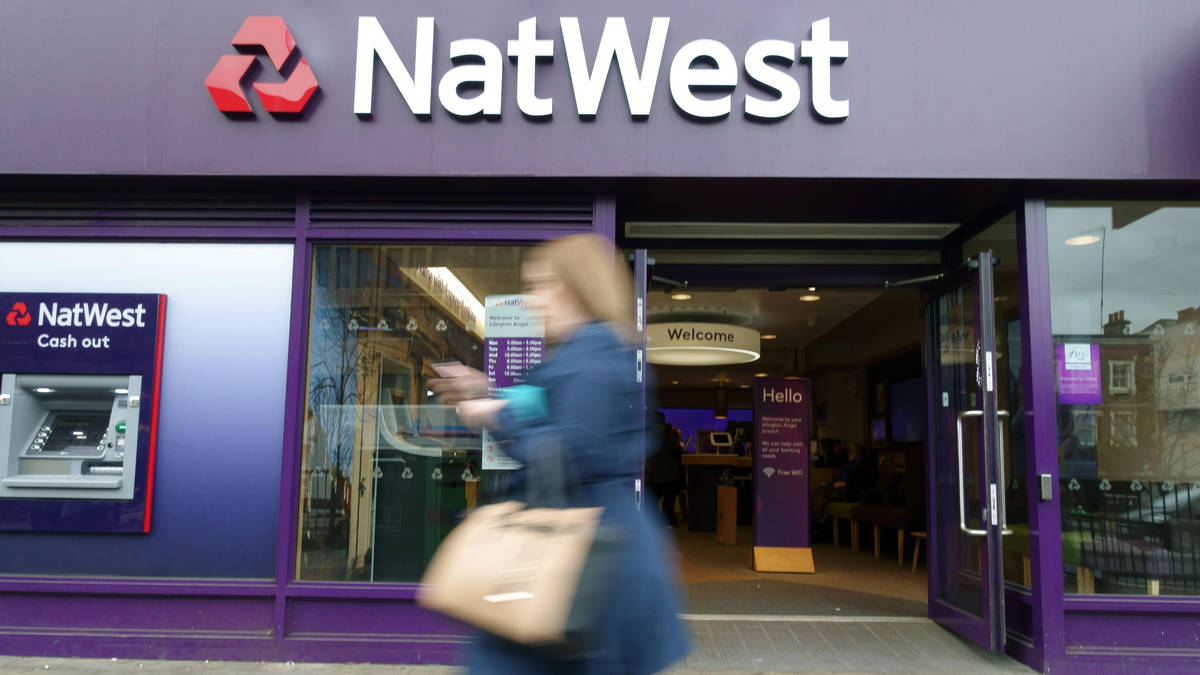
NatWest Partners with OpenAI to Enhance Digital Banking Experience

NatWest has teamed up with OpenAI in a groundbreaking collaboration aimed at enhancing its digital assistants and customer support services through advanced artificial intelligence. This marks the first such partnership between a UK-based bank and OpenAI. The collaboration is part of NatWest’s strategy to improve customer experience, reduce operational costs, and combat financial fraud in the banking sector.

Under the agreement, NatWest will gain access to OpenAI’s full range of products, as well as early access to upcoming AI tools and dedicated consultancy. One of the primary areas of focus is improving NatWest’s customer-facing chatbot, Cora, and its internal virtual assistant, AskArchie. The bank hopes to leverage AI to encourage customers to report suspected fraud through Cora, reducing the heavy reliance on phone calls, and speeding up the process of securing vulnerable accounts.

In the first half of 2024 alone, UK payment fraud amounted to over £570 million ($740 million), with scammers finding increasingly sophisticated ways to trap victims. By enhancing Cora’s fraud reporting capabilities, NatWest aims to improve response times and allow call handlers to focus on other customer needs.

The bank also envisions that AI-powered digital assistants will help customers better manage their finances, ultimately contributing to more informed financial decisions. According to NatWest, the introduction of generative AI into Cora has led to a 150% increase in customer satisfaction and reduced the need for human intervention in many cases.

With around 80% of its retail customers using digital banking exclusively, NatWest sees continuous innovation in AI-driven services as a key part of its future strategy.


Nvidia CEO Predicts Humanoid Robot Revolution Within Five Years

Nvidia CEO Jensen Huang has predicted that humanoid robots will become widely used in manufacturing within the next few years, much sooner than many expect. Speaking at the company’s annual developer conference in San Jose, California, Huang unveiled new software tools designed to help robots navigate real-world environments more effectively.

In a conversation with journalists after his keynote address, Huang emphasized that the widespread presence of humanoid robots is not a long-term vision but an imminent reality. He suggested that manufacturing will be the first industry to adopt these robots due to its structured environment and well-defined tasks, making automation more feasible.

Factories provide a controlled setting where humanoid robots can be integrated with minimal disruption, Huang explained. He also highlighted the economic advantages, noting that the cost of renting a humanoid robot could be around $100,000, making them a viable alternative to human labor in certain roles.

Nvidia’s advancements in AI and robotics continue to drive innovation in automation, with the company at the forefront of enabling next-generation robotic systems.

Accenture Faces Federal Contract Slowdown Amid U.S. Spending Cuts

Accenture reported delays and cancellations of federal contracts due to the Trump administration’s cost-cutting measures, leading to a more than 6% drop in its share price on Thursday. The administration’s Department of Government Efficiency (DOGE), led by Elon Musk, has been aggressively reducing spending and shrinking the federal workforce, impacting consulting firms like Accenture.

The U.S. General Services Administration has directed agencies to review and cancel non-essential contracts, slowing down new procurement actions and negatively affecting Accenture’s sales and revenue. The company’s federal services unit, which made up 8% of its total revenue in 2024, has been hit particularly hard by these measures.

DOGE’s aggressive policies—including rapid workforce reductions and contract cancellations—have sparked criticism, lawsuits, and uncertainty about the long-term impact on government operations. Meanwhile, President Trump is set to sign an executive order to shut down the Department of Education, a move that has already affected IBM, a key vendor for the department, causing its shares to drop 4%.

Accenture’s new bookings, a key indicator of future revenue, fell 3% to $20.9 billion in Q2. Its consulting services segment, which contributes 59% of revenue, posted $8.3 billion, missing analyst expectations of $8.54 billion. However, the company slightly raised its annual revenue growth forecast to 5%-7%, up from 4%-7%.