Tesla Chair Robyn Denholm Steps Down as Operating Partner at Blackbird VC

Tesla chair Robyn Denholm has stepped down from her role as operating partner at Blackbird VC, Australia’s largest venture capital fund, though she will remain a board member and adviser to the firm, according to sources familiar with the situation. Denholm, who has held a significant role in the firm since January 2021, had been involved in advising later-stage startups on operational matters, such as designing operating systems, hiring senior teams, and managing partnerships.

Denholm, based in Sydney, also stepped down as the chair of the Tech Council of Australia on Wednesday, a position she had held since the group’s founding in 2021. She will continue to serve as a board member there as well.

A spokesperson for Tesla did not immediately respond to a request for comment. Similarly, Blackbird VC confirmed that Denholm transitioned into a board member role in 2024 but did not provide further details about the reasons behind the change. Denholm’s LinkedIn profile and the Tesla website still listed her as an operating partner as of Friday.

In addition to her role at Blackbird, Denholm has served as the chair of Tesla since 2018. The company has faced political scrutiny, particularly related to CEO Elon Musk‘s involvement with the administration of U.S. President Donald Trump. Denholm was also part of a Tesla board settlement worth up to $919 million, addressing allegations of overcompensation.
Stellantis to Provide Two EV Vans to Iveco for European Market Expansion

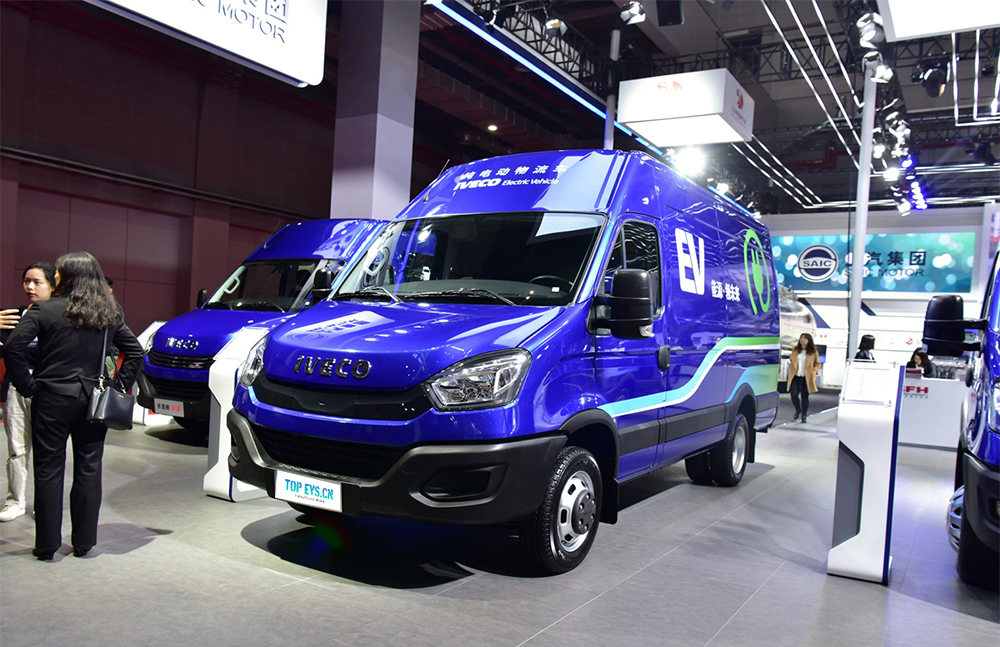
Stellantis and Iveco announced a new agreement on Friday in which Stellantis will supply Iveco with two fully-electric (EV) van models, marking a significant step in Iveco’s expansion of its electric vehicle lineup in Europe. The vans, produced by Stellantis, are expected to go on sale by mid-2026, under a ten-year supply agreement. Financial terms of the deal were not disclosed.

The new EV vans will be based on Stellantis’ mid- and large-sized EV van platforms, and will be manufactured at Stellantis’ plants in Atessa (Italy), Gliwice (Poland), and Hordain (France). Once produced, the vans will be distributed across Europe, including the United Kingdom, through Iveco’s established channels.

The two upcoming vans, with gross vehicle weights ranging from 2.8 to 3.1 tons and 3.5 to 4.25 tons, are designed to complement Iveco’s existing battery electric vehicle (BEV) offerings. These vans will help extend the brand’s footprint in the lighter weight segment of the European EV market.

This new partnership follows a similar agreement that Iveco reached last year with Hyundai Motor for the supply of a mid-sized electric van in the 2.5-3.5 ton weight range, further expanding its EV portfolio. Iveco Group, controlled by Exor, the investment arm of Italy’s Agnelli family, is also the largest shareholder in Stellantis.

Intel Shares Surge 14% Following Appointment of New CEO Lip-Bu Tan

Shares of Intel surged nearly 14% on Thursday, following the announcement that Lip-Bu Tan, former board member, has been appointed as the new CEO. Tan, who had left the company in August due to differences over its direction, is now tasked with revitalizing the chipmaker, which has faced several years of underperformance in the market.

Intel has struggled to capitalize on the artificial intelligence-driven semiconductor boom, having lost market share in the data center and PC markets while facing significant losses in its manufacturing division. Over the past five years, the company’s stock has dropped about 60%, underperforming the broader market, with the Nasdaq and S&P 500 more than doubling in that period.

Analysts are optimistic about Tan’s appointment, citing his extensive relationships within the chip ecosystem, which could help bring customers to Intel’s contract manufacturing business. TD Cowen analysts noted that Tan’s deep connections in the industry made his appointment the best possible option for stakeholders. Tan will officially take over next week, just three months after Intel ousted Pat Gelsinger as CEO.

Tan had been on Intel’s board for two years, where he helped strategize the company’s turnaround. His departure in August was due to disagreements over workforce size and company culture, but his return brings renewed hope. Despite recent skepticism about Intel’s future, analysts expect Tan to continue the approach set by Gelsinger, focusing on keeping chip design and manufacturing together. Tan also expressed a goal to make Intel a leading foundry, a term used for companies that contract out chip manufacturing.

Despite his strong track record at Cadence Design Systems, where he led a decade of growth, analysts caution that a turnaround at Intel will take time. The company’s market value has struggled to surpass $100 billion for the first time in three decades, and Intel’s AI chip business has failed to meet sales targets. However, analysts remain hopeful, with some believing that Tan’s previous tenure at Intel will provide him with a deep understanding of the company’s challenges.

Still, analysts remain divided, with many holding a “hold” rating on Intel’s stock, as the company continues to face challenges, including stiff competition from rivals like Broadcom and TSMC. Experts like Dan Morgan, senior portfolio manager at Synovus Trust, believe Intel may still require a strong partnership to successfully navigate its foundry business and return to profitability.