Brave Software Sues News Corp Over Copyright Dispute

In a significant legal battle, Brave Software has filed a lawsuit against News Corp in response to a cease-and-desist letter sent by the media conglomerate. The letter warned Brave that it faced potential litigation for allegedly “scraping” copyrighted content from News Corp’s websites, including those of The Wall Street Journal and New York Post. The suit was filed on Wednesday night in San Francisco federal court.

Brave, the company behind the Brave Search engine, argues that its actions are covered under the “fair use” doctrine, asserting that indexing website content is a necessary practice for search engines to operate. The company also contends that News Corp’s actions could undermine advancements in generative AI, claiming that chatbots such as ChatGPT and Google’s Gemini rely on search engine responses, which could be impacted by this dispute.

According to Brave, its market share is a fraction of the search industry, with its search engine holding less than 1% of the market, while Google dominates with nearly 90%, followed by Microsoft’s Bing. Brave accuses News Corp and its partners of attempting to “bully” the company and further cementing the already high barriers to entry in the search engine market.

In a public statement, Robert Thomson, CEO of News Corp, rejected Brave’s claims, labeling the company’s actions as “piratical, parasitical practices” disguised as traditional search. He emphasized that the unauthorized use and sale of News Corp’s copyrighted content to AI engines and other clients is not fair use, but a blatant violation of intellectual property rights.

This legal battle adds to the growing tensions between publishers and tech companies over the use of copyrighted content in support of AI technologies. News Corp has previously filed lawsuits against other companies, including Perplexity AI, for alleged unauthorized copying of its articles.

In its lawsuit, Brave is seeking a declaration from the court that its use of copyrighted News Corp content for search indexing purposes is not a form of infringement. The case highlights the broader conflict between content creators, who argue for protection of their intellectual property, and technology companies, which push for more access to such content to power AI developments.

Bitcoin’s Bear Market Hits New Investors Hard

Bitcoin’s recent plunge has left many newcomers feeling the pinch, especially those who entered the market during its peak. The largest cryptocurrency, which soared past $100,000 just weeks after the 2024 U.S. presidential election, has since entered a bear market. As of now, Bitcoin is trading at around $80,000, down nearly 25% from its January high. This sharp decline comes amid a global stock sell-off and concerns about U.S. economic policies.

Many of the newer investors, especially those who purchased Bitcoin at its peak and used borrowed money, are now experiencing significant losses. Over the past three months, approximately 20 million new Bitcoin addresses have been created, making up about 1.5% of all Bitcoin addresses. However, the spent output profit ratio, which indicates the ratio between the prices at which Bitcoin is bought and sold, has dropped to 0.95, the lowest level in over a year. This suggests that many of the recent buyers are already locking in substantial losses.

Bitcoin reached an all-time high of $109,071 in January 2024, but has since lost most of its gains. Analysts point to factors such as concerns about U.S. tariffs, the health of the global economy, and a tech sell-off as reasons for the market’s decline. Analysts like Kevin Dede from H.C. Wainwright also express surprise at the $80,000 price level, with many anticipating further downturns.

In addition to the drop in Bitcoin’s price, traders with leveraged positions are facing severe pain. Bitfinex analysts report that daily realized losses for this group have exceeded $800 million, with some of the largest losses occurring on February 28 and March 4. Moreover, investment products tracking digital assets have experienced consistent outflows for four consecutive weeks, with total assets under management dropping to $142 billion, their lowest since mid-November 2024.

U.S. spot Bitcoin ETFs also saw a massive outflow of about $1.1 billion on February 25, marking the largest single-day outflow since their launch. While past corrections have led to calmer periods, Bitcoin’s future seems linked to broader market conditions. Volatility is at a high, with Bitcoin’s implied volatility spiking to 69% and Ether’s volatility rising to 90%. These numbers suggest that investors are bracing for more turbulence in the near term.

Some experts predict that this downturn may be temporary, similar to the market corrections seen in late 2018, and that Bitcoin may ultimately reach higher highs in the future.

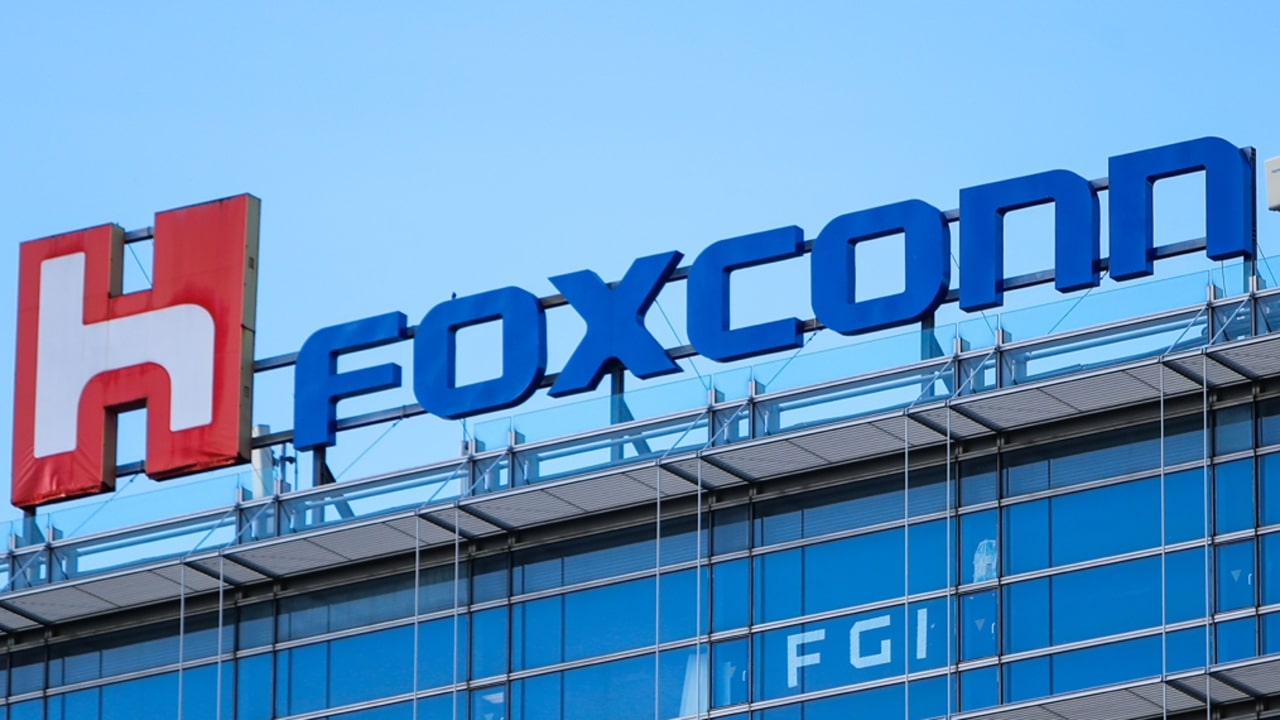
Foxconn to Report Higher Q4 Profit Driven by AI Server Demand

Foxconn, the world’s largest contract electronics manufacturer, is expected to announce on Friday a 2.35% rise in its fourth-quarter profit, driven by robust demand for artificial intelligence (AI) servers. Net profit for the period from October to December is anticipated to reach T$54.4 billion ($1.65 billion), according to a consensus estimate of 15 analysts, up from T$53.15 billion in the same period last year.

In January, Foxconn reported a 15.2% increase in fourth-quarter revenue, reaching a record level for that quarter, with much of the growth attributed to AI server sales. The company, officially known as Hon Hai Precision Industry, has forecast stronger-than-average performance for the first quarter, predicting substantial year-over-year growth, though it has refrained from offering specific financial guidance.

However, the company’s outlook remains clouded by the ongoing global trade war, which poses challenges for Foxconn as it operates major manufacturing facilities in China and Mexico—two countries that have faced increased import tariffs from the U.S. under President Donald Trump.

In addition, Apple announced last month that it would collaborate with Foxconn to build a 250,000-square-foot facility in Houston, which will assemble servers designed for data centers that power Apple Intelligence.

Despite these gains, Foxconn’s shares have dropped 8.7% this year, largely due to concerns over trade policies and the effects of U.S. tariffs.

The company’s earnings call will take place at 3 p.m. in Taipei (0700 GMT) on Friday, during which it will provide an update on its outlook for the remainder of the year.