AI to Fuel Record Year for M&A in U.S. Power Sector

Dealmakers anticipate that 2025 will be a record year for mergers and acquisitions (M&A) in the U.S. power sector, driven by the surging demand for electricity to support artificial intelligence (AI). This growing appetite for power generation and infrastructure assets is fueled by the massive energy needs of data centers that power AI technologies.

According to sources in the industry and at the CERAWeek energy conference in Houston, the first two months of 2025 have already seen significant deal-making activity, with 27 power deals valued at $36.4 billion. A standout transaction was Constellation Energy’s acquisition of Calpine for $16.4 billion. This surge in deal volume contrasts sharply with the broader M&A market, which has experienced its weakest start since the global financial crisis.

Power sector deal flow is expected to increase as companies race to meet growing electricity consumption. Private equity firms and institutional investors, such as KKR and PSP Investments, are actively pursuing investments, with KKR and PSP’s $2.8 billion acquisition of a 20% stake in American Electric Power’s (AEP) transmission network as one of the major recent deals. Strong electricity price increases have boosted the shares of power companies, enabling larger transactions.

The influx of capital into energy investments is substantial, with $334 billion in dry powder (capital raised but not yet deployed) by the end of 2024. Much of this capital is earmarked for investments in power generation, infrastructure technologies, and renewable energy projects. These funds are also fueling the increasing trend of taking public power companies private, as seen in the $2.2 billion sale of Altus Power to TPG’s climate investment arm.

The demand for power infrastructure has also driven utilities to divest non-core business units. In early 2025, Eversource Energy agreed to sell its Aquarion Water unit for $2.4 billion, while National Grid announced the sale of its U.S. renewables business to Brookfield Asset Management.

Despite challenges, such as rising costs for essential components like steel, aluminum, and copper, and uncertainties around tax credits for renewable projects, the deal-making momentum in the power sector is expected to continue. Market volatility, including potential impacts from Trump administration policies and immigration reform, will likely make existing power assets even more valuable, spurring more deals.

Ecarx in Talks with Volkswagen to Develop Smart Cars for Europe, US

Ecarx, a Chinese digital cockpit system developer, is in discussions with Volkswagen to integrate its advanced technologies into smart cars for developed markets, including Europe and the United States, according to Ecarx’s CEO, Shen Ziyu. The two companies are looking to extend their current partnership, which already includes collaboration in Brazil and India. In these markets, Ecarx’s Antora 1000 digital cockpit system—featuring proprietary chips, voice recognition, and navigation services—powers Volkswagen’s smart car offerings.

The expanded partnership would bring Ecarx’s products into Skoda-branded cars sold in Europe. Shen confirmed discussions about entering the U.S. market, although the current deal with Volkswagen does not yet include this scope. However, Ecarx’s technologies are already present in Volvo and Lotus vehicles in the U.S., as both brands are owned by Geely, the parent company of Ecarx.

A Volkswagen spokesperson clarified that the cooperation with Ecarx is currently limited to providing an infotainment system for internal combustion engine vehicles sold in Brazil and India, with no other technical involvement at this stage. Meanwhile, Skoda declined to comment on the ongoing discussions.

This move highlights growing interest among Western automakers in leveraging Chinese expertise in smart driving technologies. As traditional car sales have been hit by declining demand in China, companies like Volkswagen are turning to Chinese suppliers to stay competitive in the global market. Mercedes-Benz recently made headlines by collaborating with Hesai, a Chinese firm, to equip its vehicles with lidar sensors, marking the first instance of a foreign automaker using Chinese technology for models sold outside China.

Shen emphasized that it took over a year for Volkswagen to choose Ecarx as its smart technology supplier, with other candidates including LG and Samsung from South Korea, as well as Chinese rival Desay SV. He also noted that the development of software for consumer electronics, including semiconductors, is largely still based in Asia, which has contributed to challenges in software development in Europe.

Ecarx, which generates 70% of its revenue from Geely and its affiliated brands, aims to reduce this reliance to under 50% by 2028. The company plans to diversify further by growing its international revenue, with a goal of generating half of its income from overseas by 2030. To support this, Ecarx has been building R&D teams outside of China to mitigate concerns about geopolitical risks tied to Chinese technologies.

Shen also emphasized that China’s competitive cost structure can help strengthen the company’s supply chain globally. The shorter product cycles typically seen in China—lasting just three years—can be extended to 10 or 15 years in international markets, according to Shen.

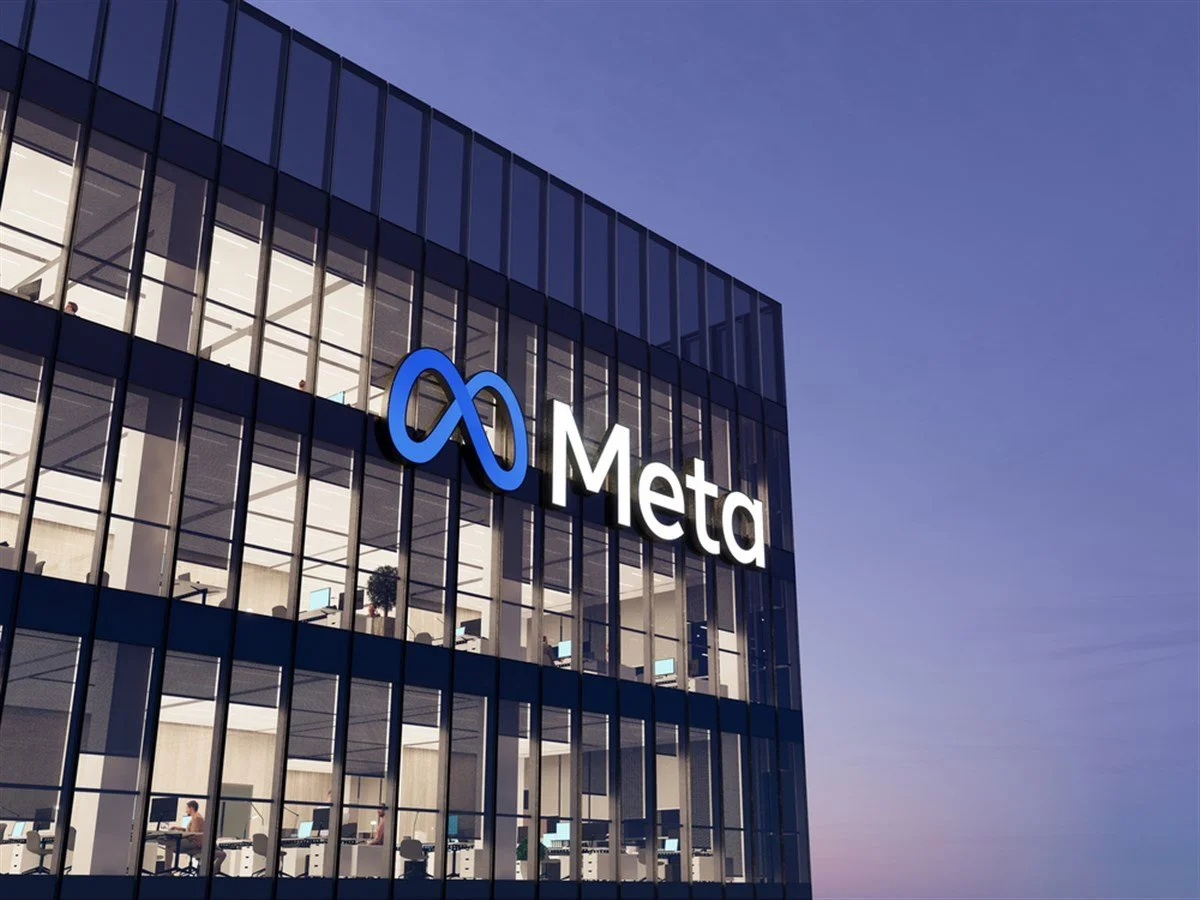
Meta Tests Its First In-House AI Training Chip

Meta, the parent company of Facebook, has initiated testing of its first in-house chip designed specifically for training artificial intelligence (AI) systems. This development marks a significant step in Meta’s plan to reduce its reliance on external chip suppliers like Nvidia and move toward producing its own custom silicon. Sources told Reuters that Meta has begun a small deployment of the chip and plans to expand production if the test proves successful.

Meta’s push to develop in-house chips is part of a broader strategy to reduce the high infrastructure costs associated with its AI projects. The company has forecast total 2025 expenses between $114 billion and $119 billion, including up to $65 billion in capital expenditure largely driven by investments in AI infrastructure.

The new chip is a dedicated accelerator, meaning it is built specifically for AI tasks, making it more power-efficient compared to graphics processing units (GPUs) typically used for AI workloads. Meta is collaborating with Taiwan-based TSMC to produce the chip. The initial design, known as the “tape-out,” has been completed, a crucial milestone in chip development. While tape-out is expensive, costing tens of millions of dollars, it is an essential part of the process to test the chip’s functionality.

Meta has experienced setbacks in its Meta Training and Inference Accelerator (MTIA) series in the past, even scrapping one chip after its initial tests failed. However, last year, Meta began using a MTIA inference chip for content recommendation systems on platforms like Facebook and Instagram. This progress has encouraged Meta to pursue further development of custom chips, aiming to use them for both training and inference of AI models, including generative AI products like Meta AI.

Meta plans to start using its own chips by 2026 for training purposes, aiming to reduce costs associated with AI model training. Chris Cox, Meta’s Chief Product Officer, discussed the company’s phased approach, noting that while progress has been slow, the success of the first-generation inference chip for recommendations has been a significant achievement. Despite the setbacks in developing custom chips, Meta continues to rely heavily on Nvidia’s GPUs for its AI needs, making it one of Nvidia’s largest customers.

The broader AI industry has raised questions about the effectiveness of scaling up large language models with ever more data and computing power. Chinese startup DeepSeek has introduced new, more efficient AI models that rely more heavily on inference rather than the computationally expensive training process. This has sparked concerns about the future value of GPUs like those from Nvidia, which have faced significant market volatility this year.