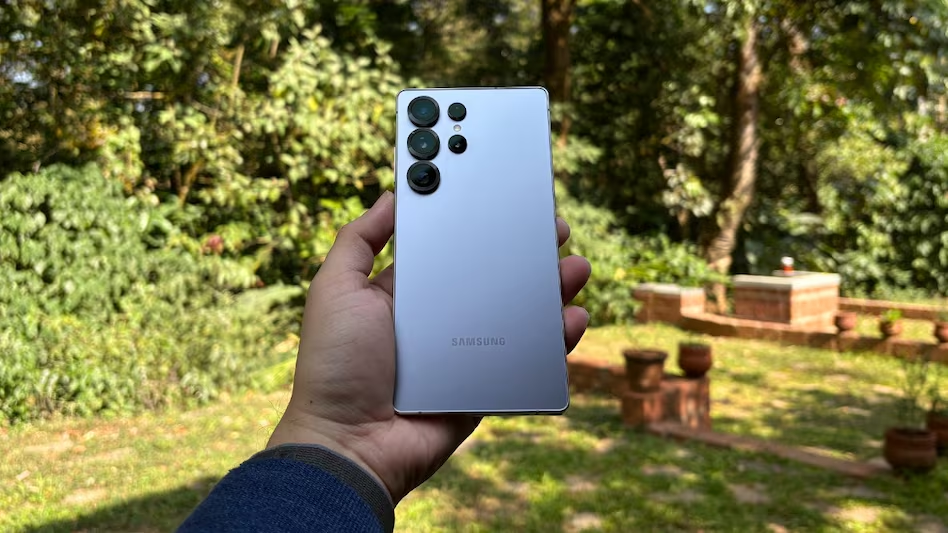
Samsung Galaxy S25 Ultra Now Available with Up to Rs. 12,000 Discount in India for a Limited Time

The Samsung Galaxy S25 Ultra, which was launched earlier this year at the Galaxy Unpacked event in India, is now available at a reduced price for a limited time. Originally priced at Rs. 1,29,999, the flagship device is now offered with an instant cashback of up to Rs. 12,000, along with other enticing offers. Customers can enjoy additional benefits such as exchange discounts and no-cost EMI options, making it an attractive deal for those looking to upgrade their smartphones.

For a limited time, Samsung is offering a significant discount on the Titanium Silverblue variant of the Galaxy S25 Ultra. By applying an instant bank discount worth Rs. 11,000 or an exchange bonus of Rs. 12,000, the price of the device effectively drops to Rs. 1,17,999. This limited-time offer is valid until April 30, providing a great opportunity for buyers to grab the device at a lower price. Additionally, customers can take advantage of extra welcome benefits worth Rs. 4,000 when purchasing through Samsung’s Shop App.

The Galaxy S25 Ultra offers a premium experience, featuring a 6.9-inch Dynamic AMOLED 2X display with a resolution of 1,400 x 3,120 pixels and a smooth 120Hz refresh rate. The phone is powered by the custom Snapdragon 8 Elite for Galaxy chip, paired with 12GB of RAM and up to 1TB of internal storage. Running Android 15 with One UI 7, the device is loaded with a suite of Galaxy AI features designed to enhance performance and usability.

In terms of photography, the Galaxy S25 Ultra excels with a quad-camera setup. It includes a 200-megapixel main camera, a 50-megapixel ultrawide lens, two 50-megapixel telephoto cameras, and a 10-megapixel telephoto camera, enabling users to capture stunning photos from a variety of perspectives. For selfies, the device is equipped with a 12-megapixel front-facing camera. The phone is powered by a 5,000mAh battery, with support for 45W wired charging and 15W wireless charging, ensuring long-lasting power and quick recharges.

Google Chrome Patches 23-Year-Old Bug That Exposed Users’ Browsing History

Google Chrome is finally addressing a longstanding privacy vulnerability that has existed for over two decades. This bug allowed malicious websites to detect whether users had previously visited certain links by exploiting how browsers visually indicate visited links. Although some browsers implemented workarounds over the years, Google’s upcoming update introduces a more comprehensive fix. The patch is set to arrive with Chrome version 136, which is expected to begin rolling out later this month.

The root of the issue lies in the CSS :visited selector—a styling rule that changes the appearance of hyperlinks a user has already clicked on. Typically, visited links appear in purple while unvisited ones are blue. However, because this styling was applied across websites, it created a potential for abuse. If a malicious website included the same link present on another site, it could determine if a user had visited that link simply by checking its appearance, effectively exposing parts of the user’s browsing history.

To address this, Google has implemented a technique known as :visited link partitioning. In a recent post on the Chrome Developers Blog, the company explained that the browser will now partition visited link history on a per-site basis. This means a link visited on one website will no longer be marked as visited on a different domain, preventing cross-site detection through CSS styling. According to Google, this change significantly improves user privacy and prevents sites from identifying previously visited URLs using old exploit techniques.

Interestingly, although the bug was only officially acknowledged in 2022, the underlying issue dates back nearly 23 years, making it one of the oldest privacy flaws to persist in modern web browsers. By partitioning visited link data, Google Chrome is catching up with privacy measures that have become more common in other browsers. This update marks a crucial step forward in Chrome’s ongoing efforts to enhance user privacy and security, especially as users become increasingly aware of how their data is tracked online.

Netflix Said to Be Experimenting With OpenAI-Powered AI Search Engine

Netflix is reportedly trialing a new artificial intelligence (AI)-powered search feature that could soon reshape how users discover content on the platform. According to a Bloomberg report, the streaming giant has begun testing an AI-enhanced search engine designed to replace the current search functionality. Powered by OpenAI’s technology, this new tool is said to allow users to search using more natural, nuanced, or specific phrases—such as describing their mood or preferences—rather than relying solely on titles or genres.

The feature is currently being tested with a limited group of users in Australia and New Zealand. Netflix confirmed that the new search experience is built on OpenAI’s models, although it did not disclose exactly which model is in use. The company noted that the AI is aimed at helping users both find specific titles and explore new content based on their input. For example, someone feeling “in the mood for something thrilling but not too dark” could receive curated suggestions that better match their preferences.

At the moment, the AI-powered search is only available on the Netflix iOS app and is not yet available on other platforms like Android or the web. Netflix spokesperson MoMo Zhou stated to The Verge that the company currently has no immediate plans to roll the feature out beyond the iOS app. However, they are actively gathering feedback from testers to refine the experience. This aligns with Netflix’s broader strategy of using user insights to guide its product development, especially when it comes to integrating AI in consumer-facing features.

In addition to this new search functionality, Netflix has been increasingly exploring AI integration across its services, including content recommendation engines and even aspects of production and filmmaking. While there is no official confirmation about expansion to other regions, the report suggests that the feature could soon launch in more markets, including the United States. Whether India or other regions in Asia will be part of the rollout remains unknown, but Netflix’s global approach suggests a wider launch could follow if the tests prove successful.