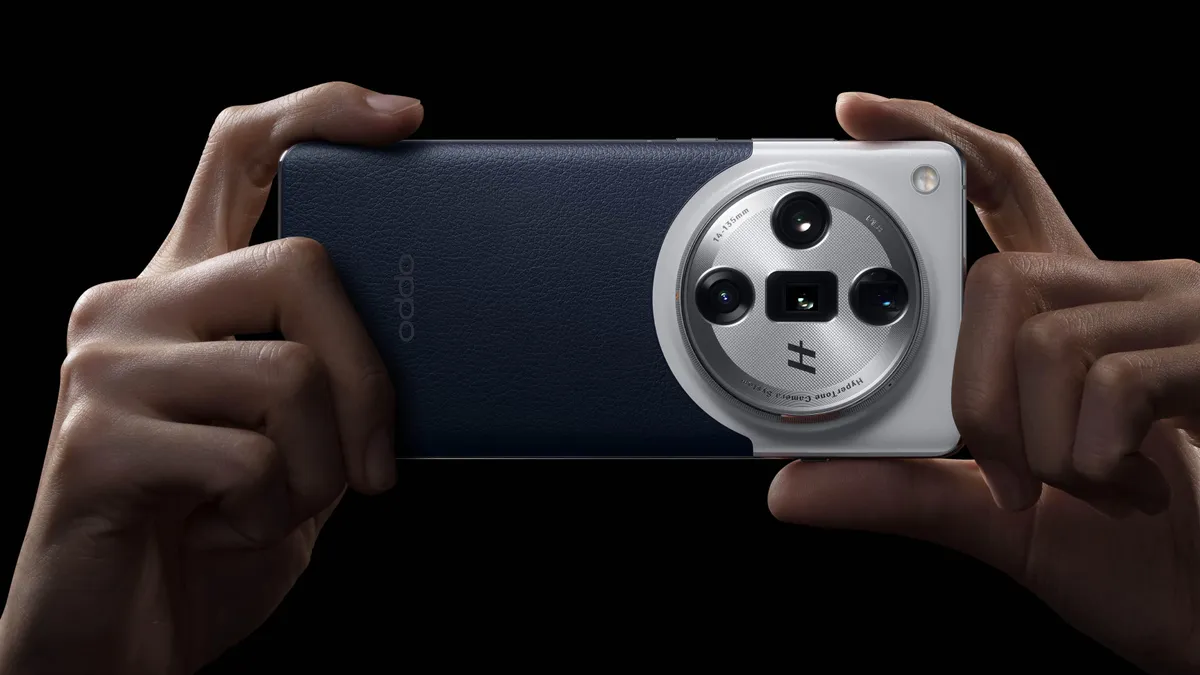
Oppo Unveils Agentic AI Initiative, Introduces New System-Wide AI Search Feature

Oppo has revealed its ambitious plans for the future of artificial intelligence (AI) with the launch of its Agentic AI initiative at the Google Cloud Next 2025 event. The company is focused on advancing AI capabilities to create deeply personalized and intelligent experiences for its users. This new initiative aims to combine in-house AI development with a strategic collaboration with Google to introduce next-generation AI features that will enhance both hardware and software integration. Oppo is setting the stage for a future where AI agents, or agentic AI, take a central role in how users interact with their devices.

The core idea behind agentic AI is to create a system where a centralized AI model autonomously manages hardware and software components to perform tasks based on user commands. This innovative approach promises to make interactions with Oppo devices smarter, more intuitive, and highly personalized. Oppo’s goal is to ensure that its AI experiences are continuously refined, and the company is leveraging partnerships with industry leaders like Google Cloud to achieve this. Jason Liao, President of Oppo Research Institute, highlighted the company’s commitment to enhancing AI capabilities, signaling a new era for Oppo users in terms of seamless and intelligent device usage.

At the Google Cloud Next event, Oppo also unveiled a cutting-edge feature called AI Search. This system-wide AI tool will allow users to conduct multimodal searches across documents stored on their devices using natural language queries. With AI Search, users can quickly find specific information within their files directly from the home screen, streamlining how users interact with their content. This feature represents a leap forward in making AI a practical, everyday tool, seamlessly integrated into Oppo’s ecosystem. Additionally, Oppo highlighted its existing AI-driven features in areas such as productivity, imaging, and creativity, showcasing the breadth of its AI applications.

As part of this ambitious initiative, Oppo is developing a user knowledge system, which will serve as a central hub for storing and managing user data. This system is designed to tackle the issue of information fragmentation, a common problem with mobile devices, by creating a unified data repository. By leveraging this system, Oppo aims to further enhance the personalization of its AI features, ensuring that users’ experiences with their devices are not only smarter but also more tailored to their individual needs and preferences. With Agentic AI at its core, Oppo is positioning itself at the forefront of AI innovation, offering users more powerful and intuitive tech experiences.

Apple and Nvidia Receive Exemptions from US Tariffs, Easing Trade Pressure

The Trump administration has granted a significant exemption from its reciprocal tariffs, which provides relief for major global tech manufacturers, including Apple and Nvidia. These exemptions, announced by US Customs and Border Protection, apply to a range of consumer electronics such as smartphones, laptops, hard drives, and memory chips. This move effectively narrows the scope of the tariffs, which had originally included a hefty 125 percent tariff on products from China, as well as a 10 percent baseline tariff on products from other countries. For tech companies and consumers alike, this offers a welcome reprieve, even though the exemptions may only be temporary.

The newly announced exclusions are a major win for the technology sector, especially considering that many of these devices are not manufactured domestically in the US. With products like iPhones, computers, and other essential electronics not being produced within the country, the tariffs had threatened to drive up prices for consumers. The decision to exempt these items comes at a crucial time when many had feared price hikes due to the escalating trade tensions. The exemption also provides some breathing room for companies like Apple and Nvidia, which have made significant financial commitments to the US in the past few months, further solidifying their importance in the tech landscape.

For consumers, the news is likely to ease concerns over rising prices. In anticipation of higher costs, many had already begun purchasing electronics in a rush, particularly iPhones and laptops. The exemption will likely prevent those fears from becoming a reality, stabilizing prices for these popular consumer products. However, the broader impact of the tariffs and trade war on global markets continues to reverberate, contributing to market volatility and uncertainty.

The exemption represents a notable softening in the US’s approach to the trade conflict with China. Although it doesn’t mark a full resolution of the trade war, it is a sign of potential thawing relations between the two economic powers. Backdated to April 5, this exemption covers an estimated $390 billion in US imports, including over $101 billion from China. This move offers a glimpse into the shifting dynamics of international trade and its effect on global markets, particularly the tech industry, which remains at the center of the ongoing geopolitical tensions.

Vivo X200 Ultra Specifications Revealed; Expected to Outperform iPhone 16 Pro Max in Camera Quality

The Vivo X200 Ultra is gearing up for its official launch in China next week, and ahead of the event, the company has shared some exciting details about the phone’s specifications. A Vivo executive recently posted teasers on social media, providing insights into what users can expect from the upcoming flagship device. One of the standout features of the X200 Ultra is its 2K OLED display, which promises to deliver vibrant visuals, paired with a robust 6,000mAh battery. This large battery supports 40W wireless charging and 90W wired charging, offering impressive power options compared to its predecessor, the Vivo X100 Ultra.

The Vivo X200 Ultra is designed to be a powerful and sleek device, measuring just 8.69mm in thickness. It comes equipped with an ultrasonic 3D fingerprint sensor for enhanced biometric security. Under the hood, the phone is powered by the Snapdragon 8 Elite chipset, ensuring fast performance and smooth multitasking. One of the most intriguing aspects of the X200 Ultra is its camera system, particularly its video-capturing capabilities. Vivo has teased that the phone will offer an exceptional low-light time-lapse performance, aided by an improved ultra-wide-angle lens. This lens is designed to capture stunning 4K resolution videos with full focal length, outperforming the iPhone 16 Pro Max in this area, according to Vivo’s product manager.

The Vivo X200 Ultra’s camera system is backed by Zeiss optics, featuring a triple rear camera setup with a telephoto lens, and will also come with a dedicated Photography Kit for users who want to take their mobile photography to the next level. Additionally, the phone will be equipped with the Vivo V3+ chip and a VS1 chip dedicated to enhancing its imaging capabilities, ensuring that users get top-tier photo and video quality. Vivo has positioned the X200 Ultra as a serious competitor in the smartphone market, especially for users who prioritize camera performance.

The launch event for the Vivo X200 Ultra will take place on April 21 at 7 PM local time in China, and it will be joined by the unveiling of other new products, including the Vivo X200s, Vivo Pad 5 Pro, Vivo Pad SE, and Vivo Watch 5. With its impressive specifications and camera advancements, the Vivo X200 Ultra is set to be a major player in the premium smartphone market, offering an experience that could rival some of the best devices available today.