
US SEC Clarifies Stablecoins Do Not Qualify as Securities Requiring Registration

The U.S. Securities and Exchange Commission (SEC) has provided much-needed clarity to the crypto industry by stating that, in general, stablecoins are not considered securities and do not require registration with the agency. This clarification marks a significant shift in regulatory tone and provides a level of assurance to stablecoin issuers and exchanges operating within the United States. The SEC’s position could help pave the way for further innovation and adoption of stablecoins, particularly those backed by traditional assets like the U.S. dollar or commodities.

In its announcement, the SEC specified that this determination applies to stablecoins that are fully backed by high-quality liquid assets. These can include fiat currencies such as the U.S. dollar, commodities like gold, or a pool of other reliable assets. This means that stablecoins like USDC, which maintain a 1-to-1 backing with fiat currency, are not subject to the same registration requirements as securities. Circle Internet Group President Heath Tarbert welcomed the decision, stating it provides clear regulatory certainty for well-structured stablecoins while cautioning that not all crypto assets labeled as “stablecoins” fall under this exemption.

However, the SEC also made it clear that the determination does not grant blanket immunity to all digital assets marketed as stablecoins. In a footnote, the agency emphasized that each stablecoin will still be subject to individual evaluation. This case-by-case approach ensures that only those assets meeting the strict criteria of full backing and liquidity transparency will be excluded from securities classification, while others may still come under scrutiny.

The move is likely to have broader implications for digital asset legislation in the U.S. It could accelerate discussions in Congress around comprehensive stablecoin regulations and a broader digital asset market-structure bill. With the SEC’s position now clarified, lawmakers may feel more confident in advancing bipartisan efforts to create a regulatory framework that supports innovation while safeguarding investors in the rapidly evolving crypto economy.
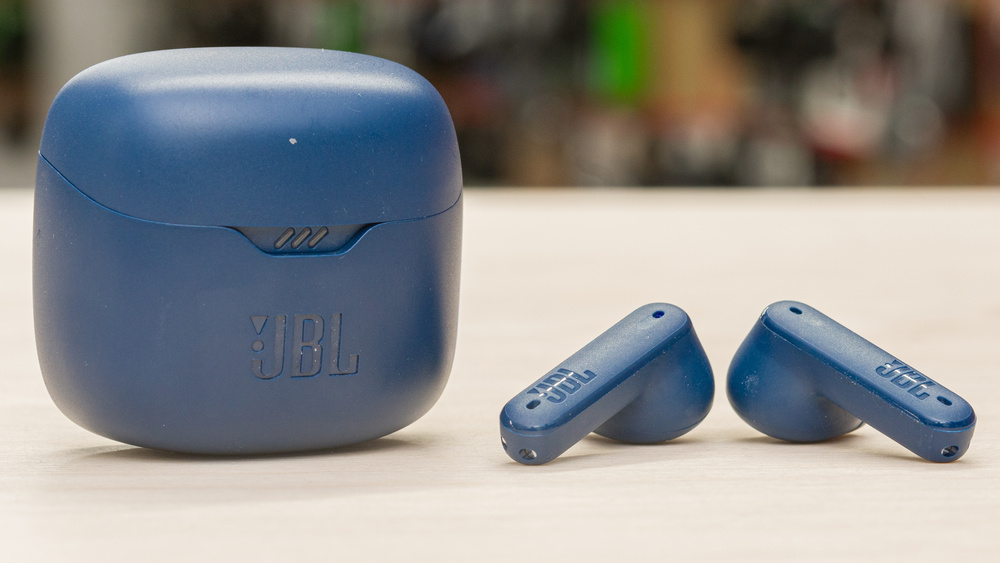

JBL Launches Tune Buds 2, Beam 2, and Flex 2 With ANC and Spatial Audio

JBL has officially launched its new Tune Series 2 true wireless stereo (TWS) earphones in India, comprising the JBL Tune Buds 2, Tune Beam 2, and Tune Flex 2. These latest additions to JBL’s audio lineup bring a host of modern features designed to enhance the user experience, including adaptive noise cancellation (ANC), spatial audio, and support for multi-point connectivity. All three models also come with Google Fast Pair for seamless device pairing, and they are built to be dust and splash resistant with an IP54 rating. Users can further personalise their listening experience through the JBL Headphones app, which offers customisation options for sound profiles, gesture controls, and more.

The pricing for the new JBL Tune Series 2 earphones reflects their premium positioning in the mid-range TWS market. The JBL Tune Buds 2 are priced at ₹9,499, while the Tune Beam 2 and Tune Flex 2 will retail for ₹11,999 and ₹10,499 respectively. JBL is offering these models in three colour options—Black, Blue, and White—allowing users to choose a style that suits their preference. According to the company’s press release, the new earphones will be available for purchase starting April 17 via the official JBL India website, Amazon, and select offline retailers.

Each model in the series offers a distinct design tailored to different user needs. The JBL Tune Buds 2 feature a traditional bud-style design with a snug fit, ideal for immersive listening. The Tune Beam 2 adopts a closed-type stick design, while the Tune Flex 2 features an open-type stick design, making them more suitable for users who prefer a lighter, less isolated fit. The Buds 2 and Beam 2 come equipped with 10mm drivers, while the Flex 2 steps up with 12mm drivers for a more dynamic sound output. All models offer robust build quality with the added benefit of water and dust resistance.

In terms of functionality, the new JBL TWS models are packed with features typically found in higher-end audio gear. With adaptive ANC, six-mic call noise cancellation, and TalkThru transparency mode, users can control how much ambient noise they want to let in or keep out. Additionally, the inclusion of VoiceAware technology gives users control over how much of their own voice they hear during calls, while the Voice Prompts feature allows for hands-free interactions. Coupled with Bluetooth 5.3 and Personi-Fi 3.0 customisation, the JBL Tune Series 2 earphones are positioned as versatile, feature-rich options for audio enthusiasts looking for premium performance without a flagship price tag.

Realme Narzo 80 Pro 5G and 80x 5G: Early Bird Sale and Student Deals Revealed

Realme is gearing up for the launch of its latest smartphones, the Narzo 80 Pro 5G and Narzo 80x 5G, in India on April 9. Ahead of the official unveiling, the company has revealed key details about early bird sales, special student offers, and promotional discounts. These new additions to the Narzo lineup are expected to bring strong value to the mid-range and budget segments, each equipped with MediaTek Dimensity chipsets. The devices will be available for purchase through Amazon and Realme’s official India website, making them easily accessible for online shoppers.

The early bird sale for the Realme Narzo 80 Pro 5G is scheduled to kick off on April 9 from 6:00 PM to midnight, offering buyers a chance to grab the phone before the standard open sale. Realme has also planned a limited-period sale event for both the Narzo 80 Pro 5G and Narzo 80x 5G on April 11, again running from 6:00 PM to midnight. These short sales windows are likely to generate buzz and encourage early adoption by offering exclusive launch deals to initial customers.

In terms of pricing, Realme has positioned the Narzo 80 Pro 5G as an affordable mid-range option, with a price tag under ₹20,000. Meanwhile, the Narzo 80x 5G is expected to fall below the ₹13,000 mark, targeting budget-conscious consumers who want 5G connectivity without breaking the bank. What sets the Narzo 80 Pro 5G apart is a dedicated student offer — Realme is providing a benefit worth ₹1,299 for students, though exact details on how this offer is redeemed are yet to be disclosed.

These promotional strategies underline Realme’s continued focus on younger audiences, especially students and first-time smartphone buyers. By combining attractive pricing with early access sales and exclusive discounts, Realme aims to capture a significant share of India’s competitive 5G smartphone market. With the official launch just around the corner, the Narzo 80 series is shaping up to be a compelling choice for anyone looking for a capable, future-ready device without a hefty price tag.