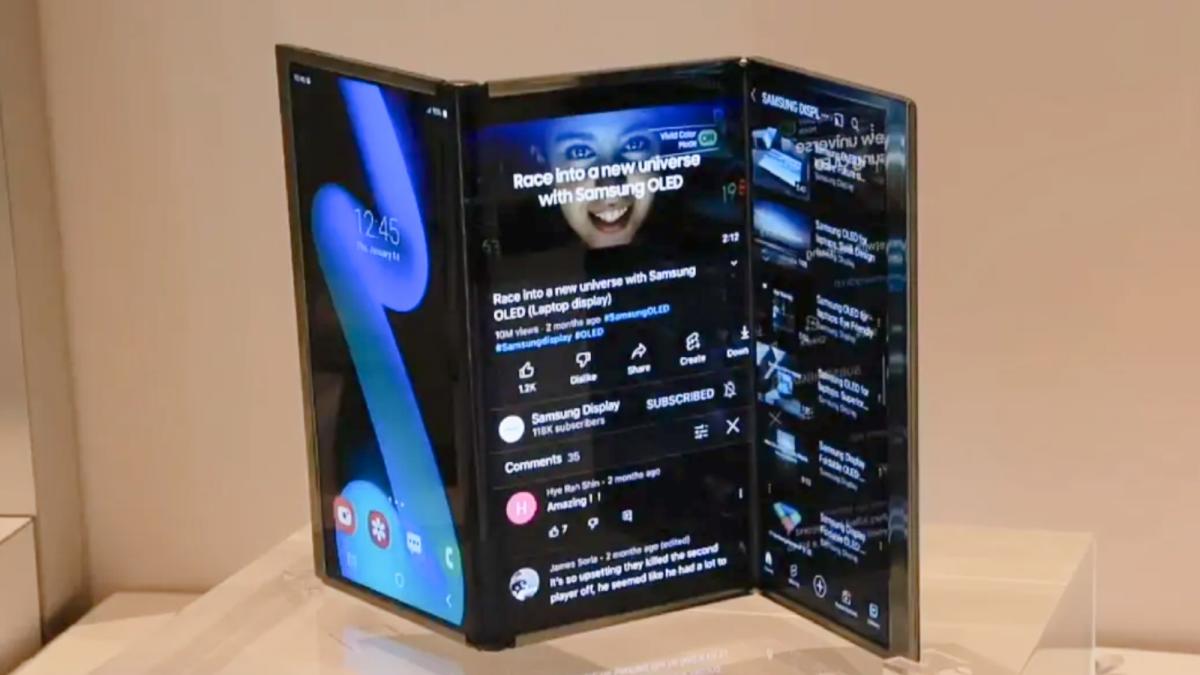
Samsung Tri-Fold Phone Set for Limited Release, Likely Launching in Just Two Countries

Samsung’s Galaxy Unpacked 2025 event, the tech giant confirmed its intentions to introduce a multi-fold device, a move that has stirred excitement in the tech community. While Huawei has already made strides in the foldable phone market, Samsung is poised to raise the bar, with its reputation as the global leader in mass-producing foldable smartphones. The company has been rumored to unveil this device alongside its next Galaxy Z Fold series, fueling speculation that it could be a major leap in foldable tech. The device, likely to be called the Galaxy G Fold, is expected to incorporate a tri-fold design, a feature that promises to enhance the overall user experience. New insights suggest that we could see the device hit the market in the latter part of this year, with certain key details about its model numbers and market availability now emerging.

According to SmartPrix, a reliable source in the tech industry, the upcoming tri-fold device is slated for launch within six to seven months, pointing to a potential debut around the fall of 2025. The information comes from the GSM Association database, where Samsung typically registers its devices. Although the company has used in-house codenames to conceal specific model details, SmartPrix managed to track down the relevant information, giving us a clearer picture of what’s to come. While Samsung has kept many details under wraps, these new revelations suggest that the tri-fold device is edging closer to a commercial release.

The Galaxy G Fold is expected to come in two different variants, as evidenced by two distinct model numbers: SM-F968N and SM-F9680. According to the report, Samsung’s naming convention uses the code “F968” for the base model, with the final letter of the code indicating the market for which the device is intended. The ‘N’ in the model number SM-F968N points to the South Korean market, Samsung’s home base, while the ‘O’ in SM-F9680 indicates the Chinese market. This could hint at a more region-specific rollout, with Samsung possibly focusing on select markets first before expanding globally.

In addition to the market variations, it’s also noted that this tri-fold device will carry the “Fold” branding, in line with previous Galaxy Z Fold models. This is a departure from the “W” moniker that Samsung has used for some of its foldable devices in China, suggesting that the G Fold will be a global release rather than a regional one. Despite the intrigue surrounding this new foldable, details on its full specifications and features remain scarce, but if the reports are accurate, Samsung’s Galaxy G Fold could redefine the foldable smartphone landscape later this year.

Lava Bold 5G Launched with MediaTek Dimensity 6300 SoC and 5,000mAh Battery: Full Specs and Price

Lava Bold 5G Launched in India with MediaTek Dimensity 6300 SoC and 5,000mAh Battery

Lava has unveiled the Bold 5G in India, marking the brand’s latest entry into the 5G smartphone market. The new device is powered by the MediaTek Dimensity 6300 chipset and features a 6.67-inch 3D curved AMOLED display with a 120Hz refresh rate. The Bold 5G boasts an IP64-rated build, ensuring protection against dust and water splashes. Additionally, the smartphone comes equipped with a 64-megapixel rear camera and a large 5,000mAh battery, supporting 33W fast charging for quick power-ups. The Lava Bold 5G will be available for purchase starting next week through Amazon.

Lava Bold 5G Price and Availability in India

The Lava Bold 5G is being offered at an introductory price of Rs. 10,499 in India. The smartphone will be available in two RAM and storage configurations—4GB RAM with 128GB of internal storage, and 6GB RAM with 128GB of internal storage. It will be available in a stylish Sapphire Blue color. Starting from April 8, the Lava Bold 5G will go on sale through Amazon, with the first sale beginning at 12 pm IST.

Lava Bold 5G Features and Performance

The Lava Bold 5G runs on Android 14 and is confirmed to receive an upgrade to Android 15, along with two years of security updates. The device features a 6.67-inch 3D curved AMOLED screen, offering a fluid visual experience with its 120Hz refresh rate. Under the hood, the smartphone is powered by the MediaTek Dimensity 6300 SoC, paired with up to 6GB of RAM and 128GB of internal storage. In addition, the Lava Bold 5G comes with virtual RAM functionality, allowing users to expand the RAM up to 8GB by utilizing unused storage, further enhancing performance.

Battery and Charging Capabilities

The Lava Bold 5G is equipped with a robust 5,000mAh battery, designed to keep users powered throughout the day. With 33W fast charging support, the device promises quick recharge times, allowing users to spend less time waiting for their phone to power up. This combination of a large battery and fast charging ensures that the Lava Bold 5G remains a reliable choice for users looking for both performance and endurance in their smartphones.

OpenAI Set to Launch Open-Source AI Model Focused on Reasoning Capabilities

OpenAI to Release Open-Source AI Model Focused on Reasoning

OpenAI is preparing to launch its first open-source artificial intelligence (AI) model with a focus on reasoning. This marks a significant shift for the San Francisco-based AI firm, which has not released an open-source model since the GPT-2 back in November 2019. The new model is expected to be unveiled in the coming months, with OpenAI specifically seeking feedback from the developer community to refine the model based on their needs and insights. One of the primary concerns during development is ensuring the model’s safety, with OpenAI emphasizing responsible deployment.

The open-source AI space has seen significant growth in recent years, with a variety of players, including Meta, Mistral, Alibaba, and major tech companies like Google and Microsoft, all releasing multiple models for public use. However, OpenAI has largely stayed away from open-source initiatives since the launch of GPT-2, instead focusing on closed software solutions. These proprietary models have not been available for downloading or modification, limiting research and commercial applications.

Earlier this year, OpenAI’s CEO, Sam Altman, addressed the company’s position on open-source AI during an AMA session on Reddit. Altman acknowledged that OpenAI had been “on the wrong side of history” in its approach to open-source releases. He expressed the need to adopt a more open strategy but noted that it wasn’t the company’s top priority at the time. His comments highlighted OpenAI’s awareness of the evolving landscape and its desire to adjust its approach.

With this upcoming open-source release, OpenAI aims to re-enter the competitive landscape of open AI models, focusing on addressing key issues like reasoning capabilities and safety. This move is expected to enhance collaboration within the AI research community and contribute to more transparent and accessible AI development.