Ubisoft at a Crossroads with the Upcoming Release of ‘Assassin’s Creed Shadows’
Ubisoft is pinning its hopes on the success of Assassin’s Creed Shadows to recover from a series of financial setbacks, as the company grapples with declining revenue, a plummeting stock price, and growing takeover speculation. Set to launch on Thursday, the game represents a return to the Assassin’s Creed franchise, which has been a cornerstone of Ubisoft’s success. This comes after a string of disappointing releases, including Avatar: Frontiers of Pandora and Star Wars Outlaws, which have raised questions about Ubisoft’s strategy of licensing new intellectual properties (IPs) to drive its gaming portfolio.
The company’s financial struggles have been evident, with its stock falling over 40% last year, leading to increased scrutiny from both investors and analysts. The Ubisoft founding family, the Guillemots, who remain the largest shareholders, have even been in talks with major investors like Tencent regarding potential buyout options to retain control of the company. Ubisoft has declined to comment on ongoing speculation regarding the sale of its intellectual properties, but the pressure to perform with Assassin’s Creed Shadows is palpable.
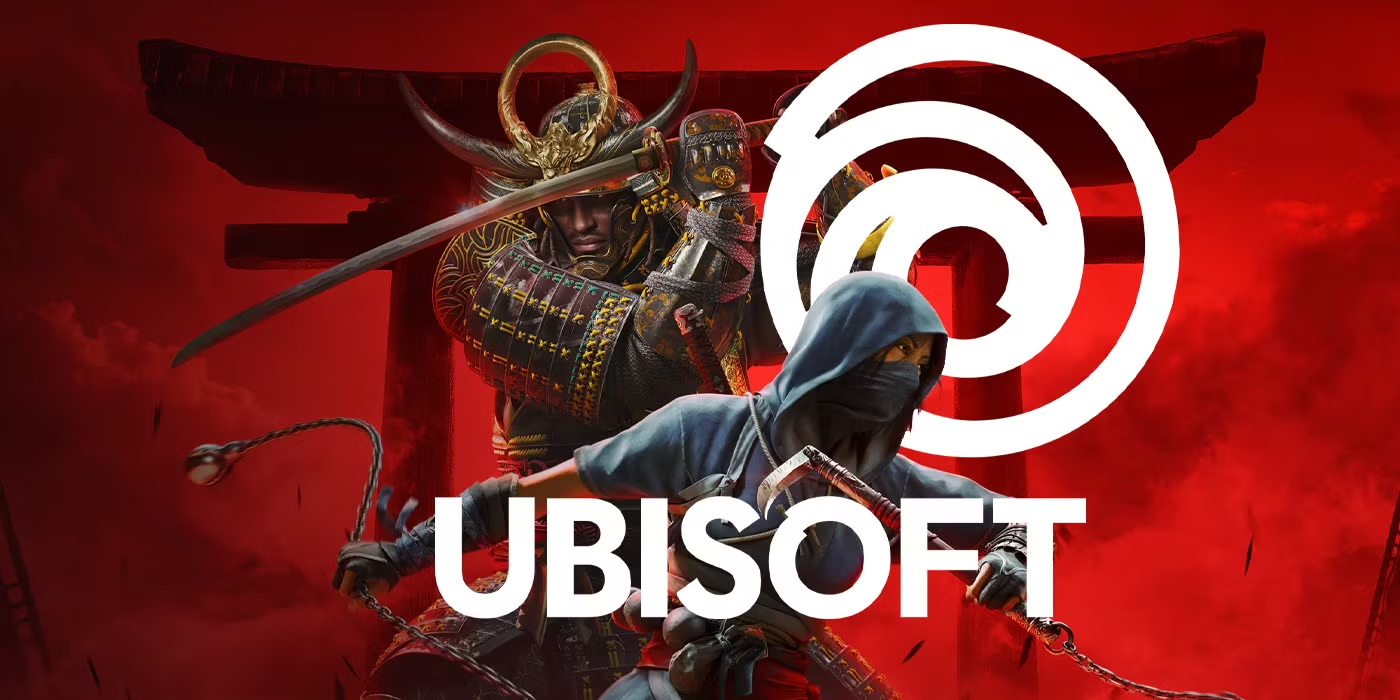
However, the upcoming release has not been without controversy. The game has faced significant backlash on social media, including from high-profile figures such as Elon Musk, particularly over its diverse character roster. The controversy highlights the growing tensions around diversity in video games, which have become a hot-button issue in the U.S. following political shifts. The inclusion of Naoe, a stealthy female assassin, and Yasuke, an African samurai inspired by a real historical figure, has drawn mixed reactions, with some gamers expressing dissatisfaction over the game’s focus on representation.
Despite these challenges, Ubisoft is banking on Assassin’s Creed Shadows to reassert its dominance in the gaming industry. The game, set in feudal Japan—a fan-favorite setting for the franchise—features enhanced parkour and stealth mechanics, with a dual-character system designed to offer fresh gameplay while maintaining the core elements that made the series famous. Industry experts, like Jordan Van Andel, believe that while Ubisoft is not attempting to revolutionize the franchise, the company is hoping that its refined mechanics will resonate with both long-time fans and new players. The release of Assassin’s Creed Shadows is seen as a critical moment for Ubisoft’s future, potentially determining the company’s ability to regain its footing in an increasingly competitive market.