Chinese Firms Rush to Issue ‘Sci-Tech Innovation Bonds’ as Beijing Pushes Tech Self-Sufficiency

Dozens of Chinese banks, brokerages, and private equity firms announced plans on Thursday to issue sci-tech innovation bonds, responding to new central government rules that broaden eligibility and offer low-cost funding to support China’s high-tech ambitions.

Key Details:

  • New Rules: Unveiled Wednesday, the rules allow financial firms, not just tech companies, to issue bonds on a designated “technology boardaimed at funding innovation.

  • Support Mechanisms:

    • The People’s Bank of China will provide low-cost liquidity.

    • Local governments will help cover potential default losses, reducing investor risk.

  • Total Demand: PBOC Governor Pan Gongsheng revealed that nearly 100 companies plan to raise over 300 billion yuan ($41.5 billion), with more expected to follow.

Notable Announcements:

  • Industrial Bank plans to raise 10 billion yuan to fund innovation-related loans.

  • Guolian Minsheng Securities will issue 1 billion yuan in 3-year bonds for tech-focused investments.

  • Wuxi Venture Capital Group plans a 400 million yuan bond sale to recycle equity holdings and invest in new tech funds.

Broader Impact:

This policy push is part of Beijing’s campaign to boost tech independence amid a Sino-U.S. rivalry that has seen Washington escalate export controls on semiconductors and AI tools. The bond initiative also helps venture capital and private equity firms under pressure due to a slow IPO market.

Concerns Over Misuse:

Despite the tech-focused label, some issuers may divert proceeds:

  • Xuzhou Construction Machinery Group plans to use 1 billion yuan in sci-tech bond proceeds to refinance loans.

  • Muyuan Foods intends to use 300 million yuan to replenish working capital, not directly for tech innovation.

Analyst View:

Government support may help whet appetite of risk-averse bond investors. A booming market would in turn stimulate tech innovation,”
Chen Yuting, Huafu Securities

Rheinmetall and ICEYE Form Satellite Venture Amid European Defense Push

German defense giant Rheinmetall and Finnish satellite firm ICEYE have signed a memorandum of understanding to establish a joint venture—Rheinmetall ICEYE Space Solutionswith plans to manufacture military-grade satellites using synthetic aperture radar (SAR) technology.

Key Points:

  • Ownership Split: Rheinmetall will hold a 60% stake, with ICEYE owning the remaining 40%.

  • Satellite Type: The venture will produce SAR satellites, which can capture images through clouds and in darknesscritical for modern military reconnaissance.

  • Manufacturing Site: The satellites will be produced at a repurposed Rheinmetall automotive components factory in Neuss, western Germany.

Strategic Context:

  • Defense Conversion: The project aligns with Rheinmetall’s strategy to transform automotive production capacity into defense manufacturing, as demand surges due to geopolitical tensions—particularly in response to Russia’s actions in Ukraine.

  • European Defense Buildup: European nations are significantly increasing defense budgets and military procurement. Rheinmetall, Europe’s top ammunition manufacturer, reported higher-than-expected demand from countries including Germany, Ukraine, and NATO allies.

What’s Next:

  • The formation of the joint venture is subject to final agreements and regulatory approval.

  • Once operational, the partnership aims to strengthen Europe’s sovereign satellite reconnaissance capabilities, a priority amid growing global surveillance needs.

Alice & Bob to Launch $50M Quantum Lab in Paris for Chip Commercialisation

French quantum computing startup Alice & Bob announced plans to open a $50 million laboratory in Paris, accelerating its shift from research to product commercialisation. The new facility, funded from a $103 million private investment round, will support the development and testing of the company’s next-generation quantum chips: Lithium, Beryllium, and Graphene.

Key Highlights:

  • Purpose: The lab will prototype and test market-ready quantum processors based on Alice & Bob’s cat qubit technology.

  • Infrastructure: The lab will house:

    • A nanofabrication cleanroom for chip prototyping.

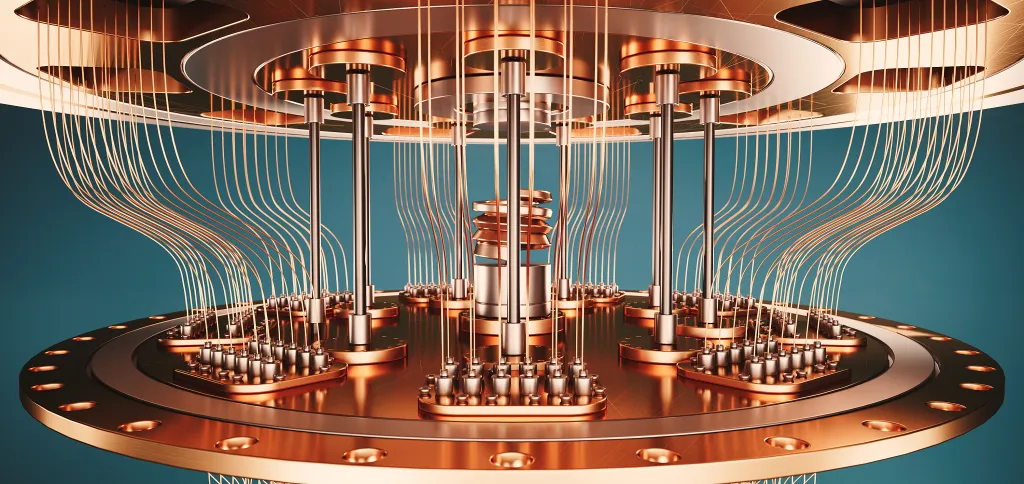
    • A cryostat farm with 20 Bluefors dilution refrigerators for ultra-low temperature testing.

    • Quantum Machines’ control hardware to enable experimentation.

Strategic Partnerships:

  • Quantum Machines (Israel): Supplying hardware/software control platforms.

  • Bluefors (Finland): Providing cryogenic systems to support scalable quantum research.

Vision and Strategy:

CEO Théau Peronnin stated the company is evolving from pure research to customer-oriented product development:

Our lab will enable Alice & Bob to create technology that can be tested by actual clients and end users.”

Founded in 2020, Alice & Bob is building fault-tolerant quantum computers that aim to outperform existing architectures in efficiency and energy consumption, using cat qubit error-correction innovations.

The move signals France’s deeper investment in becoming a European hub for quantum technology commercialisation, aligning with broader regional and global efforts to realise practical quantum computing at scale.