
Infineon Lowers Revenue Forecast Amid US Tariff Uncertainty

Infineon Technologies, Germany’s leading chipmaker, revised its full-year revenue outlook downward on Thursday, citing uncertainty around looming U.S. semiconductor tariffs and unfavorable currency exchange assumptions. Despite reporting stable order intake, the company now anticipates a more cautious fiscal year ahead.

What’s Behind the Cut:

  • U.S. President Donald Trump has warned that chip tariffs could begin at 25% or more, though no implementation timeline has been confirmed. This lack of clarity has clouded business planning for chipmakers like Infineon.

  • As a precaution, Infineon CEO Jochen Hanebeck said the company applied a 10% haircut to its expected Q4 revenue projections.

  • Without the haircut, Infineon said its forecast would have remained “essentially unchanged.”

Financial Highlights:

  • Fiscal 2024 revenue totaled 15 billion ($17 billion).

  • The company had earlier projected flat to slightly higher revenue for the current year but now anticipates a lower figure due to tariff and exchange rate risks.

  • It now expects an operating margin in the mid-teens rather than the previous mid-to-high-teens range.

CEO Commentary:

Given that order intake still shows no signs at all of slowing down, we can only guesstimate the effects of tariff disputes,”
said Hanebeck, highlighting the unpredictability of U.S. trade policy on semiconductor supply chains.

Broader Context:

Infineon joins a growing list of global tech firms affected by U.S. protectionist policies. The prospect of rising tariffs is pressuring supply chains, pricing strategies, and global investment decisions, particularly as semiconductor demand remains strong across sectors such as automotive, consumer electronics, and industrial systems.

Trump Administration to Scrap Biden-Era AI Chip Export Limits, Citing Innovation Concerns

The Trump administration plans to rescind and revise a key Biden-era rule that restricted exports of advanced AI chips, aiming to replace it with a streamlined system that it says will better support U.S. innovation and AI leadership, the Commerce Department confirmed on Wednesday.

The Biden administration’s rule, part of a broader effort to curb China’s access to military-grade semiconductor technology, was set to go into effect May 15. Known as the Framework for Artificial Intelligence Diffusion, the rule divided global countries into three tiers based on their level of trust and posed export caps accordingly.

Why It’s Being Scrapped:

The Commerce Department spokeswoman called the rule:

Overly complex, overly bureaucratic, and would stymie American innovation.”

She said the Trump administration is preparing a simpler replacement that removes the tier-based structure and introduces a global licensing regime governed through bilateral government agreements instead.

Tier System Under Biden Rule:

  • Tier 1: 17 allied countries + Taiwan (no restrictions)

  • Tier 2: ~120 countries (chip quantity caps)

  • Tier 3: China, Russia, Iran, North Korea (outright ban)

What Comes Next:

  • A new rule will rescind the tiered structure.

  • A government-to-government licensing regime is being discussed.

  • There’s no official timeline yet, as internal debate continues.

  • The Trump administration aims to focus on AI leadership and economic competitiveness, rather than control through blanket restrictions.

Market Reaction:

  • Nvidia (NVDA.O), a leading AI chipmaker whose sales have been constrained by export limits, rose 3% on the news, but slipped 0.7% after hours as markets absorbed the uncertainty surrounding implementation.

Strategic Context:

The Biden rule was part of a multi-year initiative to block Chinese access to cutting-edge chips used in AI and defense, while bolstering U.S. global dominance in emerging technologies. But the Trump team argues that these controls could inadvertently hurt American firms by stalling chip sales to non-hostile countries and overcomplicating enforcement.

A shift to bilateral licensing could give the U.S. more flexibility and diplomatic leverage, but critics warn it may also open loopholes and weaken safeguards designed to prevent authoritarian regimes from exploiting AI.

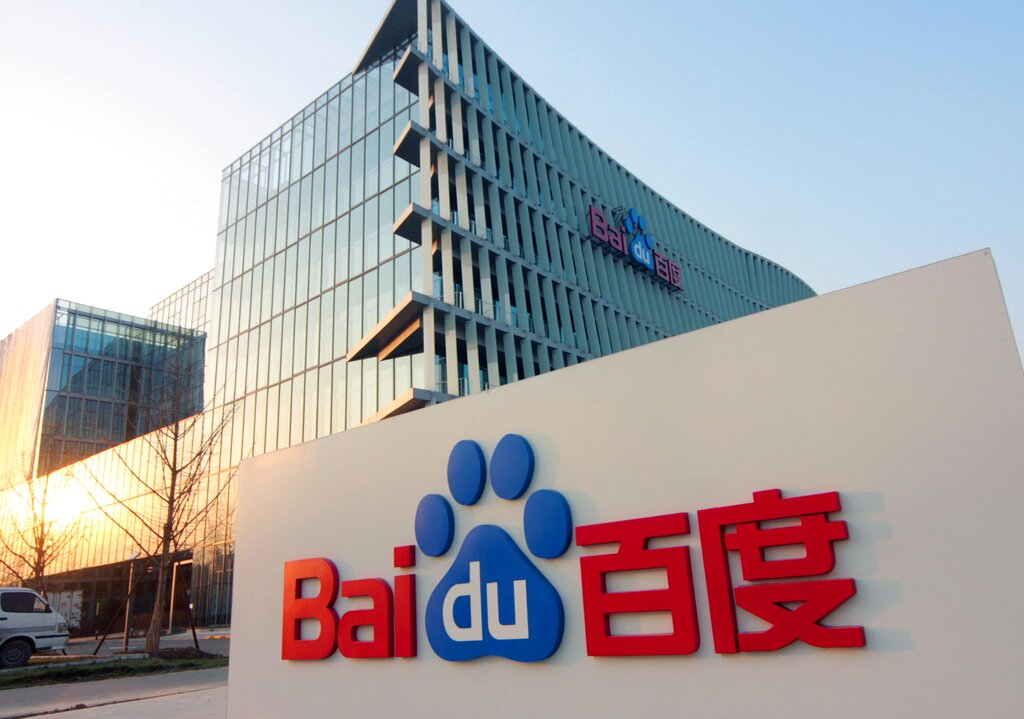
Baidu Patents AI System to Translate Animal Sounds into Human Language

Baidu, China’s top search engine operator, is venturing into interspecies communication with a newly filed AI patent aimed at decoding animal vocalisations into human language. The system, still in early research stages, would use artificial intelligence to analyse vocal cues, behaviour, and physiological signals from animals to infer emotional states and translate them into semantic meaning.

According to a document filed with the China National Intellectual Property Administration, the patented technology could eventually enable humans to “understand” animals, improving emotional bonding and practical communication with pets or even livestock.

Key Points from the Patent:

  • The system gathers animal sounds, behaviour patterns, and physiological data.

  • Data is preprocessed and fused, then analysed by AI to identify emotional intent.

  • Identified emotions are mapped to human language equivalents.

  • Aim: to enhance communication accuracy and efficiency between humans and animals.

A Baidu spokesperson confirmed the patent has attracted widespread attention but clarified it is “still in the research phase” and not close to commercial release.

Broader Context:

Baidu joins a global trend, following OpenAI-style AI advances and similar global initiatives:

  • Project CETI is studying sperm whale communication using AI.

  • The Earth Species Project, supported by LinkedIn co-founder Reid Hoffman, is also working to decode animal language.

Baidu’s AI work is best known through its Ernie AI model, the latest version of which — Ernie 4.5 Turboclaims performance parity with leading global systems. Yet, domestic competition and user uptake remain challenging for Baidu’s generative AI offerings.

Public Reactions:

The patent sparked significant buzz on Chinese social media. While many netizens were intrigued by the possibility of decoding their pets’ emotions and intentions, others voiced scepticism about how well such a system would translate into real-world use.

It sounds cool, but will it just say my cat is ‘angry’ when it knocks things over again?” joked a Weibo commenter.

If successful, Baidu’s AI breakthrough could reshape pet care, veterinary diagnostics, and wildlife research, bringing a sci-fi dream closer to reality.