Zalando Harnesses Generative AI to Slash Campaign Costs and Speed Up Fashion Marketing

Zalando, the European online fashion retailer, announced it is using generative artificial intelligence (AI) to accelerate content production for its app and website, allowing it to respond quickly to viral fashion trends while cutting marketing costs by up to 90%.

According to Matthias Haase, VP of Content Solutions at Zalando, generative AI has reduced image production times from six to eight weeks down to just three to four days. The tech enables the brand to stay agile in an industry where fast reaction to fleeting trends—like “brat summer” or “mob wife”—can determine visibility and sales.

More than 70% of Zalando’s editorial campaign imagery in Q4 2024 was AI-generated, including content used in its trend recaps and seasonal promotions. The company is also developing AI-generated “digital twins” of human models, creating three-dimensional replicas for consistent visual use across product pages and campaigns without the need for repeated photo shoots.

It’s not that AI content is better than human-created content,” Haase noted, “but it’s more timely and relevant to what customers care about now.”

Zalando joins a growing list of retailers integrating AI into their workflows. In March, H&M announced a similar initiative using digital twin technology developed with a modeling agency. The technology appeals especially to mid-tier retailers, offering an alternative to expensive, logistically intensive photo shoots favored by high-end fashion houses.

Asked about the impact of AI on creative jobs, Haase said that photographers and creatives will remain essential, but must adapt. “Creative minds now have, instead of two hands, six hands,” he said, emphasizing AI as a tool, not a replacement.
DoorDash to Acquire UK’s Deliveroo in $3.9 Billion Deal Amid Global Delivery Sector Shakeup

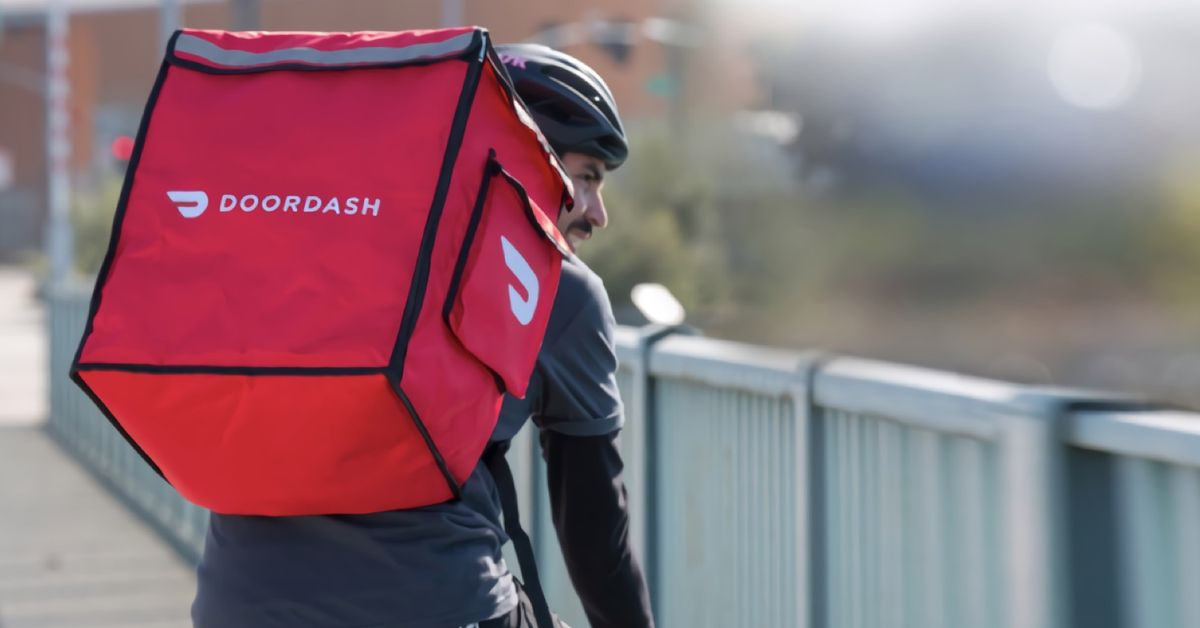
U.S. food delivery giant DoorDash announced on Tuesday that it will acquire British rival Deliveroo in a $3.85 billion (2.9 billion GBP) deal, aiming to expand its footprint in Europe and compete more aggressively against Uber Eats and Just Eat. The move also marks one of the largest consolidation deals in the global meal delivery space.

The deal values Deliveroo at 180 pence per share, a notable discount from its 2021 IPO price of 390 pence, but a premium to recent trading levels. Deliveroo’s shares rose about 2% following the announcement but remained below the offer price.

Deliveroo CEO and co-founder Will Shu acknowledged the valuation gap, saying the IPO occurred in a very different economic and interest rate environment, and emphasized that joining forces with a larger player would better position Deliveroo to succeed in a crowded and competitive market.

Sector Consolidation Accelerates

The deal comes amid a wave of consolidation in the meal delivery industry, which has faced mounting inflation, dampened consumer spending, and scaling difficulties.

  • Also on Tuesday, DoorDash said it would acquire SevenRooms, a hospitality software firm, for $1.2 billion.

  • Meanwhile, Uber announced an $700 million acquisition of Trendyol Go, strengthening its presence in Turkey and the Middle East.

According to the companies, DoorDash and Deliveroo combined processed about $90 billion in orders in 2024, serving a total of 49 million monthly active users. The acquisition will give DoorDash access to Deliveroo’s largest markets, including the UK, Ireland, Italy, France, and the UAE.

DoorDash CEO Tony Xu noted the deal would allow DoorDash to scale investments in Europe and introduce new products, helping it challenge entrenched local players.

Investor Reactions and Deal Conditions

Despite the long-term growth potential, DoorDash shares fell 7%, partly due to a cautious profit forecast and broader investor concerns about consumer demand.

Deliveroo has secured support from shareholders controlling 15.4% of shares, including Shu, Greenoaks, and DST Global. However, the deal requires approval from 75% of Deliveroo’s shareholders to proceed. Analysts flagged the notable absence of Amazon, which holds a 14.38% stake, as a potential wildcard. Amazon has declined to comment, but remains a possible counter-bidder.

DoorDash stated it will not raise its offer unless another bidder emerges.

The acquisition is not expected to face major regulatory challenges, as DoorDash has little to no presence in Deliveroo’s 10 core markets.

Cisco Unveils Quantum Networking Chip, Opens New Lab to Advance Future of Quantum Connectivity

Cisco Systems revealed a prototype quantum networking chip on Tuesday and announced the opening of a new quantum research lab in Santa Monica, California, marking the company’s formal entry into the fast-evolving field of quantum computing.

Unlike competitors focused on building standalone quantum computers with increasingly more qubits, Cisco’s efforts aim to link quantum systems together, enabling larger-scale quantum computing through networking. The chip, developed in partnership with researchers from UC Santa Barbara, facilitates quantum entanglement between pairs of photons, which can then be transmitted to separate quantum computersallowing them to share entangled states and communicate instantaneously over long distances.

There are a whole bunch of use cases,said Vijoy Pandey, SVP of Cisco’s Outshift innovation incubator. These include high-precision time synchronization for financial trading, global scientific coordination, and even space research applications like meteorite detection.

Quantum entanglement—the same phenomenon Albert Einstein called spooky action at a distance”is at the heart of Cisco’s chip design. For now, the technology remains in the prototype phase with no immediate revenue timeline, but Cisco views it as the first building block toward a scalable quantum internet.

Cisco joins a growing list of major tech firms—including Google, Microsoft, Amazon, and Nvidiaracing to lead in quantum innovation. While others build the processors, Cisco is positioning itself as the quantum network infrastructure provider.