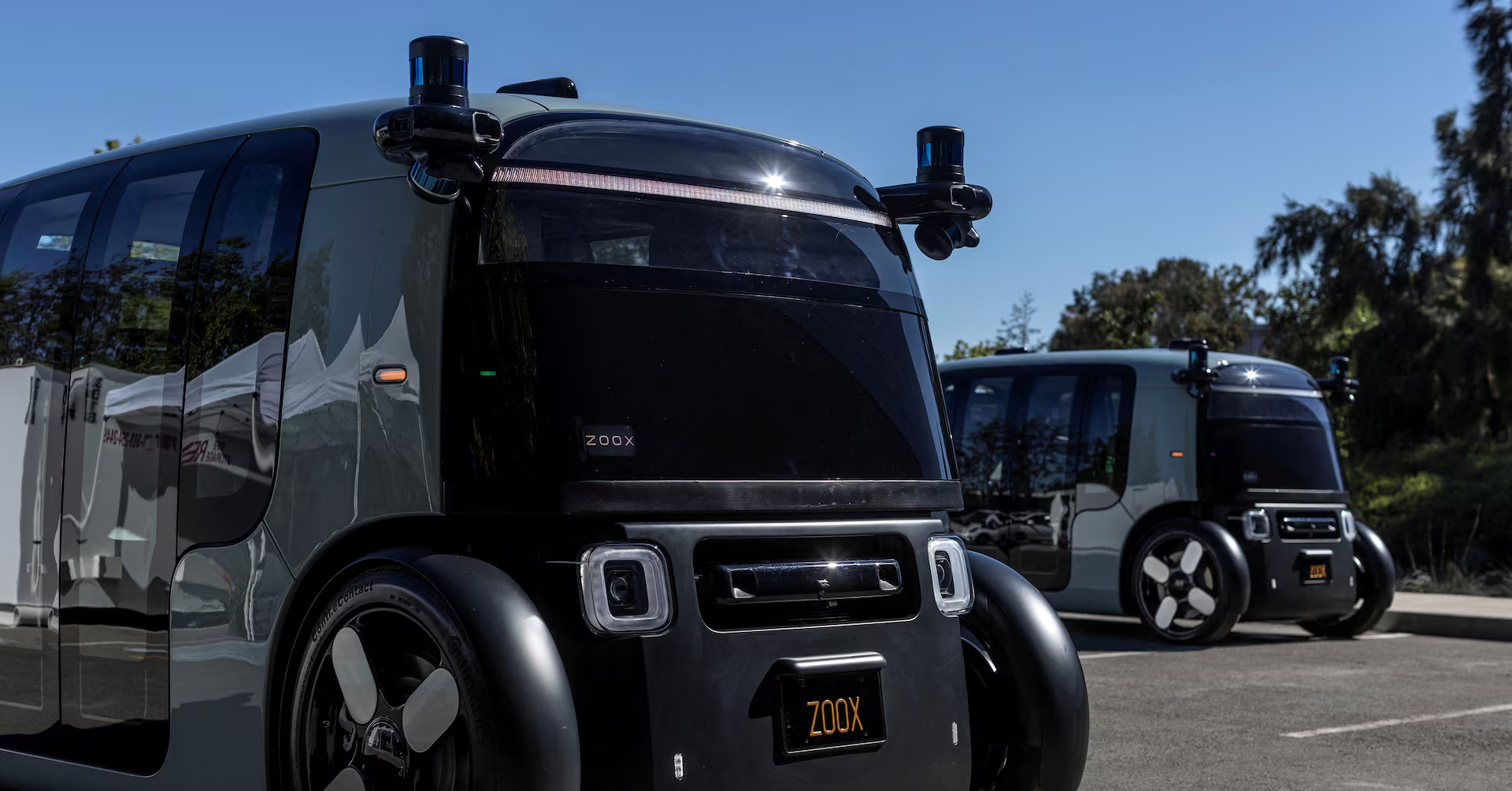
Amazon’s Zoox Issues Software Recall After Self-Driving Robotaxi Crash in Las Vegas

Zoox, the self-driving vehicle subsidiary of Amazon, has agreed to recall 270 autonomous vehicles following an April 8 crash in Las Vegas involving one of its unoccupied robotaxis and a passenger car. No injuries were reported, but the incident prompted a temporary suspension of operations and a subsequent software update to correct the issue.

According to Zoox, the crash occurred when the robotaxi misjudged a perpendicular vehicle’s behavior, incorrectly anticipating that the oncoming car would continue moving. Instead, the car stopped and yielded, but the Zoox vehicle had already slowed and shifted right, leading to a collision despite hard braking.

The company identified that the issue arises when its vehicles travel at over 40 mph (64 km/h) and encounter vehicles that slowly encroach from perpendicular driveways. The system’s failure to accurately predict the yielding vehicle’s stop was the root cause of the incident.

Zoox has since rolled out a software fix to prevent similar errors and stated that the vehicle behavior has been addressed. This marks the second recall in recent months: in April, the National Highway Traffic Safety Administration (NHTSA) closed a probe into 258 Zoox vehicles following two rear-end collisions caused by unexpected braking, after Zoox issued a software update.

However, Zoox remains under NHTSA scrutiny. The agency is still investigating the company’s 2022 self-certification of a robotaxi without traditional controls, such as a steering wheel or pedals.

The incident underscores ongoing regulatory and technical hurdles faced by autonomous vehicle developers as they approach broader deployment.
EA Forecasts Strong Fiscal 2026 Bookings, Fueled by New ‘Battlefield’ Launch and Sports Titles

Electronic Arts (EA) projected fiscal 2026 bookings above Wall Street expectations, driven by strong momentum in its flagship sports titles and the anticipated launch of a new installment in the Battlefield” franchise. The forecast sent EA shares up over 6% in after-hours trading on Tuesday.

EA said it expects bookings to reach between $7.60 billion and $8 billion, slightly surpassing analyst estimates of $7.62 billion, according to LSEG. The company also beat forecasts for its fiscal Q4, reporting $1.80 billion in bookings, compared to the expected $1.56 billion. The performance was buoyed by strong sales of Split Fiction”, a multiplayer action-adventure game that became one of March’s bestsellers.

CEO Andrew Wilson expressed confidence in EA’s future, citing a “deep content pipeline,” beginning with the summer reveal of the new Battlefield game. The launch comes at a favorable time, filling the void left by Take-Two Interactive’s delay of “Grand Theft Auto VI” beyond fiscal 2026 — a shift that analysts believe opens a window of opportunity for EA to capture player attention and spending.

Battlefield gives people something to look forward to and to play until GTA comes out,” noted Wedbush analyst Michael Pachter, highlighting the advantage of not having to compete directly with Rockstar’s highly anticipated title.

In addition to Battlefield, EA continues to benefit from its sports gaming portfolio, with titles like EA Sports FC” and Madden NFL” remaining fan favorites. Notably, in-game monetization for FC” rose by double digits following a January update, signaling a rebound after earlier underperformance.

The company’s upbeat guidance also reflects resilience in gaming demand, even as broader consumer spending faces pressure due to macroeconomic factors and U.S. tariffs.

Meta Wins $168 Million Verdict Against Spyware Firm NSO Group in Landmark Privacy Case

Meta Platforms secured a major legal victory on Tuesday, winning a $168 million verdict against Israeli surveillance firm NSO Group in a landmark case centered on unlawful spyware deployment through WhatsApp. The jury in a California court awarded $444,719 in compensatory damages and $167.3 million in punitive damages, concluding a six-year legal battle.

The case stems from a 2019 lawsuit filed by Meta’s subsidiary WhatsApp, which accused NSO of exploiting a vulnerability in the app to install spyware on users’ phones. A December 2023 ruling had already confirmed NSO’s liability, and Tuesday’s verdict marks a rare legal reckoning for a company in the secretive spyware industry.

Meta hailed the outcome as a step forward for privacy and security,” calling it the first legal victory against the development and use of illegal spyware that threatens global user safety.

NSO, which rose to global notoriety in 2016, is known for its controversial Pegasus spyware, used by governments and intelligence agencies. While the company claims its tools are used to combat terrorism and child exploitation, investigations have linked its software to abusive surveillance practices in countries such as Saudi Arabia, Poland, Mexico, and El Salvador.

In response to the ruling, NSO said it would explore legal options, including an appeal.

The trial also offered a rare glimpse into NSO’s inner workings, revealing details about its 140-person research team, a $50 million budget dedicated to exploiting smartphone vulnerabilities, and clients including Uzbekistan, Saudi Arabia, and Mexico. District Judge Phyllis Hamilton criticized NSO for repeatedly failing to comply with court orders and for withholding key evidence during discovery.

Human rights advocates called the ruling a pivotal moment for accountability in the surveillance industry. Natalia Krapiva of Access Now said it sends a strong message to spyware firms: “There will be consequences if you act recklessly or unlawfully.”