
Google Unveils AI Glasses in Live Demo, Teases Upcoming Gemini Features

Google has recently unveiled several exciting updates to its Gemini platform, including the introduction of the Gemini 2.5 models. However, these updates are just a glimpse into what the tech giant has in store for the future. At a recent TedTalk, the company offered an exclusive live demonstration that showcased its new AI Glasses, providing a sneak peek into their potential capabilities. This demonstration not only highlighted the groundbreaking technology behind the glasses but also gave a hint of upcoming Gemini features that could significantly enhance user experience in the near future.

During the live demo, Shahram Izadi, Vice President and General Manager of Android XR at Google, introduced the AI Glasses in a captivating presentation. The wearable device, which appears to be inspired by the 2013 prototype that never made it to market, is now infused with Gemini’s advanced features. This fusion aims to enhance the glasses’ functionality, making them not just a product of wearables but also a smart device deeply integrated with Google’s AI advancements.

One of the standout features teased in the presentation was Gemini Live, a two-way real-time voice conversation feature designed to transform how users interact with AI. This feature is expected to expand the utility of the glasses, allowing users to engage in seamless, interactive conversations with the device. Whether for professional use, personal assistance, or entertainment, the real-time voice capabilities could redefine the way users experience AI-powered wearables.

Looking ahead, Google hinted at further enhancements to the Gemini platform, focusing on improving both its performance and its integration with wearable technology. With more Gemini features on the horizon, the company aims to create a richer, more interactive user experience, positioning its AI Glasses as an essential tool for the future of wearable technology. As Google continues to innovate, it seems clear that the company is setting the stage for a future where AI seamlessly blends into everyday life through advanced devices like these glasses.

Huawei Preparing to Ship New AI Chip as China Seeks Alternatives to Nvidia Solutions

Huawei Technologies is set to begin mass shipments of its new 910C artificial intelligence chip to Chinese customers as early as next month, according to sources familiar with the matter. These shipments come at a crucial time, as China faces increasing challenges in securing domestic alternatives to Nvidia’s AI chips, which have been restricted due to escalating tensions between the U.S. and China. Some shipments of the Huawei 910C have already been made, with many Chinese AI companies eagerly awaiting a local solution to meet their growing demand for high-performance AI hardware.

The timing of the release is significant, as Chinese AI firms have been scrambling to find alternatives to Nvidia’s H20 chip, which had been widely used in AI development. Recently, the U.S. government announced that sales of the H20 to China would now require an export license, placing additional strain on Chinese tech companies that rely heavily on Nvidia’s advanced GPUs for AI research and deployment. With the Huawei 910C, China is looking to reduce its dependency on foreign technology, particularly in the critical area of AI chip development.

The Huawei 910C, which is a graphics processing unit (GPU), represents an evolution of the company’s previous offerings rather than a revolutionary breakthrough. The 910C combines two 910B processors into a single package using advanced integration techniques, delivering performance that rivals Nvidia’s H100 chip. This architectural design allows Huawei to provide a competitive product without entirely reinventing the wheel, making it an appealing alternative for AI applications in China. While the company has yet to publicly confirm the details of the chip’s capabilities or its shipment schedule, the timing aligns with the urgent need for domestic alternatives to Nvidia’s technology.

The geopolitical context behind the 910C’s development is important, as the U.S. has been restricting the sale of its most advanced AI products to China, citing national security concerns. In addition to the H20 chip, China has also been cut off from Nvidia’s flagship B200 chip, further intensifying the need for local solutions. As Huawei ramps up its efforts to ship the 910C, it is positioning itself as a key player in China’s push to maintain technological independence in the face of foreign restrictions.

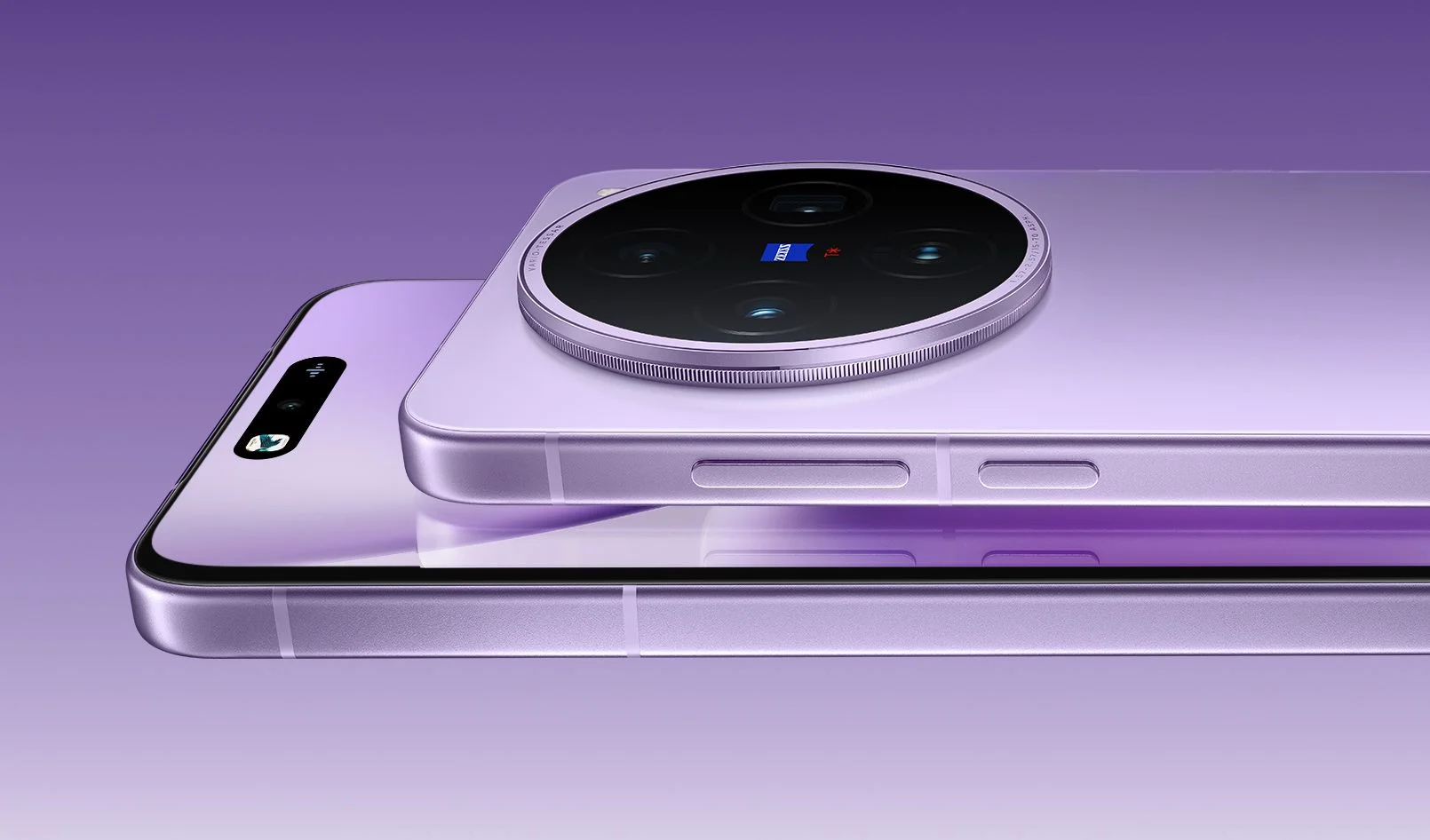
Vivo X200s Unveiled with MediaTek Dimensity 9400+ Chipset and Massive 6,200mAh Battery: Price and Features

Vivo has officially launched the Vivo X200s in China, marking the release of its latest flagship smartphone alongside the Vivo X200 Ultra, Vivo Watch 5, and the Vivo Pad SE and Pad 5 Pro tablets. The Vivo X200s stands out with its powerful 3nm MediaTek Dimensity 9400+ chipset, providing an octa-core processor paired with up to 16GB of RAM and a whopping 1TB of internal storage. This combination promises top-tier performance for gaming, multitasking, and demanding applications. For photography enthusiasts, the Vivo X200s doesn’t disappoint, featuring a versatile triple-camera setup with three 50-megapixel rear sensors, including a periscope shooter, and a 32-megapixel front camera for high-quality selfies.

Battery life is another highlight of the Vivo X200s, as the phone comes equipped with a massive 6,200mAh battery. The device supports both wired and wireless fast charging, ensuring that users can keep their device powered up without long wait times. This substantial battery is especially useful for users who rely on their phone for extended periods, whether for media consumption, gaming, or work tasks.

As for pricing, the Vivo X200s is available in several configurations, catering to different needs and budgets. The base model with 12GB of RAM and 256GB of storage is priced at CNY 4,199 (approximately Rs. 49,000). For those needing more storage, the 16GB RAM + 256GB storage variant is priced at CNY 4,399 (about Rs. 51,400). The 12GB RAM + 512GB, 16GB RAM + 512GB, and the top-of-the-line 16GB RAM + 1TB storage models are priced at CNY 4,699, CNY 4,999, and CNY 5,499, respectively (roughly Rs. 54,900, Rs. 58,900, and Rs. 64,200).

The Vivo X200s is available for pre-order now and will officially go on sale starting April 25 in China through Vivo’s official e-store and other online retailers. The phone is offered in a range of stylish colors, including Light Purple, Mint Blue, Straightforward (white), and Simple Black, giving users a variety of choices to match their personal style. With its premium features and competitive pricing, the Vivo X200s is set to make a significant impact in the flagship smartphone market.