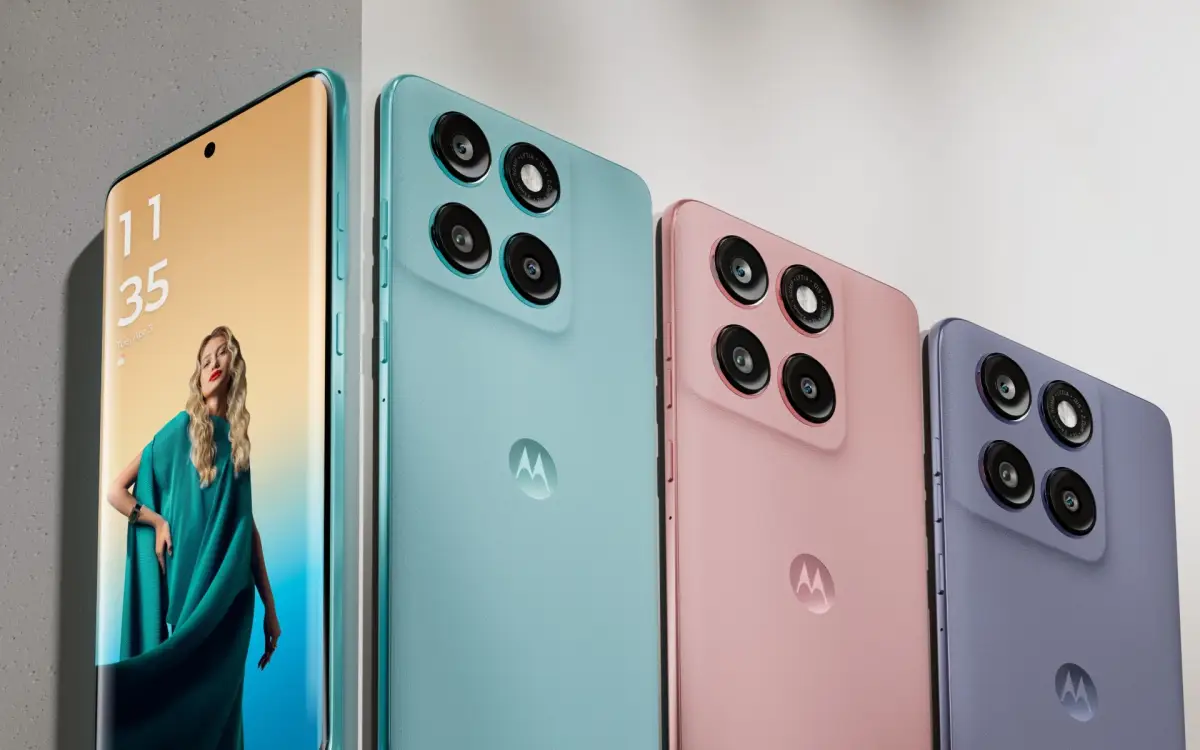
Motorola Edge 60 and Edge 60s Names Confirmed Through HDR10+ Certification Listing

Motorola is expanding its Edge 60 series lineup following the recent launches of the Edge 60 Stylus and Edge 60 Fusion in India. Now, anticipation is building for the arrival of the base model—the Motorola Edge 60—as well as a new variant, the Edge 60s. While the company has yet to confirm the launch timeline, new certifications and leaks are helping piece together what’s coming. Recently, both monikers were spotted on the HDR10+ certification website, confirming their existence and hinting at upcoming global and regional launches.

The HDR10+ listing explicitly names the Motorola Edge 60 and Edge 60s, indicating that these handsets are nearing their official debut. According to the listing, the Motorola Edge 60 appears to be intended for both India and international markets, while the Edge 60s may be a China-exclusive model. While the certification doesn’t provide much in the way of specifications, it does reinforce the expectation that Motorola is continuing to prioritize display quality in its Edge series.

Leaks suggest that the standard Motorola Edge 60 could feature premium specs similar to those seen in its siblings. It is tipped to come with a 6.7-inch curved pOLED display boasting a 1.5K resolution (2,712 x 1,220 pixels) and a 120Hz refresh rate. On the durability front, it may carry a MIL-STD 810H rating, offering enhanced protection against drops and harsh environmental conditions. These upgrades suggest that Motorola aims to blend sleek aesthetics with robust performance.

In the camera department, the Edge 60 is rumored to feature a 50-megapixel Sony Lytia 700C main sensor on the rear and a 50-megapixel front-facing shooter—suggesting a focus on high-quality photography for both regular and selfie modes. While further details are still under wraps, the inclusion of HDR10+ support hints at a visually rich multimedia experience. With these models now officially listed through certification, Motorola fans can likely expect an official announcement in the near future.


Nothing CMF Phone 2 Pro Teased With Dual-Tone Design and Swappable Back Panel

Nothing is gearing up to launch the CMF Phone 2 Pro under its CMF sub-brand on April 28, and ahead of the official debut, the company has begun teasing the device’s standout design features. The latest official teasers confirm that the phone will sport a dual-tone rear panel and be available in two colours—grey and the brand’s signature orange. One of the most distinctive aspects of the phone is its removable back panel, a nod to the CMF Phone 1’s modular aesthetic. Alongside a bold design, the CMF Phone 2 Pro is also set to offer solid performance with the MediaTek Dimensity 7300 Pro chipset and a triple-camera setup led by a 50-megapixel primary sensor.

Images shared on the Flipkart landing page and Nothing’s social media posts reveal more about the phone’s design direction. Visible screws and an accessory attachment point on the back panel suggest a level of customisation and modularity that sets the CMF Phone 2 Pro apart in its segment. Users may be able to swap out panels or attach accessories like a lanyard or card holder, enhancing both functionality and personalization. The device will be available in vibrant finishes and is expected to build on the industrial design language that Nothing has championed in its previous products.

The front of the CMF Phone 2 Pro features a hole-punch display design with symmetrical bezels, aiming for a modern and immersive look. The triple-camera setup on the back is arranged in a unique vertical layout with a third lens and LED flash placed to the side. While the exact pricing is yet to be revealed, Nothing claims this model will feature the “largest and brightest” display in its segment. The company appears to be targeting users who value both design innovation and display performance.

Under the hood, the CMF Phone 2 Pro is expected to deliver a notable performance upgrade over its predecessor. Powered by the MediaTek Dimensity 7300 Pro SoC, it promises a 10 percent boost in CPU speed and up to five percent better GPU output. The chip also includes a sixth-generation NPU capable of up to 4.8 TOPS of AI performance. The phone will also introduce a new Essential Key linked to an AI-powered “Essential Space” for quick access to key apps or functions. On the gaming front, Nothing claims it can hit 120fps in BGMI with a 1,000Hz touch sampling rate. Combined with a lightweight build and versatile camera system—including a 50MP telephoto lens and 8MP ultra-wide sensor—the CMF Phone 2 Pro looks poised to offer an appealing mix of style, power, and utility.

Microsoft Rolls Out Copilot Vision to All Users on Edge Browser

Microsoft has officially rolled out Copilot Vision to all users of its Edge browser, marking a significant expansion of its AI-powered capabilities. Initially introduced in December 2024, Copilot Vision was limited to Copilot Pro subscribers. However, as of last week, the feature is now freely available to every Edge user. Designed to work as a real-time assistant, Copilot Vision enables the AI chatbot to interpret and interact with the contents of any webpage, assisting users with tasks such as summarizing content, identifying visual elements, and even guiding them through online research or shopping.

The announcement was made by Mustafa Suleyman, CEO of Microsoft AI, in a post on X (formerly Twitter). He highlighted the feature’s usability and simplicity, saying it will “think out loud with you when you’re browsing online.” Suleyman emphasized that Copilot Vision is meant to reduce the friction of traditional browsing—eliminating the need to constantly copy-paste text or formulate specific search queries. This announcement signals Microsoft’s commitment to making its AI tools more accessible and integrated directly into everyday digital workflows.

Copilot Vision works by using computer vision to “see” the content of a webpage in real time. It then uses that visual context, combined with user prompts, to generate helpful responses. The tool includes a voice mode, allowing users to speak their requests instead of typing them. Microsoft has opted to make this a user-controlled, opt-in feature to address potential privacy concerns. To enable it, users need to open a specific link within Edge and follow the setup instructions. Once activated, a floating bar with a microphone and text field appears, allowing seamless interaction through voice or text.

In terms of practical uses, Copilot Vision is designed to enhance the browsing experience in meaningful ways. For instance, it can quickly summarize multiple product reviews, helping users make informed decisions. It can also identify and describe specific design elements in product photos—such as determining the style of a piece of furniture—and assist users in locating similar items using conversational prompts. By combining visual context with natural language understanding, Copilot Vision turns the Edge browser into a more intelligent and interactive space for users navigating the web.