
CloudSEK Secures $19 Million Funding to Accelerate AI Development and Platform Expansion

CloudSEK recently announced the successful completion of its combined Series A2 and B1 funding rounds, raising a total of $19 million (approximately Rs. 162.3 crore). This significant capital infusion includes participation from a mix of Indian and US-based investors, underscoring the company’s growing global appeal. While welcoming new investors, CloudSEK’s existing backers have remained committed to the company, signaling strong confidence in its future growth prospects. The fresh funds are primarily earmarked for scaling the company’s artificial intelligence (AI) models and enhancing platform integration capabilities.

The funding round attracted a diverse group of investors, including MassMutual Ventures, Inflexor Ventures, Prana Ventures, Tenacity Ventures, and strategic partners like Commvault. Existing investors such as the Meeran Family, StartupXSeed, Neon Fund, and Exfinity Ventures have continued their involvement, maintaining their stakes in the firm. This continuity indicates sustained trust in CloudSEK’s vision and execution strategy. The collaboration between new and existing investors is expected to provide CloudSEK with both financial support and strategic guidance.

This latest fundraising effort comes four years after CloudSEK’s Series A round led by MassMutual Ventures in 2021, when the company raised $7 million. Prior to that, CloudSEK secured $1.9 million in a pre-Series A round in 2018. The newly raised capital will be invested in product innovation, particularly focusing on expanding CloudSEK’s predictive cybersecurity platform. By leveraging AI, the platform aims to detect cyber threats early by identifying initial attack vectors such as leaked credentials, exposed APIs, and compromised vendors—allowing clients to act proactively before breaches occur.

According to Rahul Sasi, Co-Founder and CEO of CloudSEK, international markets are a major growth driver, with over 60 percent of new revenue coming from outside India. The US is emerging as the company’s fastest-growing region, highlighting the global demand for advanced cybersecurity solutions. Despite this rapid expansion, CloudSEK has managed to remain cash flow positive, demonstrating a balanced approach to scaling and profitability. With this fresh infusion of funds, the company is well-positioned to accelerate AI development and broaden its platform’s integration across global markets.
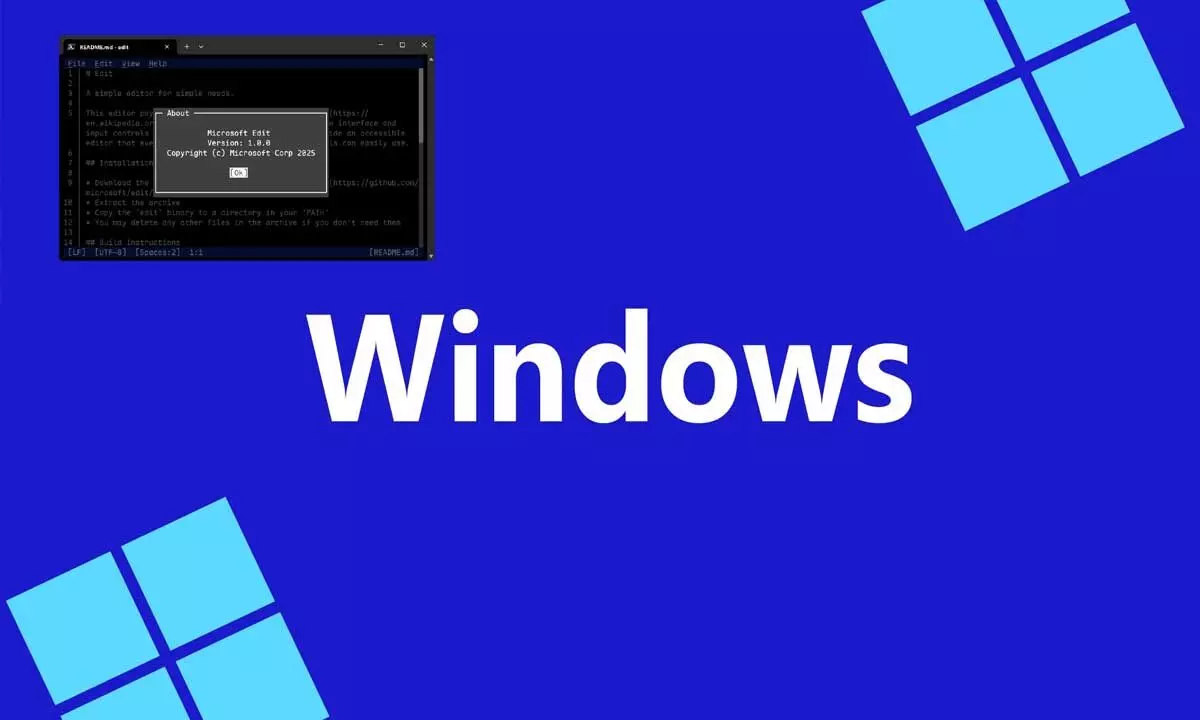
Microsoft Unveils Edit: A New Open-Source Command-Line Text Editor for Windows at Build 2025

At Microsoft’s Build 2025 developer conference, the company unveiled several important updates, with a major focus on advancements in artificial intelligence and agentic technologies. Alongside these AI innovations, Microsoft introduced a brand-new open-source command-line text editor for Windows named Edit. This lightweight yet powerful tool is designed to help developers and users easily edit files directly within the command line interface, offering a blend of simplicity and modern functionality.

Microsoft’s Edit editor is built as a modeless Text User Interface (TUI) editor, allowing users to navigate and modify text without having to switch modes, a feature that simplifies the editing experience. Paying tribute to the classic MS-DOS Editor many remember fondly, Edit modernizes the concept with an interface inspired by Visual Studio Code, making it more user-friendly and accessible to developers who may not be familiar with traditional terminal-based editors. The project is fully open source and available on GitHub, giving the community the chance to contribute, customize, or build the editor from scratch.

One of the key motivations behind creating Edit was to address a common frustration among developers: the difficulty in exiting some command-line editors like Vim, famously encapsulated in the “How do I exit vim?” meme. Christopher Nguyen, Microsoft’s Product Manager for Windows Terminal, explained that Edit aims to offer a straightforward alternative that eliminates such usability hurdles. The tool is specifically tailored for 64-bit Windows environments, filling a gap since MS-DOS Edit is only available on 32-bit Windows, leaving many users without a native CLI editor for modern systems.

Overall, Microsoft Edit represents an effort to modernize the command-line editing experience while maintaining familiarity for longtime users. Its release as open-source software encourages community involvement, ensuring the editor can evolve to meet developers’ needs. By combining ease of use with robust editing features, Edit could become a go-to tool for Windows users seeking a simple yet capable text editor in the terminal.

Apple Releases iPadOS 17.7.8 Update Addressing Major Security Vulnerabilities

Apple has released the iPadOS 17.7.8 update on Monday, following the recent but short-lived iPadOS 17.7.7 version. The earlier update was quickly pulled due to multiple user complaints, including problems with Touch ID login and apps resetting to their initial screens. This new update aims to fix critical security vulnerabilities and stability issues that surfaced in previous versions, ensuring a smoother and safer user experience for compatible iPad devices.

The iPadOS 17.7.8 update carries the build number 21H440 and is available for select models, including the iPad Pro 12.9-inch (2017), iPad Pro 10.5-inch, and the 2018 iPad. Apple specifically mentions that this update replaces the problematic 17.7.7 firmware. Users who experienced disruptions such as apps failing to launch properly or authentication issues with Touch ID should find those problems resolved with this release.

Among the key security fixes, Apple patched a vulnerability in AirDrop that allowed apps to access arbitrary file metadata without permission, now restricted by enhanced permission controls. Additionally, the update addresses a “double free” flaw in the Audio component that could cause unexpected system crashes. Other critical fixes include improved entitlement checks in iCloud Document Sharing to prevent unauthorized folder sharing, as well as tightened lock screen authentication to block unauthorized access to Notes.

Apple also tackled several kernel-level security issues in this update. The previous kernel flaws could have led to memory corruption, unauthorized access to sensitive kernel information, and app crashes. With iPadOS 17.7.8, Apple has removed vulnerable code sections, improved memory handling, and reinforced overall system stability. This update highlights Apple’s ongoing commitment to protecting user data and maintaining device reliability through timely security patches.