
Sergey Brin Breaks Silence at Google I/O 2025, Shares Why He Came Back

At the Google I/O 2025 developer conference, attendees were treated to a major surprise on day one: the unexpected appearance of Google Co-Founder Sergey Brin. Scheduled as a fireside chat between DeepMind CEO Demis Hassabis and moderator Alex Kantrowitz, the session quickly turned into something far more notable when Brin joined the stage. The conversation centered around artificial intelligence, highlighting Google’s latest Gemini tools, the capabilities of its newest AI models, and a bold look toward the future of artificial general intelligence (AGI). Brin also used the opportunity to share why he returned to Google after years of stepping away from day-to-day operations.

Brin’s reentry into the spotlight appeared to be driven by a renewed sense of purpose. He expressed his excitement about the progress in AI and the potential for meaningful breakthroughs that could reshape technology—and even society. Speaking candidly, Brin acknowledged that developments like Gemini represent a pivotal shift in computing, and he believes his presence can help steer Google toward achieving AGI responsibly and effectively. “This is the most interesting and important challenge I’ve seen in decades,” he remarked.

Throughout the discussion, Demis Hassabis emphasized the distinction between current AI models and true AGI. According to Hassabis, AGI is not just about performing tasks—it’s about replicating the broad cognitive flexibility of the human brain. He explained that while today’s models are capable of impressive feats, they still fall short of the consistency, reasoning, and creativity that define general intelligence. Hassabis pointed to the need for breakthroughs in world modeling and logical reasoning before AGI becomes a reality, though he remains optimistic that those breakthroughs are within reach.

When pressed on a timeline for AGI, the panelists offered slightly different forecasts. Brin confidently predicted that AGI would arrive before 2030, aligning with Google’s ambitions for its Gemini platform. Hassabis, slightly more cautious, estimated it might emerge just after that milestone. Regardless of the exact date, both leaders agreed that AGI is no longer a distant dream but a near-future goal—one that Brin is now personally invested in helping realize.

Red Magic 10S Pro and 10S Pro+ Debut Featuring Snapdragon 8 Elite Chipset and Under-Display Front Camera

The Red Magic 10S Pro and 10S Pro+ were officially launched in China, marking the latest additions to Red Magic’s gaming-focused smartphone lineup. Both models are powered by the advanced 3nm Snapdragon 8 Elite “Leading Edition” SoC, paired with up to 16GB of LPDDR5T RAM and a generous 1TB of UFS 4.1 Pro storage. To enhance gaming performance, these devices also feature Red Magic’s proprietary Red Core R3 Pro gaming chip and incorporate composite liquid metal cooling 2.0 technology to keep temperatures in check during intense gaming sessions. Running on Redmagic AI OS 10.5, based on Android 15, the phones offer a smooth and optimized user experience. Photography enthusiasts will appreciate the 50-megapixel main rear camera and the innovative 16-megapixel under-display selfie camera, providing a clean front display without a notch or punch-hole.

Pricing for the Red Magic 10S Pro starts at CNY 4,999 (around Rs. 59,200) for the 12GB RAM and 256GB storage variant, available in Dark Knight and Day Warrior colors. The 16GB RAM with 512GB storage option costs CNY 5,499 (approximately Rs. 65,100). Additionally, a special Deuterium Front Transparent Silver Wing edition is available at a slightly higher price point of CNY 5,299 (Rs. 62,700) for the base model and CNY 5,799 (Rs. 68,700) for the larger RAM and storage option. The Red Magic 10S Pro+ commands a premium with its 16GB + 512GB Dark Quantum variant priced at CNY 5,999 (around Rs. 71,000), while the higher-end Dark Knight and Silver Wing models are listed between CNY 6,299 (Rs. 74,600) and CNY 7,499 (Rs. 77,000) depending on RAM and storage. A limited Mingchao Edition will also launch in June, offering a unique design with 16GB RAM and 512GB storage for CNY 5,999.

Both smartphones sport a large 6.85-inch OLED BOE Q9+ display featuring a 1.5K resolution (1216×2688 pixels), a rapid 144Hz refresh rate, and an impressive 960Hz touch sampling rate. The screens offer 10-bit color depth with 100 percent DCI-P3 coverage and can reach a peak brightness of 2,000 nits, ensuring vivid and bright visuals even in challenging lighting conditions. Advanced features such as DC dimming and a 2,592Hz PWM dimming rate help reduce eye strain during extended gaming or media consumption sessions, making these displays highly optimized for gamers and power users alike.

Under the hood, the Snapdragon 8 Elite chipset combined with the Red Core R3 Pro gaming chip provides powerful performance tailored for gaming and multitasking. The inclusion of up to 16GB LPDDR5T RAM and UFS 4.1 Pro storage ensures fast app loading and smooth operation. Both models come pre-installed with Redmagic AI OS 10.5, based on the latest Android 15, promising timely software updates and a customized interface optimized for gaming and overall user experience. The Red Magic 10S Pro series continues to emphasize premium specs and gamer-centric features, cementing its position in the competitive gaming smartphone market.

Google and TSMC Ink Multi-Year Agreement to Produce Tensor Processors for Upcoming Pixel Devices: Report

Google is gearing up to launch its Pixel 10 series later this year, featuring the next-generation Tensor G5 chipset. This new SoC is reportedly being developed in close collaboration with Taiwan Semiconductor Manufacturing Company (TSMC), continuing the strong partnership between the two firms. According to recent reports from China, Google intends to maintain this collaboration for several years, potentially through the Pixel 14 series, which could arrive as late as 2029.

The long-term partnership between Google and TSMC reflects a deepening relationship with Taiwan’s semiconductor industry. Sources indicate that Google executives recently visited TSMC’s headquarters in Taiwan to discuss expanding their cooperation. The discussions reportedly confirmed a multi-year agreement, ensuring that TSMC will remain the primary manufacturer for Google’s custom Tensor chips well into the future, at least for the next three to five years.

Beyond smartphones, Google’s collaboration with Taiwanese technology firms is expected to grow into other areas, including cloud-based TPU chips, integrated circuit (IC) design, server technology, and advanced liquid cooling solutions. The Pixel 10 series, expected to debut in late 2025, will showcase the first Tensor G5 chip made on TSMC’s advanced 3nm manufacturing process. The lineup is rumored to consist of four models: the Pixel 10, Pixel 10 Pro, Pixel 10 Pro XL, and Pixel 10 Pro Fold.

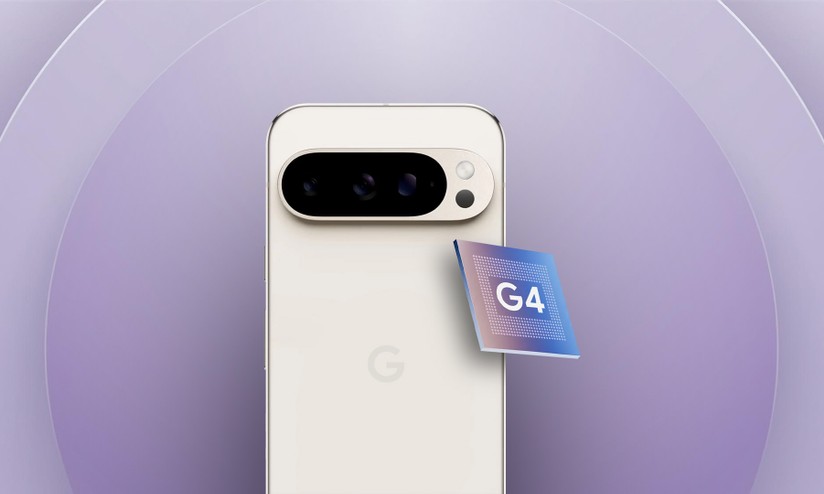
Leaks suggest that the Tensor G5 will bring significant improvements over its predecessor, the Tensor G4. Enhancements may include an always-on compute (AoC) audio processor, Google’s Emerald Hill memory co-processor, a custom DSP called Google GXP, and an EdgeTPU for AI acceleration. The chip is expected to use Arm Cortex CPU cores and feature a GPU designed by Imagination Technologies DXT, promising better performance and efficiency for Google’s upcoming flagship devices.