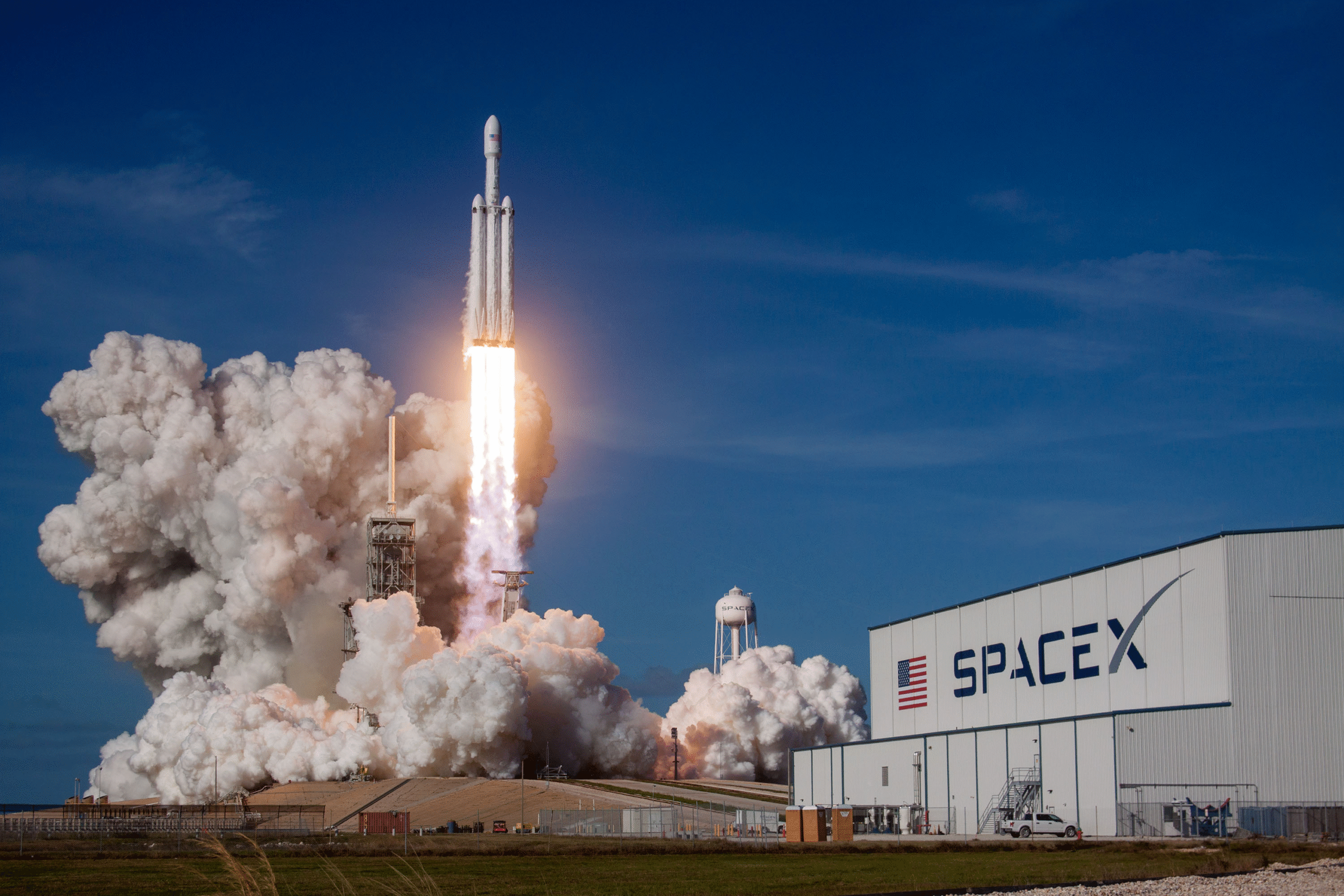
FAA Clears SpaceX Starship for Next Test Flight, Expands Hazard Zones After Debris Incidents

The U.S. Federal Aviation Administration (FAA) has approved SpaceX’s Starship for its ninth test flight, following a series of explosive failures that scattered debris across international territories earlier this year. The launch, now cleared to proceed as early as Tuesday, May 27, will include enhanced safety measures and wider hazard zones along the rocket’s trajectory.

The 400-foot-tall (122-meter) rocket system, a cornerstone of NASA’s Artemis Moon program and Elon Musk’s Mars colonization vision, has faced intense scrutiny following two failed flights in January and March. Debris from those tests impacted areas in Turks and Caicos, the Bahamas, and other parts of the Caribbean, raising diplomatic and safety concerns.

Expanded Flight Safety Protocols

  • The FAA has expanded the Aircraft Hazard Area along Starship’s path:

    • From 885 nautical miles to 1,600 nautical miles

    • Includes airspace over the Straits of Florida, Bahamas, Turks and Caicos, and parts of Mexico and Cuba

  • The expansion is based on an updated flight safety analysis, factoring in:

    • Probabilities of vehicle failure

    • Public safety risks

    • Introduction of booster reuse for the first time in Starship’s test program

“With the Starship vehicle return to flight determination, Starship Flight 9 is authorized for launch,” said the FAA, confirming SpaceX meets all safety, environmental, and licensing standards.

Diplomatic and Environmental Coordination

The FAA emphasized its collaboration with international partners, including:

  • United Kingdom (Turks and Caicos)

  • Mexico, Cuba, and the Bahamas

These nations were involved in post-incident cleanup coordination and expressed concern after debris from previous flights landed in their jurisdictions.

What’s at Stake

  • Flight 9 marks a critical milestone in SpaceX’s goal of reusability, as it attempts to reuse a Super Heavy booster for the first time.

  • Success would represent a major step toward Musk’s ambition to create a rapidly reusable launch system for human space exploration.

  • Delays or additional failures could impact NASA’s Artemis lunar plans, which rely on Starship to land astronauts on the Moon later this decade.

The FAA’s decision reaffirms the agency’s role in balancing commercial innovation with global safety and diplomatic responsibility, as spaceflight increasingly intersects with international airspace and policy.
Anthropic Launches Claude Opus 4 AI Model Capable of Autonomous Multi-Hour Coding

AI startup Anthropic has unveiled Claude Opus 4, its most advanced artificial intelligence model to date, claiming the system can now code autonomously for hours — a significant leap in the evolution of long-context, reasoning-driven AI tools. The company also introduced Claude Sonnet 4, a smaller, cost-efficient sibling model designed for broader accessibility.

Backed by tech giants Alphabet (Google) and Amazon, Anthropic has carved a niche in building safe, high-performing AI assistants, with software development and autonomous task execution as core strengths.

What’s New with Claude Opus 4?

  • Autonomous task handling extended from minutes to multiple hours

    • Example: Opus 4 was used by Rakuten to code for nearly 7 hours continuously

    • Another experiment had it play a 24-hour session of Pokémon — up from just 45 minutes with Claude 3.7 Sonnet

  • Enhanced long-form coherence and persistent memory

  • Improved context retention, logic, and decision-making over extended periods

“For AI to truly have the economic and productivity impact that it can, models need to work autonomously and coherently for long periods,” said Mike Krieger, Anthropic’s Chief Product Officer.

Key Technical Upgrades

  • Models now toggle between fast responses and deep reasoning based on the complexity of the task

  • Integrated web search capability for real-time information retrieval

  • Claude Code, Anthropic’s developer tool for software engineering, is now generally available after a February preview

Strategic Context

The release comes in a week marked by major AI updates from Google and OpenAI, reflecting the intensifying race for AI supremacy. With Claude Opus 4, Anthropic positions itself as a strong contender in the high-performance, enterprise-ready AI space — particularly in software engineering, automation, and long-context tasks.

Market Implications

  • Strengthens Anthropic’s value proposition for enterprise use cases such as code generation, virtual R&D assistants, and simulation tools

  • Places pressure on rivals including OpenAI’s GPT-4, Google’s Gemini, and Mistral’s open-weight models

  • Reinforces investor confidence in Anthropic’s multibillion-dollar backers, as the startup moves toward fully autonomous AI agents

China to Streamline Rules for Overseas Tech Listings, Vows Greater Support for Startups

China’s securities regulator will establish a more transparent and predictable regulatory framework to support technology firms seeking overseas listings, a senior official announced Thursday, signaling Beijing’s renewed push to boost capital access for its tech sector amid intensifying U.S.-China tensions.

Speaking at a news briefing, Yan Bojin, Chief Risk Officer at the China Securities Regulatory Commission (CSRC), said the regulator aims to simplify procedures and safeguard fund usage, ensuring capital raised from IPOs is channeled directly into core business operations rather than speculative activities.

“We will support more high-quality, unprofitable tech companies to go public,” Yan said, referencing China’s desire to emulate Western models of nurturing early-stage innovation through public markets.

Key Highlights:

  • Improved regulatory clarity for tech firms listing abroad

  • Stronger oversight on how IPO funds are used

  • Expanded support for pre-profit tech startups to access equity markets

  • Further reforms to Shanghai’s STAR Market and Shenzhen’s ChiNext board

  • Encouragement for “red-chip” tech companies (Chinese firms listed in Hong Kong) to consider domestic IPOs

Strategic Context

The policy update comes amid:

  • Beijing’s push for tech self-sufficiency, especially in semiconductors and AI

  • Escalating U.S. export controls and investment restrictions targeting Chinese tech firms

  • Efforts to keep promising Chinese startups within domestic capital markets, rather than relying heavily on U.S. IPO routes

The CSRC’s focus on “red-chip” firms also suggests efforts to strengthen Hong Kong’s role as a financial bridge while still drawing key players back to mainland exchanges.

Implications

The shift is seen as part of a broader capital markets reform agenda that aims to:

  • Enhance investor confidence

  • Deepen tech financing channels

  • Retain strategic tech assets within China’s influence

  • Reduce dependence on Western listing venues, particularly as geopolitical risks mount

While regulatory challenges and global tensions remain, the announcement marks a clear signal that Chinese authorities are seeking to balance market openness with national security priorities.