CoreWeave Shares Dip Despite $4B OpenAI Deal as Investor Concerns Over Spending Linger

CoreWeave (CRWV.O) shares fell 2.5% on Thursday despite announcing a major $4 billion expansion deal with OpenAI, as investor concerns persisted over the company’s aggressive spending plans relative to its projected revenue.

The Nvidia-backed cloud computing firm said during its first post-IPO earnings call on Wednesday that it plans to spend nearly four times its expected 2025 revenue, triggering skepticism despite strong top-line partnerships.

Key Deal Highlights:

  • OpenAI, a major CoreWeave client, will pay the company through April 2029, as per a newly disclosed regulatory filing.

  • This is in addition to their existing $11.9 billion, five-year cloud services contract, which includes equity ownership by OpenAI in CoreWeave.

  • CoreWeave also confirmed that it signed a new hyperscaler client, but declined to identify the company.

Market Reaction and Analyst Views:

  • Stock Performance: Despite the dip, CoreWeave shares remain up over 64% since their March IPO.

  • Analyst Reactions:

    • Morgan Stanley and MoffettNathanson speculate the unnamed new hyperscaler is Alphabet (Google), citing earlier reports that Google was exploring renting Nvidia chips from CoreWeave.

    • However, Gil Luria of D.A. Davidson & Co warned that hyperscalers are temporary clients, likely to exit once their own infrastructure catches up.

They will likely go away once they have built out enough of their own data centers,” Luria said.

Context: AI Boom Meets Investor Caution

CoreWeave is part of a growing class of infrastructure providers fueling the AI boom by offering GPU-as-a-service platforms to leading AI developers. Yet, the AI investment wave is entering a more scrutinized phase, as cheaper models from firms like DeepSeek raise questions about sustainability and margins.

Despite robust demand and high-profile partnerships, CoreWeave’s heavy capital expendituresfar outpacing revenue — remain a red flag for value-focused investors, especially as competitors build out in-house capabilities.

Still, at least seven brokerages have raised their price targets for CoreWeave stock to between $50 and $80, showing continued optimism about the company’s long-term role in AI infrastructure.
Google One Surpasses 150 Million Subscribers as AI Drives New Growth

Google One, Alphabet’s subscription service for cloud storage and AI tools, has crossed 150 million subscribers, marking a 50% jump from February 2024, when the service reached the 100 million milestone, the company confirmed to Reuters.

This rapid growth follows the launch of a new AI-powered premium tier in February 2024, priced at $19.99 per month, which offers access to advanced AI capabilities not available to free users. Google executives said the AI tier alone has already attracted “millionsof users.

Strategic Importance:

  • Google One’s success underscores Alphabet’s shift toward subscription-based revenue, helping diversify beyond digital advertising, which still accounts for over 75% of its $350 billion in 2024 revenue.

  • AI tools included in the premium tier are tied closely to Google’s Gemini project, its flagship response to competitors like OpenAI’s ChatGPT.

AI’s Impact on Search — and the Stakes:

Alphabet’s AI pivot comes as its core search business faces disruption:

  • AI-generated answers are causing a decline in traditional web searches, notably on Apple’s Safari browsera shift confirmed by Apple executives in court testimony.

  • Apple is now exploring AI-powered search options, a strategic threat that recently led to a $150 billion drop in Alphabet’s market value in a single day.

Just like you’ve seen with YouTube, we’ll give people options over time,” said CEO Sundar Pichai, signaling a subscription-focused monetization path for Gemini AI, rather than ad-based models.

The Bigger Picture:

  • AI interfaces, unlike search engines, have yet to integrate ads effectively, prompting many companies, including Google, to charge for access through subscriptions or usage-based pricing.

  • Google One’s rapid subscriber growth may serve as proof of concept for AI monetization in the consumer space — a key priority as Alphabet’s ad-centric business model evolves.

With AI adoption accelerating and competitors like Apple and Microsoft moving aggressively into the space, Google One’s success offers a glimpse into Alphabet’s strategy to retain consumer engagement and build recurring revenue streams in the post-search era.

Trump Concludes Gulf Tour with AI Chip Deal and $440B Energy Investment Pledge from UAE

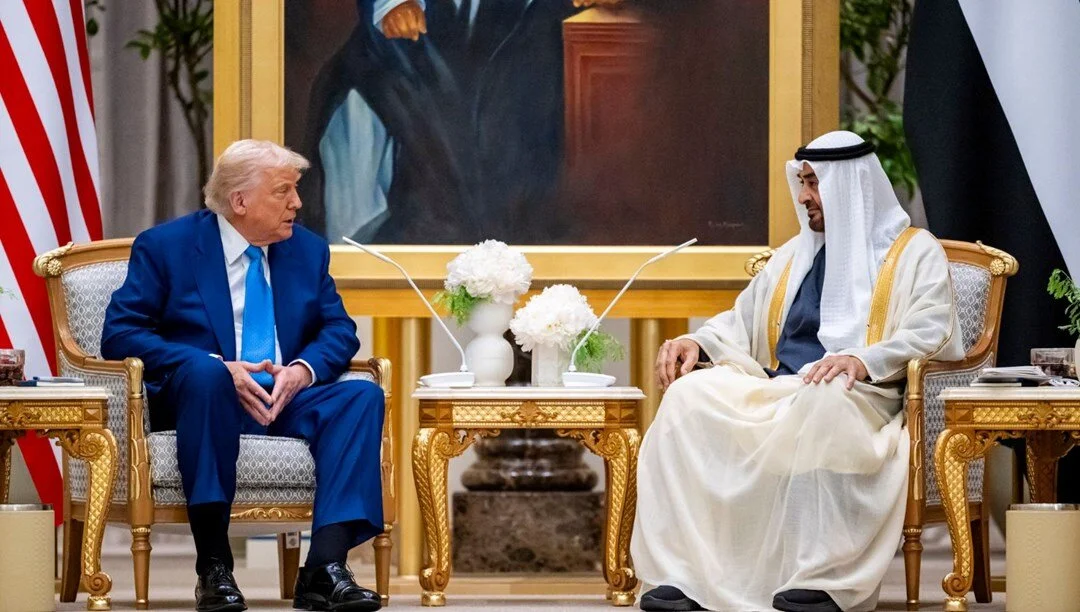
President Donald Trump wrapped up a high-stakes four-day Gulf tour in Abu Dhabi on Friday, securing a string of massive AI and energy agreements with the United Arab Emirates (UAE), aimed at boosting U.S. economic interests and reinforcing strategic ties in the region.

Key Highlights:

  • The U.S. and UAE reached a landmark agreement to create a path for Abu Dhabi to purchase advanced AI semiconductors from American companies — a significant win for the UAE’s goal of becoming a global AI hub.

  • The deal will require U.S. companies to manage the data centers, addressing long-standing U.S. security concerns around chip diversion to China, the UAE’s largest trading partner.

This will generate billions and billions of dollars in business,” Trump said, calling it a step that will accelerate the UAE’s plans to become a really major player in artificial intelligence.”

$440 Billion Energy Investment Boost:

  • Sultan Al Jaber, CEO of Abu Dhabi’s energy giant ADNOC, announced that the UAE would increase its energy investment in the U.S. to $440 billion by 2035, up from $70 billion today.

  • New partnerships will include $60 billion in upstream oil and gas investments involving major U.S. companies such as ExxonMobil, Occidental Petroleum, and EOG Resources.

  • Trump praised the commitment as part of a broader $200+ billion deal package signed with the UAE during the visit, including:

    • A $14.5 billion Etihad Airways investment in 28 Boeing aircraft

Strategic Context:

  • The UAE has pledged $1.4 trillion in investments over 10 years across sectors like AI, energy, and manufacturing to deepen U.S. ties.

  • Trump’s visit to Saudi Arabia, Qatar, and the UAE focused on economic diplomacy, not regional conflicts, marking a pivot from security to commercial engagement.

Geopolitical Developments:

  • Trump confirmed the lifting of U.S. sanctions on Syria, enabling a new $800 million deal between Dubai-based DP World and the Syrian government to develop the port of Tartous.

  • He formally recognized Syria’s new interim government, led by President Ahmed al-Sharaa, and urged it to normalize ties with Israel and join the Abraham Accords.

  • Trump also reiterated that Iran has a U.S. nuclear deal proposal in hand and must act quickly:

They know they have to move quickly or something bad—something bad’s going to happen,” he said.

The Gulf tour underscores Trump’s broader strategy of leveraging economic partnerships and AI leadership as tools of diplomacy, while taking bold moves on Middle East realignment, including Syria and Iran policy shifts.