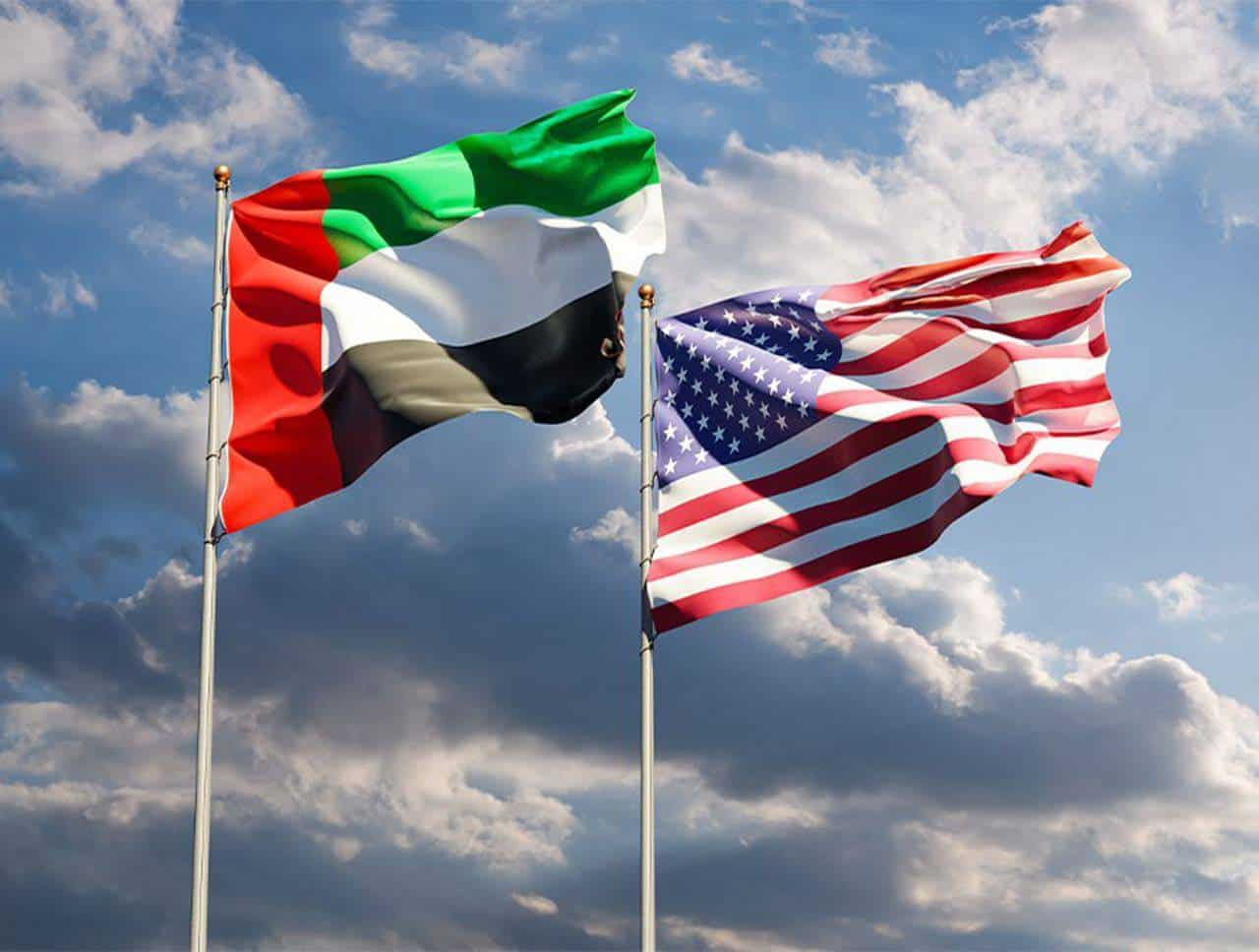
U.S. and UAE Finalize Tech Security Agreement Amid AI Expansion Plans

The United States and United Arab Emirates have finalized a technology framework agreement, expected to be signed Thursday during President Donald Trump’s final stop on his Gulf tour, according to a source familiar with the matter. The deal emphasizes mutual commitments to technology security, a key concern amid growing geopolitical tensions and the global AI arms race.

Strategic Significance:

The agreement is seen as a major diplomatic and technological milestone for the UAE, which aims to position itself as a global leader in artificial intelligence and digital innovation. For Washington, the deal strengthens control over the flow of advanced U.S. technologies, particularly AI chips, to friendly nations while keeping them out of adversarial hands like China’s.

AI Chip Context:

  • The tech pact closely follows reports that the U.S. and UAE are nearing a separate agreement allowing the UAE to import 500,000 of Nvidia’s most advanced AI chips annually starting in 2025.

  • The chips, likely from Nvidia’s Blackwell or forthcoming Rubin series, would significantly boost the UAE’s AI data center infrastructure, including projects linked to UAE-based firm G42.

  • The import deal would include provisions requiring reciprocal infrastructure investment in the U.S., reinforcing bilateral cooperation.

Broader Implications:

The finalized framework reinforces the U.S. strategy of deepening tech ties with Gulf allies while maintaining tight export controls to prevent sensitive technologies from reaching China. It also enhances the UAE’s reputation as a trusted AI development hub, backed by Western partnerships.

Neither the White House, the U.S. Commerce Department, nor the UAE or Chinese foreign ministries responded to requests for comment.

This agreement could accelerate the UAE’s emergence as a third global center for AI innovation, alongside the U.S. and China, reshaping the landscape of AI development and governance in the years to come.


ECB Targets Early 2026 Political Agreement for Launch of Digital Euro

The European Central Bank (ECB) aims to have all key political decisions in place by early 2026 to pave the way for launching a digital euro, ECB Executive Board Member Piero Cipollone said on Thursday. Once the necessary legislation is finalized, the ECB expects it would take two to three years to launch the digital currency.

Although the ECB has been exploring a digital euro for several years, progress has been slow due to the absence of a proper legal framework. Cipollone expressed hope that EU political consensus could be reached before summer 2025, with additional legislative work by the European Parliament extending into early 2026.

Key Features of the Digital Euro:

  • Provides consumers with a direct claim on the ECB, unlike current card payments through private providers like Visa or Mastercard.

  • Designed to function similarly to cash, offering high security and offline payment options.

  • Supports both online and in-person transactions, enhancing digital resilience and financial sovereignty.

Strategic Context:

The urgency behind the initiative has increased due to geopolitical developments, particularly following the election of Donald Trump, which has heightened concerns over European dependence on U.S.-based digital payment infrastructure. Europe currently relies heavily on American financial firms, posing a potential strategic vulnerability.

French central bank governor François Villeroy de Galhau, also speaking at the event, noted that recent political shifts, such as Trump’s return to office, have strengthened the ECB’s resolve to press ahead with the digital euro project.

If launched successfully, the digital euro would position Europe among the global leaders in central bank digital currencies (CBDCs), alongside initiatives already underway in China and the United States.

Siemens Beats Q2 Forecast, Sees Limited Profit Hit From Tariffs

Siemens reported stronger-than-expected second-quarter earnings on Thursday and said the global surge in tariffs will have only a limited impact on its full-year profit, thanks to its diversified global manufacturing base and flexible pricing strategy.

The German industrial giant, known for its factory automation systems, software, and rail technology, posted a 29% rise in industrial profit to 3.24 billion, well above analyst expectations of 2.75 billion.

Tariff Strategy and Global Footprint:

CEO Roland Busch stated that while trade barriers do pose challenges, Siemens is well-positioned to mitigate their impact. The company estimates the total tariff-related effect on 2024 profit will be in the high double-digit to low triple-digit million-euro range.

To minimize exposure, Siemens is:

  • Adjusting procurement strategies

  • Diversifying production

  • Increasing prices selectively (but cautiously)

We’re going to act with a slow hand,” said CFO Ralf Thomas, indicating Siemens is not planning any immediate price hikes or shifts in manufacturing locations. The company operates 150 factories worldwide, including 28 in the U.S., 23 in China, and 12 in India, reducing its vulnerability to any one region’s trade policy.

Market Outlook:

Despite global economic uncertainty and customer caution — partly stemming from trade tensions between the U.S. and China, even as they declared a truce this week — Siemens reaffirmed its full-year sales growth forecast of 3% to 7% through September.

Siemens competes globally with peers like Schneider Electric and ABB, and remains a key barometer for global industrial demand. Its resilience to tariffs and strong quarterly performance reinforce investor confidence, even in a volatile trade environment.