Tesla Ditched Robotaxi Lease Plan, Sold Returned Vehicles for Profit Instead

Tesla quietly ended a years-long policy that blocked U.S. customers from buying their leased vehicles, a policy originally justified by CEO Elon Musk’s 2019 claim that returned cars would be used in the company’s upcoming robotaxi” network. The autonomous fleet never materialized — and instead, Tesla flipped many of the off-lease vehicles for profit through resale, according to a Reuters investigation citing multiple sources familiar with Tesla’s retail operations.

Background: The Robotaxi Promise

In 2019, Musk publicly stated that Tesla would not allow lease buyouts because it needed the vehicles back for its planned fleet of self-driving robotaxis, claiming:

Next year, for sure, we’ll have over 1 million robotaxis on the road.”
This never happened. Instead, Tesla:

  • Upgraded returned cars with high-margin software features like “Full Self-Driving” ($8,000–$15,000) and “acceleration boost” ($2,000)

  • Resold them to new customers at higher prices than lease-end buyouts would have yielded

  • Blocked lessees from buying vehicles for years, citing the robotaxi plan that never materialized

Lease Policy Reversal

On November 27, 2023, Tesla quietly reversed the policy. A post from its North America X account (formerly Twitter) announced that Lease buyout now available” for new contracts. Its website was also updated to reflect that leased cars may be eligible for purchase”a major shift after years of denying customers that right.

Legal but Misleading

While Tesla’s no-buyout lease terms were likely legal, critics argue they were deceptive, especially given Tesla’s continued robotaxi narrative. Many lessees were led to believe their cars were headed for autonomy, only to discover they were sold in secondary markets.

  • Joe Mendenhall, a lessee from Indiana, was told multiple times his Model Y was bound for robotaxi duty. He later learned it was auctioned off:

Lies about not being able to buy out my lease,” he posted.

  • Another customer, Marshall Distel, expressed regret over his association with Musk, saying:

I love the car, I just don’t like what has been going on at the top with the CEO.”

Business Strategy Masked by Autonomy Claims

Tesla’s strategy of reselling off-lease cars at inflated prices was financially lucrative — especially when used car prices soared during the pandemic. However, now that demand has cooled and used Tesla prices are plummeting, the company appears to have changed course.

  • Tesla vehicles now depreciate faster than most EVs, with used Model Y prices falling 14.1% and Cybertruck prices plunging 46% over the last year, according to CarGurus.

  • During the January earnings call, Tesla CFO Vaibhav Taneja acknowledged “lower profit from used car business” as a reason for margin decline.

Investor Illusion

The robotaxi story also helped sustain investor confidence — contributing to Tesla’s high stock valuation despite lack of profitability from full autonomy. Firms like Ark Investment cited Tesla’s off-lease fleet as a potential base for an autonomous ride-hailing service, a belief now shown to be based on unfulfilled assumptions.

Conclusion

Tesla’s abandoned robotaxi lease plan reflects a broader pattern of overpromising and underdelivering on autonomous driving, while capitalizing on consumer and investor expectations. As the company faces softening demand, depreciating assets, and growing political backlash, its strategic pivots — and past missteps — are drawing renewed scrutiny.
Eutelsat Meets Revenue Forecasts as OneWeb Gains Government Clients Amid Geopolitical Shifts

Eutelsat reported 300 million in third-quarter revenue for its 2024–25 fiscal year, slightly below last year’s figure but in line with analyst expectations. The French satellite operator, which owns OneWeb, the world’s second-largest low-Earth orbit (LEO) satellite constellation, is seeing a rise in government demand for secure, non-American and non-Chinese satellite services.

Key Financials:

  • Q3 revenue fell 1.9% year-on-year

  • Analyst consensus was 302 million, with estimates ranging from €294 million to €307 million

  • Government services revenue rose 10.2%, the fastest-growing segment, fueled by geopolitical demand for independent satellite connectivity

Strategic Positioning:

Eutelsat’s OneWeb network, with over 600 LEO satellites, offers secure broadband services to governments and militaries at approximately 1,200 km altitude. This positions it as a European alternative to SpaceX’s Starlink, which has over 7,000 satellites and deep traction with commercial clients.

Eutelsat CFO Christophe Caudrelier emphasized the strategic importance of non-U.S. and non-Chinese alternatives in satellite communication:

With the current geopolitics, there is interest from many countries… Many non-aligned countries are seeking alternative, non-American, non-Chinese solutions,” he stated.

Challenges & Developments:

  • The company experienced a drop in its U.S. Department of Defense contract renewal rate to 50%, citing structural changes in U.S. spending under President Donald Trump’s administration. Without that one-off, the renewal rate would have been closer to 70%.

  • Eutelsat also took a 16 million revenue hit due to EU sanctions requiring the cessation of Russian channel broadcasts.

  • The firm is actively seeking new capital investors to support its future financing needs.

Despite the recent CEO replacement, Eutelsat reaffirmed its full-year outlook, signaling stability in operations as it navigates market transitions and growing demand for secure satellite services from non-aligned nations.

Trump Announces $200 Billion in U.S.–UAE Deals, Inks Major AI Agreement

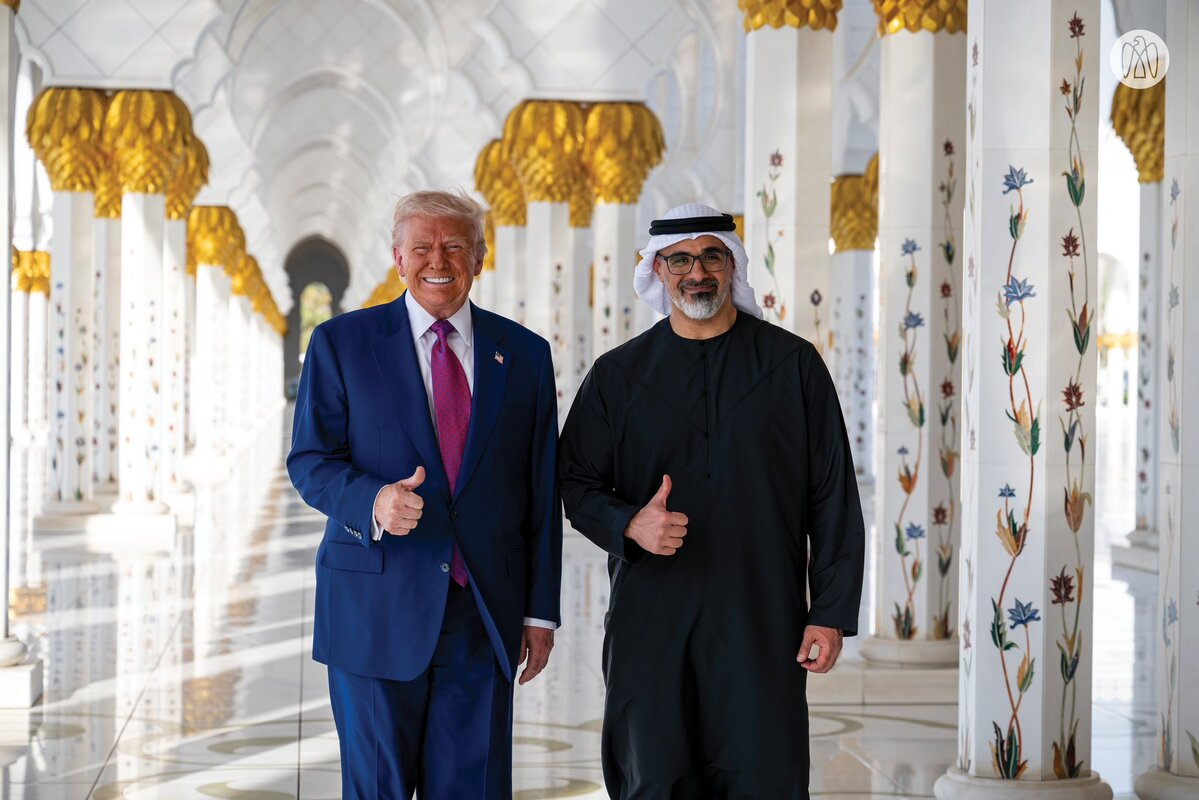
President Donald Trump, during his visit to the United Arab Emirates (UAE) on Thursday, announced over $200 billion in new deals between the two nations, including a landmark agreement to deepen cooperation in artificial intelligence (AI). The visit capped his three-nation Gulf tour, which also included Qatar and Saudi Arabia.

Following a meeting with UAE President Sheikh Mohamed bin Zayed Al Nahyan, the White House detailed major business and technology partnerships, including a $14.5 billion aircraft order by Etihad Airways for Boeing jets powered by GE Aerospace engines.

AI and Tech Cooperation:

Trump and Sheikh Mohamed also unveiled a 5-gigawatt AI campus, which will become the largest AI hub outside the U.S. A centerpiece of the visit was the signing of the U.S.–UAE AI Acceleration Partnership, which includes:

  • A commitment by the UAE to invest in U.S.-based data centers with capabilities matching or exceeding those in the UAE.

  • Import of 500,000 advanced Nvidia AI chips annually, per a prior agreement reported by Reuters.

  • UAE pledging to align its national security regulations with U.S. standards to prevent the diversion of AI technology to adversarial nations, particularly China.

Nvidia CEO Jensen Huang was seen in discussions with the leaders during the announcement.

Additional Economic Deals:

  • Emirates Global Aluminum to build a $4 billion aluminum smelter in Oklahoma.

  • $60 billion energy cooperation between UAE’s ADNOC and U.S. firms ExxonMobil, Occidental Petroleum, and EOG Resources.

  • A reaffirmation of the UAE’s $1.4 trillion, 10-year U.S. investment commitment, originally announced by Sheikh Tahnoon bin Zayed.

Broader Diplomatic and Regional Impact:

Trump’s visit follows major deals in Qatar and Saudi Arabia, including:

  • $600 billion Saudi commitment to invest in the U.S.

  • Qatar Airways’ deal to buy up to 210 Boeing widebody aircraft

  • $142 billion in U.S. arms sales to the Saudi kingdom

Trump also used the trip to announce diplomatic shifts:

  • A potential nuclear deal with Iran reportedly near completion

  • Sanctions lifted on Syria, with a meeting held with interim President Ahmed al-Sharaa

  • Encouragement for Syrian-Israeli normalization

Trump framed his Gulf tour as a strategic effort to solidify U.S. influence and transform the Middle East into a third global power center in AI, alongside the U.S. and China.