Nvidia and Foxconn in Talks to Deploy Humanoid Robots at New Houston AI Server Factory

Taiwanese electronics manufacturer Foxconn and U.S. AI chipmaker Nvidia are reportedly negotiating to introduce humanoid robots at Foxconn’s upcoming factory in Houston, which will produce Nvidia AI servers. According to sources familiar with the discussions, this would mark the first time Nvidia products are manufactured with the help of humanoid robots and Foxconn’s inaugural use of such robots in an AI server production line.

The planned deployment, expected to be finalized within months, represents a significant advancement in the use of human-like robots in manufacturing, potentially transforming factory processes. Foxconn is working on its own humanoid robots in collaboration with Nvidia and has also tested humanoids developed by China’s UBTech. Details on the specific types, appearances, and number of robots planned for the Houston facility remain unclear.

The goal is to have the humanoid robots operational by the first quarter of next year, coinciding with the start of production for Nvidia’s GB300 AI servers at the Houston plant. While precise tasks have not been confirmed, Foxconn has been training humanoid robots for activities such as picking and placing objects, cable insertion, and assembly, according to a May company presentation.

Foxconn’s Houston factory is particularly suited for humanoid robot deployment due to its newness and ample space compared to existing AI server production sites. Nvidia and Foxconn declined to comment on the matter, and sources spoke anonymously due to lack of authorization to speak publicly.

At a recent event in Taipei, Leo Guo, general manager of Foxconn Industrial Internet’s robotics unit, revealed plans to showcase two humanoid robot models at Foxconn’s annual tech event in November—one with legs and another on a wheeled autonomous mobile robot base, the latter being the more cost-effective option.

Nvidia announced in April its plans to build AI supercomputer manufacturing plants in Texas, partnering with Foxconn in Houston and Wistron in Dallas, with production ramp-up expected within 12 to 15 months.

For Nvidia, integrating humanoid robots in AI server manufacturing signifies a deeper commitment to robotics technology, building on its existing platform that supports humanoid robot development. Nvidia CEO Jensen Huang has forecasted that widespread use of humanoid robots in manufacturing is less than five years away.

Several automakers, including Mercedes-Benz and BMW, have experimented with humanoid robots on production lines, while Tesla is developing its own. China also heavily supports humanoid robotics, anticipating that many factory tasks will eventually be carried out by these robots.

Pope Leo Urges Politicians to Address Challenges of Artificial Intelligence

Pope Leo cautioned politicians on Saturday about the growing challenges posed by artificial intelligence (AI), particularly emphasizing its impact on younger generations. Speaking at an event attended by Italian Prime Minister Giorgia Meloni and parliamentary delegations from 68 countries, the pope highlighted that AI should serve as a tool to benefit humanity rather than diminish or replace people.

This topic has been a recurring concern for Pope Leo since the early weeks of his papacy. Speaking during the Roman Catholic Jubilee or Holy Year event, he underscored that AI proponents argue the technology can accelerate scientific progress and help free people from routine tasks, enabling more creative and valuable work.

Italian Prime Minister Meloni pledged to uphold the pope’s message, committing Italy to efforts domestically and internationally to ensure AI development remains human-centered, prioritizing human wellbeing. She also referenced the pope’s criticism of the growing divide between the rich and poor in society.

The U.S.-born pope stressed the need to protect healthy, fair lifestyles, especially for the youth, contrasting AI’s “static memory” with the “creative, dynamic” power of human memory. He emphasized that personal life holds greater value than any algorithm, and that social relationships require development spaces beyond the limited frameworks of machine programming.

Since becoming pope in May, Leo has spoken about AI’s threat to employment and urged responsible use of the technology by journalists and society at large.

US May Target Samsung, Hynix, and TSMC Operations in China by Revoking Trade Authorizations

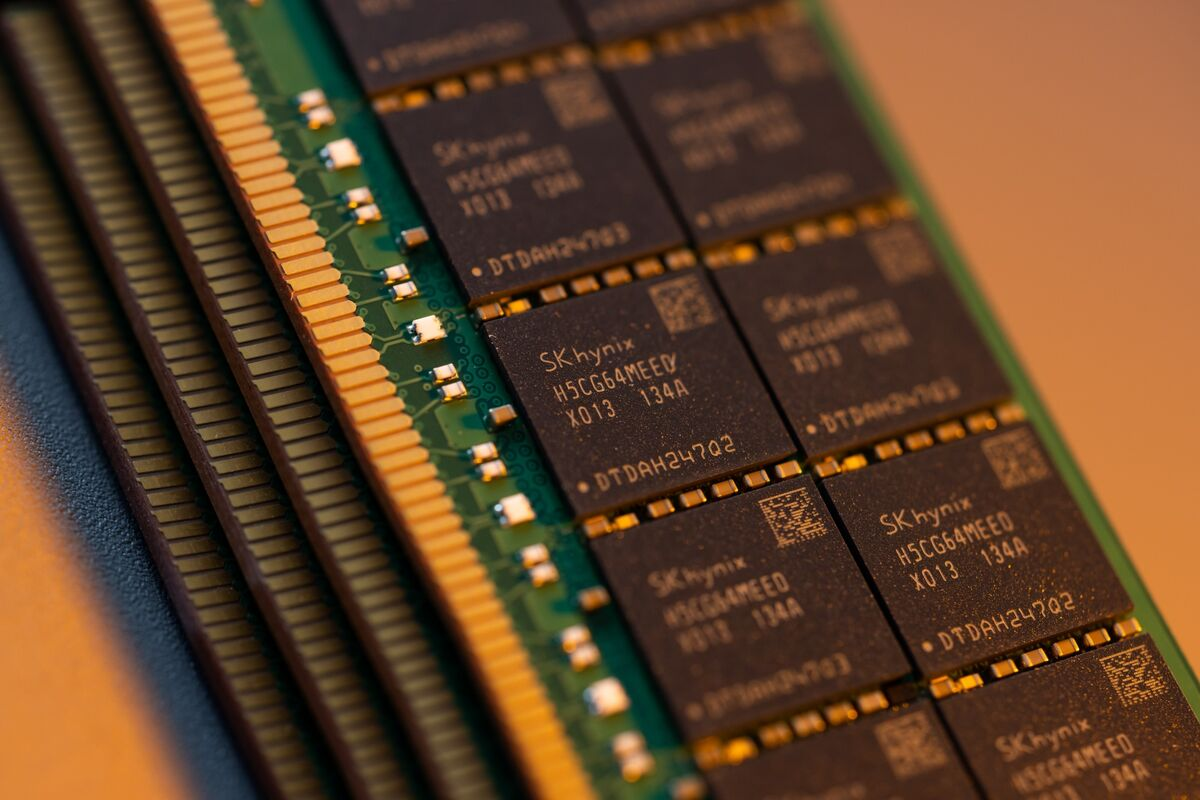
The U.S. Department of Commerce is considering revoking authorizations granted in recent years to major chipmakers Samsung, SK Hynix, and TSMC that allow them to receive U.S. goods and technology at their manufacturing plants in China, sources familiar with the matter said. This potential move would complicate operations for these foreign semiconductor firms in China, where they produce chips used across many industries.

While the likelihood of the U.S. actually withdrawing these authorizations remains uncertain, officials view the tactic as a contingency if the current trade truce between the U.S. and China deteriorates. A White House official emphasized that the U.S. is “just laying the groundwork” and expressed confidence the trade agreement would continue, including the agreed supply of rare earth minerals from China. The official clarified that “there is currently no intention of deploying this tactic,” but it remains a tool in case bilateral relations worsen.

Following early reports, shares of U.S. semiconductor equipment suppliers that serve Chinese plants dropped: KLA Corp fell 2.4%, Lam Research declined 1.9%, and Applied Materials sank 2%. Conversely, shares of Micron Technology, a key competitor to Samsung and SK Hynix in memory chips, rose 1.5%.

TSMC declined to comment, while Samsung and SK Hynix did not respond to requests for comment. Lam Research, KLA, and Applied Materials also did not immediately respond.

Background: In October 2022, the U.S. imposed broad restrictions on chipmaking equipment exports to China but provided foreign firms like Samsung and SK Hynix with letters authorizing shipments. In 2023 and 2024, these companies received “Validated End User” (VEU) status, which allows them to obtain U.S.-controlled products more quickly and reliably without needing multiple export licenses. However, VEU status comes with conditions such as equipment prohibitions and reporting requirements.

A Commerce Department spokesperson said chipmakers would still be able to operate in China if the authorizations are revoked. The enforcement mechanisms would align with licensing rules for other semiconductor firms exporting to China, ensuring the U.S. applies an equal and reciprocal approach.

Industry insiders warn that stricter U.S. controls could unintentionally benefit Chinese domestic competitors by making it harder for foreign companies to receive equipment, calling such a move “a gift” to China’s semiconductor industry.