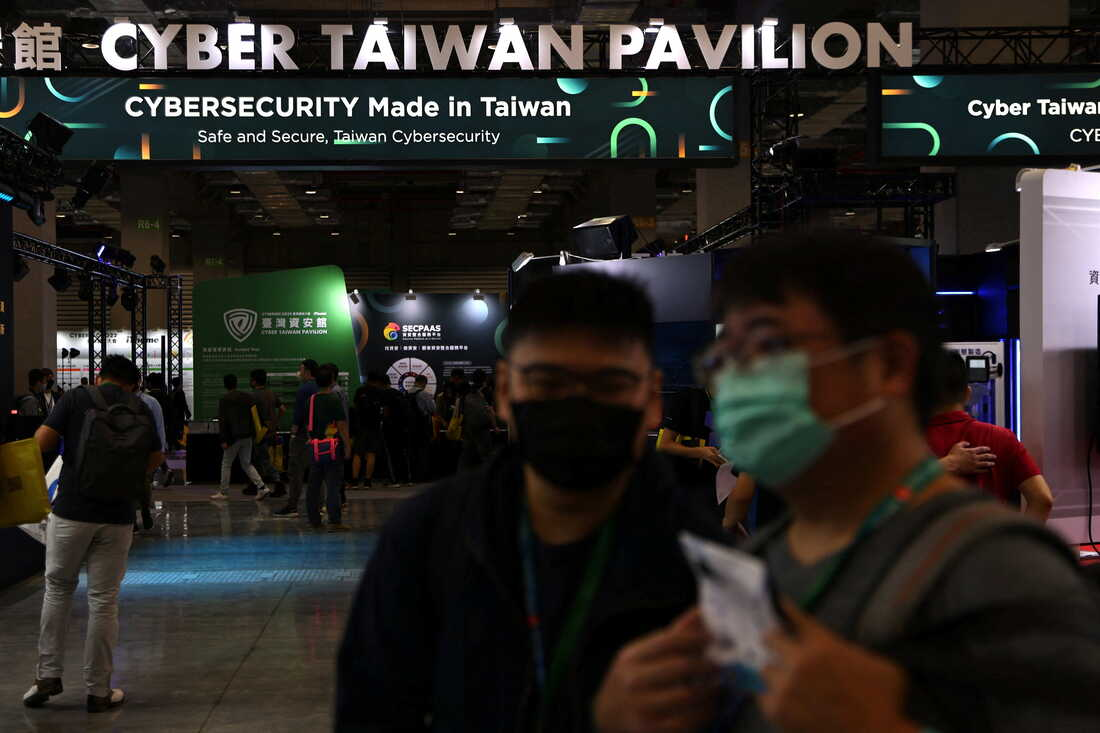
Taiwan Cyber Unit Unfazed by China’s Bounty Threat on Alleged Hackers

Taiwan’s cyber defense forces have vowed not to be intimidated by China’s offer of monetary rewards for the arrest of 20 individuals Beijing claims are Taiwanese military hackers, the island’s defense ministry said on Wednesday. Taiwan emphasized that China’s legal system holds no jurisdiction over the democratically governed island.

The controversy escalated last week when China’s Guangzhou Public Security Bureau named and published photos, names, and identity card numbers of the alleged hackers linked to Taiwan’s Information, Communications and Electronic Force Command, offering rewards exceeding $1,000 for their capture. Beijing’s Taiwan Affairs Office warned that it would “pursue the matter to the end” and would not show leniency.

In response, Taiwan’s defense ministry condemned China for spreading false narratives and using “cross-border rewards” as part of what it called a disinformation campaign to weaken military morale. Taiwan’s constitution affirms that Chinese laws have no binding authority on the island or its people.

“The officers and soldiers of the Information, Communications and Electronic Force Command will remain steadfast,” the ministry said, “defending the digital frontier and ensuring national security through solid information defense.”

Taiwan has frequently accused China of extensive cyberattacks and disinformation campaigns aimed at undermining public trust in Taiwan’s government, amid increasing military and political pressure from Beijing.

Synopsys Resumes Limited Services in China Amid U.S. Export Restrictions, Core Tool Sales Still Blocked

Synopsys has partially resumed some services in China after suspending operations earlier this month in response to new U.S. export curbs, according to a source with direct knowledge of the situation. The California-based semiconductor design software provider had halted sales and access to its SolvNet customer support portal to comply with broad U.S. restrictions aimed at limiting technology exports to China.

The source revealed that while Synopsys has restarted sales of non-core hardware and intellectual property (IP) to serve some existing Chinese clients, sales of critical Electronic Design Automation (EDA) tools remain suspended. These essential EDA tools are necessary to fully utilize the company’s IP and hardware products, such as the HAPS and ZeBu hardware-assisted verification systems, which are primarily used for accelerating chip verification.

SolvNet has reopened with limited access, restricting some software-related documents, further impacting Chinese customers’ ability to use Synopsys’ full range of services.

Synopsys, along with Cadence and Siemens EDA, dominates the global EDA market with over 70% market share in China, according to the Chinese state news agency Xinhua. The ongoing restrictions on EDA tool sales pose a significant challenge to Chinese semiconductor design companies, potentially hindering the country’s chipmaking industry.

Following the U.S. export controls, Synopsys suspended its annual and quarterly revenue forecasts, reflecting uncertainty about future sales prospects in China.

The company did not immediately respond to requests for comment.

Nvidia to Build Germany’s First Industrial AI Cloud, Boosting Europe’s AI Infrastructure

Nvidia announced plans to develop its first artificial intelligence cloud platform for industrial applications in Germany, CEO Jensen Huang said Wednesday at the VivaTech conference in Paris. The AI cloud will combine artificial intelligence with robotics to support automotive giants like BMW and Mercedes-Benz in tasks ranging from product design simulation to logistics management.

Huang also detailed a broader Europe-focused strategy including expanding Nvidia technology centers across seven countries, launching a compute marketplace for European companies, and advancing AI models in multiple languages. The company is supporting drug discovery efforts with partners like Novo Nordisk.

“In just two years, we will increase the amount of AI computing capacity in Europe by a factor of 10,” Huang declared during his nearly two-hour presentation.

Europe is embracing the concept of “AI factories,” large-scale infrastructures dedicated to AI model development, training, and deployment. Huang announced plans for 20 such AI factories across the continent.

Huang is scheduled to visit Berlin Friday and is expected to meet with German Chancellor Friedrich Merz, signaling political support for the initiative.

Though specifics about the plant’s location, cost, and construction timeline were not disclosed, the move could be a win for Germany’s ruling coalition following recent setbacks with Intel and Wolfspeed suspending factory plans.

While Europe trails the U.S. and China in AI development, the European Commission revealed a $20 billion investment plan to build four AI factories earlier this year.

Additionally, Nvidia is partnering with European AI startup Mistral to power AI computing using 18,000 latest Nvidia chips for European enterprises.

“Sovereign AI is an imperative—no company, industry or nation can outsource its intelligence,” Huang said.

He emphasized the importance of AI adoption to avoid falling behind globally and expressed optimism about quantum computing’s near-term impact, noting it could solve complex problems beyond even advanced AI systems.

This announcement reinforces Nvidia’s role as a global AI infrastructure leader and marks a significant step in strengthening Europe’s AI ecosystem.