Shanghai Regulator Considers Policy Responses to Stablecoins and Digital Currencies, Signaling Shift in China’s Crypto Stance

A regulatory body in Shanghai convened a meeting this week with local government officials to discuss strategic policy responses toward stablecoins and cryptocurrencies, marking a notable shift for China, where crypto trading remains banned. The meeting, held on Thursday by the Shanghai State-owned Assets Supervision and Administration Commission, follows growing calls from experts and major Chinese companies to develop a yuan-pegged stablecoin.

He Qing, director of the Shanghai regulator, emphasized the need for “greater sensitivity to emerging technologies and enhanced research into digital currencies” during the session, according to the regulator’s official WeChat post. The meeting was attended by roughly 60 to 70 participants.

Shanghai, as China’s leading international financial center, often pilots regulatory reforms. Nick Ruck, director at LVRG Research, highlighted Shanghai’s potential to shape blockchain-based payment innovations, given China’s strong fintech ecosystem.

Globally, blockchain-based stablecoins—typically pegged to fiat currencies and enabling faster, cheaper transactions—have gained momentum. ARK Investment Management estimates that stablecoin transaction volumes reached $15.6 trillion worldwide last year, surpassing Visa’s transaction value. The U.S. has seen growing interest from large companies such as Amazon and Walmart in launching stablecoins.

In Asia, South Korea’s government has pledged to allow won-based stablecoins and support related infrastructure, though the central bank advises a cautious, gradual approach. Within China, companies like JD.com and fintech giant Ant Group have urged the People’s Bank of China to approve yuan-based stablecoins to counter the dominance of U.S. dollar-linked cryptocurrencies. Both plan to seek stablecoin licenses in Hong Kong, where legislation takes effect on August 1.

The Shanghai meeting included a policy expert from Guotai Haitong Securities, who provided an overview of cryptocurrencies and stablecoins, examined global regulatory frameworks, and offered policy suggestions for digital currency development.

Meanwhile, Yang Tao, deputy director of the National Institution for Finance and Development, recommended exploring yuan-based stablecoin issuance in both the Shanghai Pilot Free Trade Zone and Hong Kong simultaneously.

Despite this increasing interest, significant hurdles remain. China’s capital controls present major challenges for stablecoin development, and central bank governor Pan Gongsheng recently warned that the rise of digital currencies and stablecoins poses serious regulatory challenges. Cryptocurrency trading and mining were banned in mainland China in 2021 over financial stability concerns.

While stablecoins are gaining attention domestically, the future of other cryptocurrencies in China remains uncertain. Outside the mainland, cryptocurrencies continue to grow in popularity, with Bitcoin recently hitting a record high above $118,000.
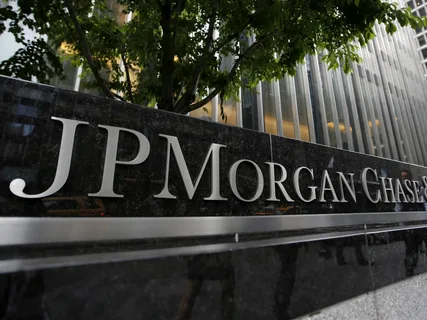
JPMorgan to Charge Fintech Firms for Access to Customer Bank Data, Bloomberg Reports

JPMorgan Chase is planning to start charging fintech companies for access to its customers’ bank account data, Bloomberg News reported Friday, citing sources familiar with the matter. The U.S.’s largest bank has sent pricing proposals to data aggregators — intermediaries that connect banks with fintech platforms — outlining fees that may vary depending on the use case. Payment-focused fintech firms are expected to face higher charges.

A JPMorgan spokesperson stated the bank has invested heavily in building a secure system to protect customer data. The spokesperson added that JPMorgan is engaging with industry players to ensure necessary investments are made in infrastructure that safeguards customer information.

This move could disrupt payment app companies that currently rely on free access to customer financial data to facilitate transactions. Following the news, shares of major payment firms fell sharply: PayPal dropped 6.3%, Block fell 5.6%, while Visa and Mastercard declined around 2.8% and 2.9%, respectively.

The fees are expected to be implemented later this year but remain subject to negotiation, according to Bloomberg.

In the broader regulatory context, U.S. banking giants like JPMorgan are advocating for lighter regulations under President Donald Trump’s administration, in contrast to the stricter capital requirements imposed during the Biden administration.

European Securities Regulator Warns Crypto Firms Against Misleading Customers on Regulation

Europe’s securities regulator, the European Securities and Markets Authority (ESMA), issued a warning on Friday to crypto companies about misleading customers regarding the regulatory status of their products. The caution comes as European authorities intensify efforts to curb risks associated with crypto assets.

Under the EU’s new crypto regulation framework, known as MiCA, a series of investor protections are in place, including rules on safeguarding client assets and managing complaints. However, ESMA highlighted concerns over crypto asset service providers (CASPs) offering both regulated and unregulated products on the same platform, which poses risks to investors who may not clearly understand which products fall under MiCA’s protections.

ESMA pointed out that some CASPs might exploit their regulated status as a marketing tool, potentially confusing customers about which services are regulated. The regulator stressed that firms must not use their MiCA licensing as a promotional device or suggest that all crypto offerings are covered by the EU’s rules when they are not.

Products outside MiCA’s regulatory scope include direct investments in commodities like gold and crypto lending services.

The move follows global regulatory concerns about crypto investor risks, especially after the collapse of major crypto platforms such as FTX in 2022, which resulted in significant investor losses.

MiCA requires companies offering crypto services to obtain a license from national regulators, enabling them to operate across the EU. ESMA also issued guidance on the knowledge and competence standards that staff should meet to properly assess crypto companies.

ESMA’s warning coincides with the release of a peer review on Malta’s licensing process for crypto firms. The review found that while Malta’s Financial Services Authority has sufficient expertise and resources, its authorization procedures only “partially” met expected standards. Malta defended its role as an early adopter of digital asset regulation but did not directly respond to ESMA’s critique.

Concerns have been raised behind closed doors about the rapid pace at which some EU member states grant crypto licenses, according to previous Reuters reports.