
U.S. Eases Chip Software and Ethane Export Curbs Amid China Trade Truce

The United States has lifted export restrictions on chip design software and ethane to China, signaling further de-escalation of trade tensions between the world’s two largest economies. The move follows Beijing’s agreement to ease controls on rare earth exports—a key concession that helped maintain a fragile trade truce.

Restrictions Reversed

Leading electronic design automation (EDA) software firms—Synopsys, Cadence Design Systems, and Siemens—confirmed they are resuming sales and support for Chinese customers after receiving notification from the U.S. Department of Commerce that prior restrictions have been revoked.

  • Siemens announced Thursday it has restarted business operations in China, causing its shares to rise 1.7% after market opening.

  • Synopsys said it plans to restore customer access within three business days.

The EDA tools, essential for advanced semiconductor design, are dominated by these three firms, which together control over 70% of China’s market, according to Xinhua.

Ethane Export Curbs Also Rescinded

On the same day, the U.S. government also notified ethane producers that licensing requirements imposed in May and June had been withdrawn, allowing resumption of exports to China.

These curbs had been part of a broader U.S. response to China’s April suspension of rare earth exports, which had disrupted global supply chains for automakers, aerospace firms, chipmakers, and military contractors.

The Bigger Picture: Rare Earths for Rollbacks

According to a source familiar with the internal U.S. strategy, the Biden administration took a calculated step:

“The U.S. have escalated to de-escalate. They put restrictions on many more items in order to get the Chinese to back off on rare earths.”

Following negotiations, both sides reportedly confirmed a framework agreement in which:

  • China will review export applications for sensitive goods,

  • And the U.S. will roll back countermeasures imposed earlier this year.

China’s Commerce Ministry affirmed the arrangement last Friday, paving the way for what analysts describe as a return to February-March status quo.

Remaining Uncertainties

Despite the rollback on EDA tools and ethane, it remains unclear whether the U.S. has also lifted other strategic restrictions, including:

  • GE Aerospace’s license suspension for jet engine exports to COMAC’s C919 aircraft,

  • Or limitations on nuclear equipment suppliers selling to Chinese power plants.

The U.S. Department of Commerce has not yet commented on the latest developments.

Outlook

With both countries aiming to stabilize economic relations amid broader geopolitical tensions, more trade rollbacks could follow—particularly if the framework agreement holds. However, sector-specific restrictions tied to national security concerns are likely to remain or evolve in other forms.

France’s SNCF to Roll Out Satellite Internet on Trains Amid European Connectivity Push

France’s state railway operator SNCF is preparing to introduce satellite internet on its trains, joining a growing movement across Europe to improve onboard connectivity using low Earth orbit (LEO) satellite networks. The company announced on Friday it will launch a tender seeking providers to supply satellite-powered internet services.

Dual-Network Strategy

In a statement to Reuters, SNCF said it is adopting an “innovative approach” that combines terrestrial (4G/5G) and satellite internet to enhance network resilience and continuity across its vast rail network, including in rural and isolated areas.

“The satellite plus 4G/5G combination would eliminate dead zones and offer stable, fast service adapted to new uses such as streaming or video conferencing,” the company said.

Possible Partners: Starlink and Eutelsat

According to a source familiar with the matter, Elon Musk’s Starlink and France’s Eutelsat are among the companies being considered for the project. While SNCF declined to confirm specific talks, Eutelsat has publicly expressed interest, stating it is already in discussions with SNCF about a potential pilot project.

A Eutelsat spokesperson highlighted its experience in similar pilot efforts in Britain and Kazakhstan, and emphasized its position as one of only two active LEO providers currently operating, alongside Starlink. Eutelsat’s OneWeb network, backed by the French government, operates more than 600 LEO satellites.

“We intend to bid for the contract with our French partners such as Orange Business Services,” said the spokesperson.

A Broader European Trend

France’s move mirrors similar efforts across Europe:

  • Italy’s Ferrovie dello Stato ran a two-week trial in June with providers including Starlink.

  • Scotland’s ScotRail began a six-week Starlink trial in May.

These initiatives seek to address longstanding problems with mobile-based train internet, which often suffers from dead zones, tunnel interference, and rapid handovers between towers—particularly challenging at high train speeds.

In contrast, LEO satellites offer more stable, continuous coverage, including in rural and mountainous regions where cellular signals are often weak or absent.

Looking Ahead

With public demand growing for high-speed, uninterrupted internet on the move, satellite connectivity is poised to become a mainstay of next-generation transportation infrastructure. France’s entry into the space-connected railway space may soon redefine the standard for European rail travel.

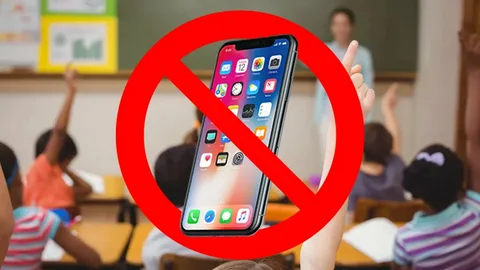
Dutch School Smartphone Ban Shows Clear Gains in Focus and Social Interaction

A government-commissioned study has found that the Netherlands’ nationwide ban on smartphones and electronic devices in schools is leading to notable improvements in student focus, social interaction, and even academic performance.

Key Findings from the Study

Since the ban came into effect on January 1, 2024, affecting both primary and secondary schools, the impact has been particularly evident in high schools:

  • 75% of the 317 surveyed secondary schools reported improved student concentration.

  • Two-thirds of the schools noticed a better social environment.

  • One in three schools said they observed a positive impact on academic results.

Although the ban also applies to primary education, the effects were less significant there. The study notes that students typically begin bringing phones to school only in their final years of primary school.

Government Response

Dutch State Secretary for Primary and Secondary Education, Marielle Paul, welcomed the study’s findings:

“Less distraction, more attention to the lesson, and more social students. No more mobile phones in the classroom is having wonderful positive effects. It’s great that schools are putting their shoulders to the wheel on this.”

Flexibility for Medical Needs

While the policy is strict, exceptions are made for medical or educational needs, such as students using hearing aids or other assistive devices connected to smartphones.

Broader Context

The Dutch move aligns with a growing international trend of reassessing the role of mobile phones in education, with similar debates ongoing in countries like France, the UK, and Australia. The study strengthens arguments that reducing digital distractions can contribute to healthier, more productive learning environments.