
Hubbell to Acquire DMC Power in $825 Million Deal to Strengthen Power Infrastructure Portfolio

Hubbell Inc. announced on Tuesday that it will acquire peer DMC Power for $825 million in cash, aiming to expand its portfolio of high-voltage power components as demand for electricity surges.

California-based DMC Power specializes in designing and manufacturing connector technology systems for high-voltage power infrastructure, a business that complements Hubbell’s substation and transmission connector solutions. The acquisition comes as utilities and manufacturers prepare for increasing electricity needs driven by artificial intelligence, modern data centers, and upgrades to aging infrastructure.

“As load growth, datacenter buildouts and aging infrastructure drive highly visible utility substation and transmission investment over the next several years, the acquisition of DMC Power expands Hubbell’s strong presence in these attractive markets,” said Hubbell CEO Gerben Bakker.

Hubbell, which recently raised its annual profit forecast due to rising demand, expects the deal to enhance its long-term growth. DMC Power employs more than 350 people, operates two manufacturing facilities, and maintains multiple distribution sites across North America.

The acquisition is expected to close by the end of 2025. Hubbell projects that the deal will boost adjusted earnings per share beginning in 2026. The company plans to finance the purchase through a mix of cash reserves and debt.
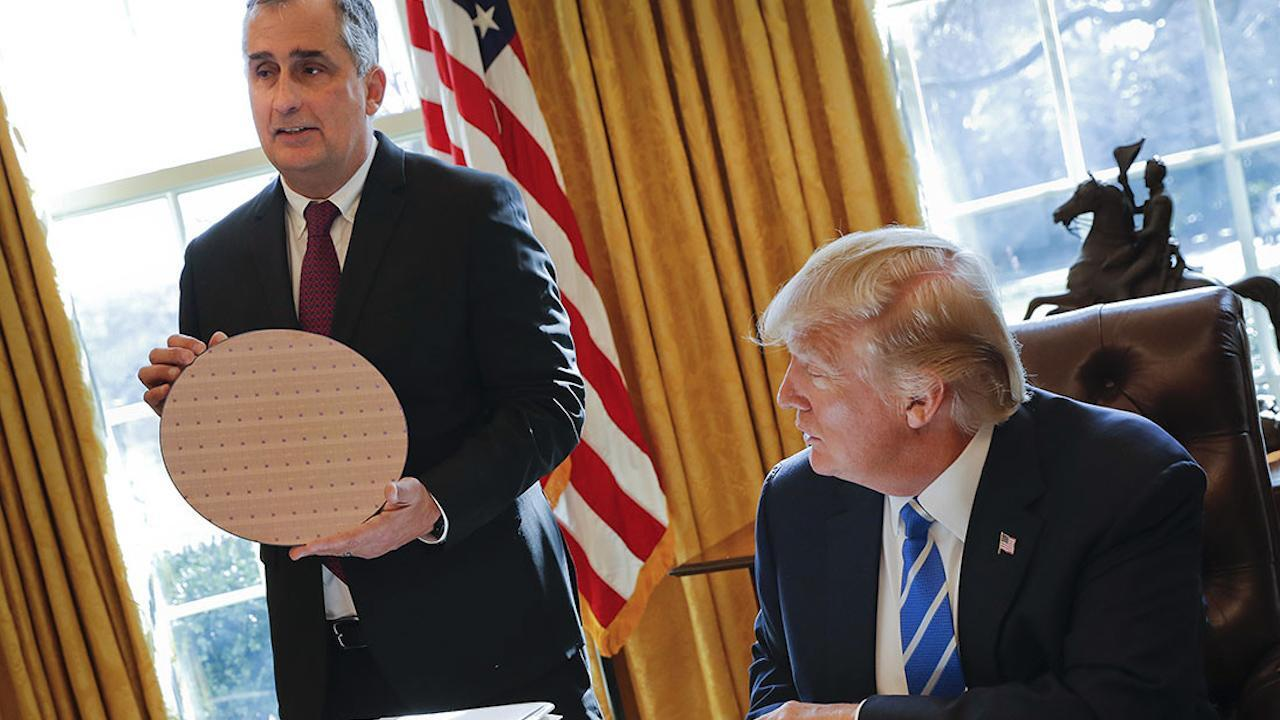
Trump Meets with Intel CEO Tan After Resignation Demands

U.S. President Donald Trump met with Intel CEO Lip-Bu Tan on Monday, just days after publicly demanding his resignation over alleged conflicts of interest tied to investments in Chinese firms. Following the meeting, Trump praised Tan, calling the discussion “very interesting.” Intel’s stock rose 3% in extended trading.

Last week, Trump had accused Tan of being “highly conflicted” due to his extensive ties to Chinese companies, some of which were reportedly linked to China’s military. Though such investments are not illegal unless involving entities on the U.S. Treasury’s restricted list, the revelations created uncertainty around Intel’s ongoing turnaround effort.

During the White House meeting, Trump was joined by Commerce Secretary Howard Lutnick and Treasury Secretary Scott Bessent. Trump said the officials, along with Tan, would provide him with further recommendations next week. Despite earlier criticism, Trump acknowledged Tan’s career as “an amazing story.”

Tan, who has been Intel’s CEO for roughly six months, is leading efforts to reposition the company amid heavy losses and fierce competition from Nvidia in the AI chip market. His strategy has included major asset sales, layoffs, and resource reallocation. However, Trump’s intervention—demanding his resignation—has raised concerns among investors and industry insiders that political pressure could derail Intel’s recovery.

Intel released a statement emphasizing Tan’s constructive dialogue with Trump and reaffirming its commitment to U.S. technology and manufacturing leadership. The company pledged to work closely with the administration to “restore this great American company.”

Trump’s direct involvement highlights his unusual influence over corporate governance, following a recent deal requiring Nvidia and AMD to share 15% of their China sales revenue with the U.S. government.

Trump Suggests Allowing Scaled-Down Nvidia AI Chips Sales to China Amid Security Concerns

U.S. President Donald Trump signaled on Monday that he may permit Nvidia to sell a reduced-performance version of its next-generation Blackwell AI chips in China, raising alarms in Washington about Beijing’s potential access to cutting-edge computing power.

Trump told reporters that Nvidia CEO Jensen Huang had discussed a “somewhat enhanced-in-a-negative-way Blackwell,” explaining it would carry 30–50% less computing power than the U.S. flagship model. “That will be an unenhanced version of the big one,” Trump said, suggesting the proposal remains under review.

The Trump administration also confirmed an unprecedented deal with Nvidia and AMD that requires them to give the U.S. government 15% of revenue from China chip sales. The move follows last month’s approval for Nvidia’s H20 chips, a lower-performance variant developed under Biden-era export restrictions, to resume shipping to China.

Security experts warn the policy could still advance Beijing’s AI capabilities. Saif Khan, a former White House tech security director, cautioned that China could buy enough scaled-down Blackwell chips to build frontier-level AI supercomputers, potentially leapfrogging U.S. progress.

Currently, the H20 is the most advanced chip allowed for Chinese markets, though Trump called it “obsolete,” noting Beijing already has access. Nvidia unveiled its flagship Blackwell chip in March, boasting performance up to 30 times faster than its predecessor.

While Nvidia has not confirmed a China-only Blackwell variant, Reuters reported in May that a lower-cost, scaled-down version was being prepared. China’s foreign ministry did not immediately comment.

Meanwhile, critics highlight Trump’s unusual interventions in corporate strategy, from demanding revenue-sharing to pressuring Intel’s CEO Lip-Bu Tan to resign over his ties to Chinese firms. The Commerce Department has begun issuing licenses for H20 exports, insisting national security remains safeguarded.

Nvidia and AMD both stated they will comply with U.S. rules, while China has accused Washington of using tech restrictions to “maliciously contain and suppress” its development.