
U.S. Senators Press Tinder Parent Match to Address Dating Scams

Two U.S. senators urged Match Group, the parent company of Tinder, to step up its fight against romance scams across its dating platforms. In a letter sent Wednesday to CEO Spencer Rascoff, Democratic Senator Maggie Hassan and Republican Senator Marsha Blackburn requested details on Match’s policies and safeguards against fraudulent activity.

Romance scams typically involve fraudsters creating convincing but fake profiles to lure victims into prolonged interactions before soliciting money or gifts. The senators expressed concern that Match’s platform design and algorithms may unintentionally foster trust that scammers exploit.

According to the FBI, cybercrime caused victims more than $16 billion in global losses last year, with romance scams alone responsible for hundreds of millions of dollars.

Hassan and Blackburn gave Match until October 15 to provide documents showing its prevention measures and an explanation of how scams persist on its apps, which also include Hinge and OkCupid.

In response, Match said it welcomed “constructive conversations” with lawmakers. Yoel Roth, the company’s Trust & Safety chief, said Match has invested heavily in advanced fraud detection systems, user safety features, and partnerships with law enforcement and industry groups.

Match has faced regulatory scrutiny before. In 2019, the Federal Trade Commission accused the company of sending fake “interest” notifications from accounts it knew were fraudulent on Match.com. The Department of Justice later closed its probe in 2020.

To combat impersonation, Match has introduced tools like “face check” to verify profiles and reduce the spread of fake accounts.
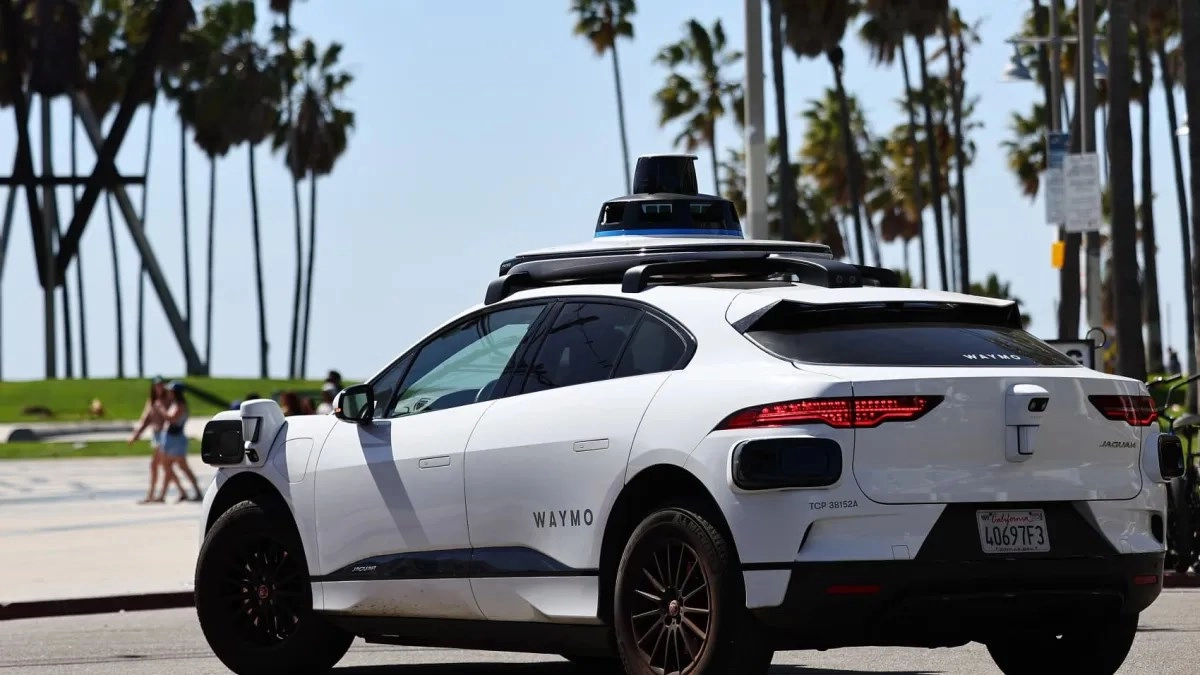
Waymo Launches Corporate Robotaxi Accounts to Target Business Travel

Alphabet-owned Waymo announced on Wednesday the launch of “Waymo for Business,” a corporate program that allows companies to set up accounts for employees to use its robotaxi service across Los Angeles, Phoenix, San Francisco, Austin, and Atlanta.

The initiative is aimed at tapping into recurring corporate travel demand, giving employers tools to control when, where, and how staff use autonomous rides. It marks another step in Waymo’s efforts to expand the commercial use of its driverless fleet.

Waymo said it now completes more than 1 million rides per month, with nearly one in six riders in San Francisco, Los Angeles, and Phoenix using the service for commuting. The company has recently expanded operations, launching paid driverless rides in Atlanta and broadening coverage in Austin.

Through an administrative portal, organizations can manage employee access, issue promo codes, and generate reports to track ride usage and expenses. Early adopters include Carvana, the Phoenix-based online used-car retailer.

The business service is still in its early stages, but Waymo said more features will be added over time to support companies of various sizes.

A key focus for Waymo is airport access, a priority for frequent business travelers. The company already serves Phoenix Sky Harbor Airport, recently gained approval to operate at San José Mineta International Airport, and holds a testing permit at San Francisco International Airport ahead of possible commercial service.

Alibaba Shares Surge on Nvidia Partnership and Global AI Expansion

Alibaba announced on Wednesday a sweeping set of initiatives, including a partnership with Nvidia, new global data centers, and its largest-ever AI products, underscoring its pivot to make artificial intelligence a central business priority alongside e-commerce.

The news sent Alibaba’s Hong Kong-listed shares up nearly 10% to a four-year high, while its U.S.-listed shares also rose by a similar margin in premarket trading.

“The speed of AI industry development has far exceeded our expectations, and the industry’s demand for AI infrastructure has also far exceeded our expectations,” Alibaba CEO Eddie Wu said at the company’s annual Apsara Conference. He added that spending on AI will be increased, though without specifying figures. Earlier this year, Alibaba pledged 380 billion yuan ($53 billion) for AI infrastructure investments over three years.

As part of its strategy, Alibaba will collaborate with Nvidia to enhance physical AI capabilities including data synthesis, model training, environmental simulation, and validation testing.

The company also unveiled an ambitious global data center expansion plan, announcing facilities in Brazil, France, and the Netherlands, with more to follow in Mexico, Japan, South Korea, Malaysia, and Dubai within the next year. This will add to Alibaba’s current network of 91 data centers across 29 regions. The company did not specify whether Nvidia chips would power these new facilities.

At the same event, Alibaba launched its most advanced AI language model to date, Qwen3-Max, boasting over 1 trillion parameters. According to CTO Zhou Jingren, the model demonstrates strong performance in code generation and autonomous agent capabilities, allowing the AI to act more independently toward user-defined goals compared to traditional chatbots like ChatGPT.

Benchmark tests such as Tau2-Bench reportedly show Qwen3-Max outperforming competitors including Anthropic’s Claude and DeepSeek-V3.1 in specific categories.

Additional AI products showcased included Qwen3-Omni, a multimodal system designed for immersive applications in virtual and augmented reality, with potential use cases in smart glasses and intelligent vehicle cockpits.

The announcements come shortly after Nvidia revealed a $100 billion investment deal with OpenAI, highlighting the intensifying race in AI infrastructure.

Alibaba’s cloud division, which reported 26% revenue growth last quarter, is emerging as a key growth driver as the company monetizes its AI services more aggressively.