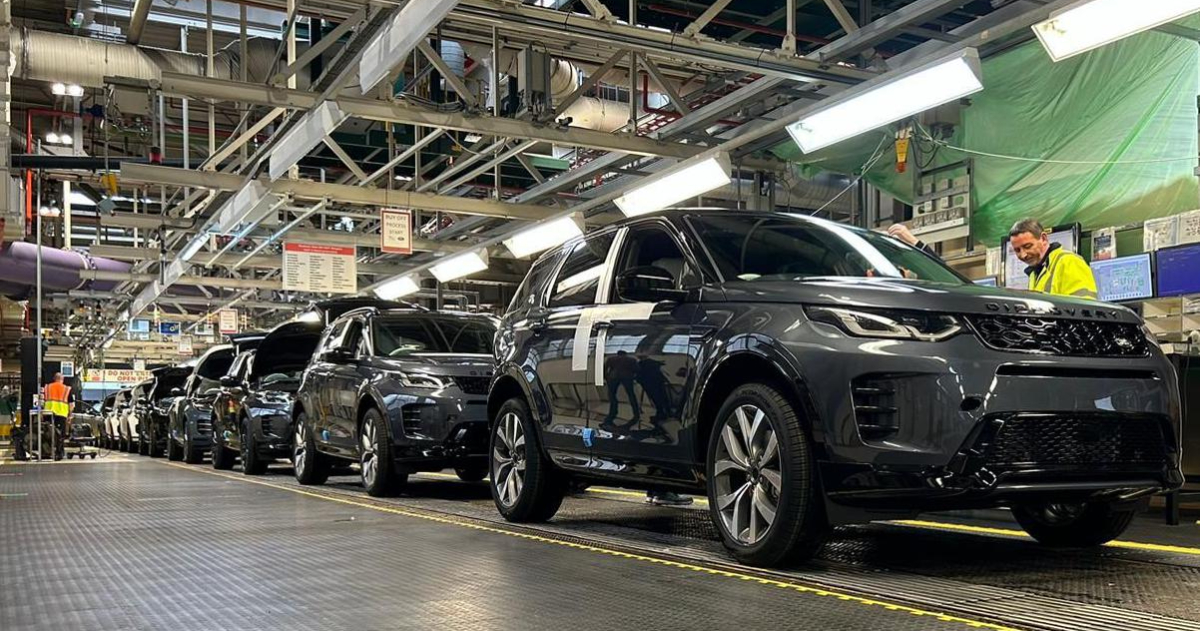
Jaguar Land Rover extends cyberattack shutdown to four weeks, costing £50m per week

Jaguar Land Rover (JLR), Britain’s largest carmaker, said it will keep its factories closed until October 1 following a cyberattack earlier this month that has paralyzed operations and rippled across the automotive supply chain. The shutdown, now stretching to four weeks, is costing the Tata Motors-owned luxury carmaker about £50 million ($68 million) per week, according to the BBC.

JLR runs three UK factories producing around 1,000 vehicles a day, including the popular Range Rover and Defender models. The outage has forced many of its 33,000 employees to stay home, while smaller suppliers are also struggling to cope with the disruption.

Adding to the fallout, industry sources told The Insurer that JLR was left without direct cyber insurance coverage, having failed to finalize a deal brokered by Lockton before the attack. The company has declined to comment on its insurance position or on who may be behind the breach.

Government ministers, including Peter Kyle and Chris McDonald, visited JLR on Tuesday to discuss recovery plans. McDonald said the government’s top priorities are “helping Jaguar Land Rover get back up and running as soon as possible and the long-term health of the supply chain.”

The shutdown underscores the UK’s broader vulnerability to ransomware and cyberattacks, which have recently hit major retailers like Marks & Spencer and Co-op, and even disrupted airport check-in systems across Europe. Official figures show more than 40% of UK businesses reported some form of cyber breach in the past year.

S&P Global’s latest survey shows JLR’s stoppage is already weighing on UK manufacturing output. With JLR’s supply chain supporting over 104,000 jobs, the Unite union has warned of potential layoffs and urged government support to protect workers and suppliers.

JLR said it is working on a phased restart plan, though the investigation into the attack continues. “We have made this decision to give clarity for the coming week,” the company said, stressing its focus on minimizing disruption to staff and partners.
Oracle appoints Clay Magouyrk and Mike Sicilia as co-CEOs, Safra Catz steps aside

Oracle announced a surprise leadership shakeup on Monday, naming insiders Clay Magouyrk and Mike Sicilia as co-CEOs, replacing longtime chief executive Safra Catz. Catz, who helped transform Oracle into a cloud powerhouse over her 11-year tenure, will remain with the company as vice chair of the board.

Catz’s legacy includes steering Oracle from its roots as a database provider into a global competitor in cloud computing, securing massive AI-related contracts, and driving the company’s market capitalization close to $1 trillion. Shares of Oracle have soared about 85% this year, outpacing rivals Microsoft and Alphabet, buoyed by the AI boom.

  • Mike Sicilia (54) currently oversees Oracle’s cloud-based applications and AI products.

  • Clay Magouyrk (39) manages Oracle’s cloud infrastructure platform, which underpins the company’s AI and data services.

Both executives are well-known to investors, and analysts say their promotion highlights cloud and industry solutions as Oracle’s main growth engines. Evercore ISI noted that with co-founder Larry Ellison staying on as CTO and Catz as executive vice chair, the leadership transition should be smooth.

Oracle is currently central to U.S. data security discussions, hosting TikTok’s U.S. user data on its cloud systems. The company also recently signed one of the largest cloud deals in history with OpenAI, worth an estimated $300 billion in computing power over five years.

Safra Catz, one of the most influential women in tech, first became co-CEO alongside the late Mark Hurd in 2014 after Ellison stepped back from daily operations. Under her leadership, Oracle shares climbed more than 586%. Trained in finance and law, Catz joined Oracle in 1999 after a career on Wall Street and today holds a net worth of $3.3 billion, according to Forbes.

Magouyrk, who joined Oracle from Amazon Web Services in 2014, will receive stock options worth $250 million, while Sicilia, who came via Oracle’s acquisition of Primavera Systems, will receive $100 million in stock options.

The co-CEO model, while less common, is being adopted by several global firms, including investment giant KKR and, briefly, Intel. For Oracle, the dual leadership underscores the scale of its ambitions as cloud and AI reshape the tech landscape.

Magnum to harness NotCo AI for new ice cream products and reformulation

Unilever’s Magnum ice cream business, which is preparing for a public listing in November, will use Chilean food-tech start-up NotCo’s artificial intelligence to develop new products and reformulate existing ones. The partnership aims to address calorie reduction, plant-based innovation, and rising commodity costs, according to Zbigniew Lewicki, Magnum’s chief of research, design and innovation.

Lewicki noted that consumers increasingly want indulgent treats that also come in smaller portions and use more sustainable ingredients. Magnum, which also oversees the Ben & Jerry’s and Cornetto brands, joins over a dozen consumer goods firms leveraging NotCo’s AI to keep up with shifting consumer demands.

NotCo CEO Matias Muchnick said global food makers are turning to AI to adapt quickly to trends driven by health-conscious consumers and inflationary pressures in key commodities like cocoa. NotCo’s technology is already helping companies:

  • Replace synthetic dyes

  • Reduce sugar content

  • Identify new viral flavors, such as “Dubai chocolate”

The start-up has previously partnered with Kraft Heinz on plant-based versions of macaroni and cheese, cheese singles, and mayonnaise.

By integrating NotCo’s AI, Magnum aims to balance indulgence with nutrition, cut costs, and accelerate the rollout of innovative ice cream options tailored to modern consumer expectations.