
Emails reveal regulators were alarmed and confused by Musk’s Bay Area “robotaxi” claims

Tesla’s promised “robotaxi” rollout in the San Francisco Bay Area wasn’t driverless at all—and regulators were blindsided. Emails obtained via public-records requests show California and U.S. officials were alarmed after Elon Musk publicly suggested Tesla was “getting the regulatory permission to launch,” even though the company had not applied for the permits required to test or operate autonomous taxis in California. Tesla’s actual plan was invite-only rides in human-driven vehicles under a limousine-style permit that doesn’t allow on-demand robotaxis.

Officials at the California Public Utilities Commission and NHTSA pressed Tesla to clarify public statements to avoid “public confusion.” Tesla’s policy staff told the state it would inform customers “when available” and generally doesn’t respond to press, while Musk continued to tout robotaxi scale on X and to blur the term with Tesla’s “Full Self-Driving” driver-assist feature that still requires an attentive human driver.

The regulatory skepticism comes as Tesla pushes for rapid robotaxi expansion and seeks to test in permissive states such as Arizona and Nevada, where approvals for autonomous testing with safety drivers are advancing—still far from fully driverless commercial operations. California authorities reiterate that separate DMV and CPUC permits are prerequisites for any paid driverless service in the state, and Tesla hasn’t obtained them.

Beyond the Bay Area episode, the gap between marketing and regulatory filings will matter more as investors weigh Musk’s ambitious timelines against legal guardrails. Agencies say Tesla must “properly and accurately” describe services—clearly distinguishing human-driven pilots from autonomy—if it wants to avoid enforcement headaches as it scales.
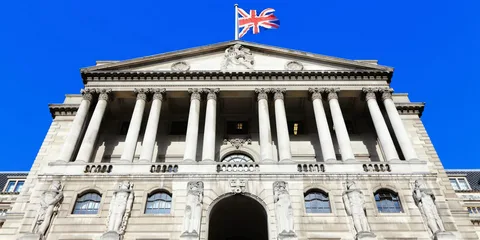

Bank of England’s Bailey: AI can help regulators uncover the ‘smoking gun’

Bank of England Governor Andrew Bailey said financial regulators should adopt artificial intelligence to better detect misconduct and risks within firms they oversee. Speaking at the London School of Economics on Monday, Bailey stressed the need to invest heavily in data, data science, and AI techniques to make full use of the vast information regulators already collect.

Bailey warned that supervisors face a recurring problem: crucial evidence of wrongdoing may exist within their own datasets but remain undetected until it is too late. “It also creates the danger for the authorities that you’ve got the evidence in the building and you haven’t been able to use it and it subsequently comes out that somewhere in your system was the smoking gun,” he said.

The BoE governor reiterated his opposition to rolling back financial rules in the name of business competitiveness. He said easing oversight could risk a return to the kind of behavior that destabilized the economy during the 2008 financial crisis.

His comments come amid ongoing debate over how much regulation is appropriate for the UK’s financial sector. In July, Bailey pushed back against Finance Minister Rachel Reeves’ claim that regulation was a “boot on the neck of businesses,” defending the BoE’s prudential framework for banks and other institutions.

The BoE is now exploring how AI might strengthen its supervisory role, potentially helping regulators spot early-warning signs of fraud, mismanagement, or systemic vulnerabilities hidden in mountains of financial data.

Airport chaos underscores growing trend of high-profile ransomware attacks

A weekend ransomware attack that crippled airport check-in systems across Europe has drawn attention to a new trend in cybercrime: hackers are increasingly targeting high-profile companies and infrastructure for both larger payouts and reputational clout, cybersecurity experts said.

The European Union’s cybersecurity agency ENISA confirmed on Monday that the attack on Collins Aerospace, a unit of RTX, was ransomware-based. The hack disrupted check-in and baggage systems since Friday, grounding flights and stranding thousands of passengers. The attackers’ identity remains unknown, with no ransomware group yet claiming responsibility on dark web leak sites.

Rafe Pilling, Director of Threat Intelligence at Sophos, noted that while most ransomware attacks remain financially motivated, a subset of operations is now engineered for maximum disruption: “They are becoming more visible and more ambitious.”

The strategy is not new but appears to be escalating. In April, the group Scattered Spider was linked to an attack on retailer Marks & Spencer that halted online orders for weeks. Britain’s National Crime Agency also charged two teenagers last week over a 2024 attack on Transport for London, tied to the same group. The FBI estimates Scattered Spider has been involved in around 120 network intrusions and netted $115 million in ransom payments.

Experts warn the trend poses greater systemic risks. Martyn Thomas, Emeritus Professor of IT at Gresham College, said software vulnerabilities and weak security practices continue to fuel the crisis: “If criminals were to decide to cause serious injury or many deaths, the same attack strategies could be used on critical systems in healthcare or major infrastructure.”

Another driver, analysts say, is reputation within cybercriminal networks. Pulling off high-impact breaches boosts a hacker’s credibility and standing among peers, creating a cycle of increasingly bold attacks.

The incident highlights the growing urgency for stronger software security and corporate defenses as ransomware groups become more emboldened, aiming not only for profit but also prestige.