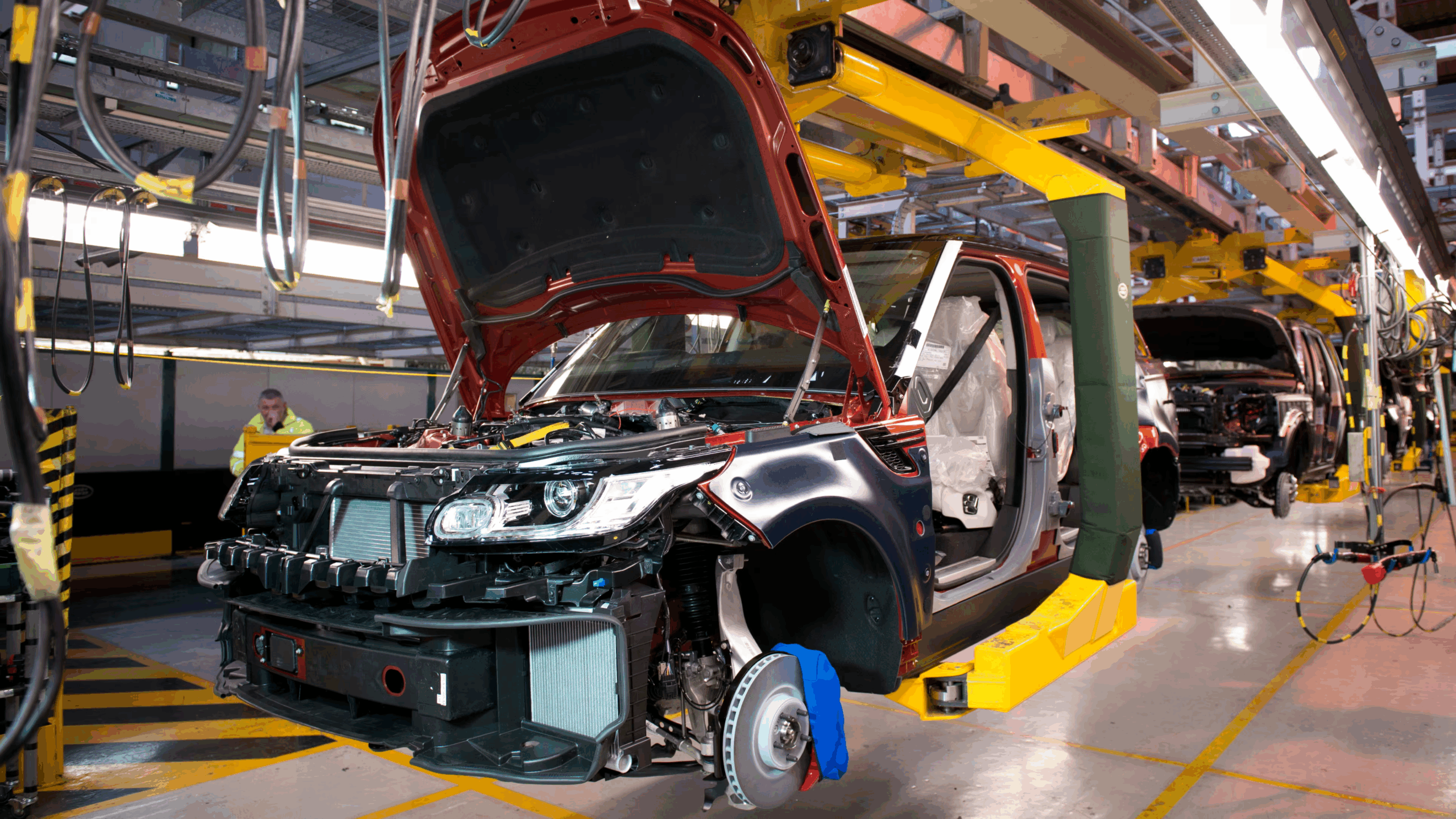
UK monitors supply chain risks after Jaguar Land Rover cyberattack halts production

The UK government said Friday it is working with Jaguar Land Rover (JLR) to assess the fallout of a cyberattack that has kept the automaker’s factories offline for more than three weeks. JLR, Britain’s largest carmaker, confirmed its plants will remain shut until at least September 24, extending the disruption first triggered in early September when production was halted to contain the breach.

The shutdown has sparked growing concern over the impact on JLR’s extensive supply chain, which supports 104,000 jobs across the country, many of them at small and medium-sized firms. The Unite trade union has warned the stoppage could lead to layoffs if the disruption persists and has called for government intervention to protect workers.

In a joint statement, the government and the Society of Motor Manufacturers and Traders (SMMT) said officials, including national cyber experts, are directly supporting JLR’s recovery efforts and working to evaluate the knock-on effects across the industry.

The incident underscores the vulnerability of major manufacturing operations to cyberattacks and the risks they pose to national supply chains, especially in sectors where thousands of smaller firms depend on the output of a single large manufacturer.

Nvidia eyes $500 million investment in UK self-driving startup Wayve

Nvidia has signed a letter of intent to invest $500 million in Wayve, a London-based autonomous driving technology company, during its next funding round, Wayve confirmed Thursday. The move underscores Nvidia’s growing push into self-driving and follows a broader U.S.-UK technology pact to deepen cooperation in artificial intelligence.

Founded in 2017, Wayve has developed a machine-learning approach to autonomous driving that differs from conventional systems. Instead of relying heavily on pre-mapped roads, its AI learns directly from traffic patterns and human driver behavior using vehicles equipped with camera sensors.

Wayve raised over $1 billion in 2023, led by SoftBank with backing from Nvidia, while Uber invested separately in 2024. Its autonomous driving platforms already use Nvidia chips, linking its growth to the broader global AI hardware surge.

The company operates in both the UK and U.S., while expanding testing into markets such as Germany and Japan. Nvidia’s latest move comes alongside a pledge to invest £2 billion ($2.7 billion) in Britain’s AI startup ecosystem, a signal of its commitment to both mobility technology and the UK’s broader AI ambitions.

OpenAI teams with Apple supplier Luxshare to build consumer AI device

OpenAI has struck a deal with Luxshare, a major Apple supplier, to manufacture a prototype consumer AI device, according to The Information. The pocket-sized gadget is being designed to work natively with OpenAI’s AI models and adapt to user context, potentially offering an alternative to smartphones and PCs as the main way people interact with artificial intelligence.

The project represents one of the boldest pushes yet by an AI firm into dedicated hardware, rather than layering AI onto existing devices. Analysts say an “AI-native” product could open entirely new markets while challenging the dominance of established consumer electronics leaders such as Apple, Samsung, and Google.

OpenAI earlier this year acquired io Products, a hardware startup founded by former Apple designer Jony Ive, in a $6.5 billion deal to accelerate its hardware ambitions. Luxshare—best known for assembling iPhones and AirPods—will provide the large-scale manufacturing muscle. OpenAI has also reached out to Goertek, another Apple supplier, for components such as speaker modules.

Neither Luxshare nor OpenAI has commented publicly on the report. But the move underscores OpenAI’s effort to expand beyond software like ChatGPT into consumer electronics, a sector where hardware-software integration is often the key to success.

If successful, the device could pose a new kind of competition to smartphones by offering a lightweight, AI-first alternative—part personal assistant, part communications tool—that reimagines how users connect to digital ecosystems.