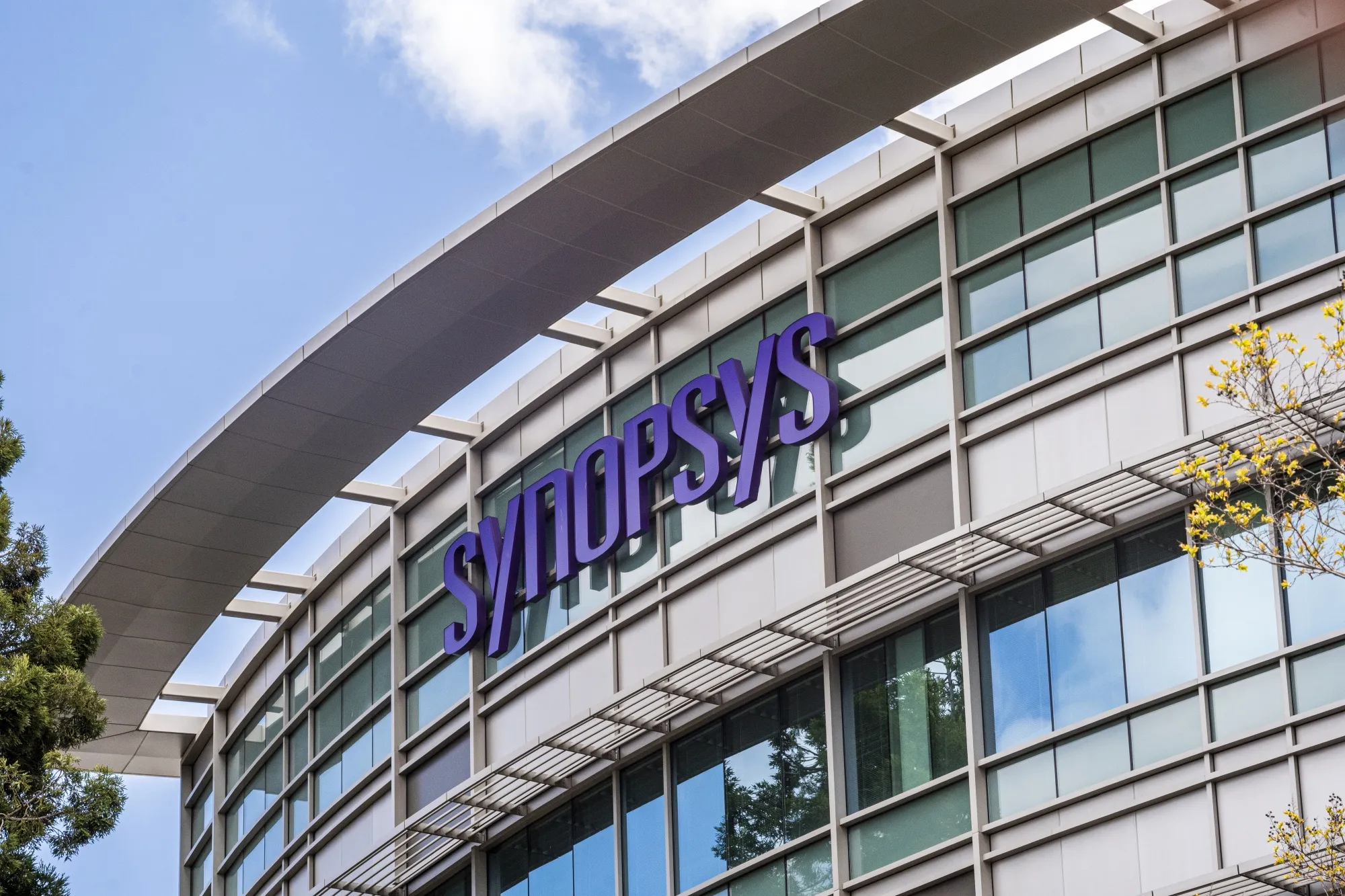
Synopsys Shares Plunge 35% on China Woes, Erasing 2025 Gains

Synopsys shares tumbled nearly 35% on Wednesday, putting the chip design software giant on track for its worst single-day drop on record and wiping out gains accumulated in 2025. The decline followed disappointing earnings and fresh concerns about its business in China, a key semiconductor market under tightening U.S. export restrictions.

The company reported Q3 revenue of $1.74 billion, missing analyst estimates, with weakness in its IP segment. CEO Sassine Ghazi blamed U.S. export curbs — which blocked sales of chip design software to China for more than a month — and setbacks at a “major foundry customer.” Although restrictions were lifted in July, analysts said Chinese customer confidence has eroded, leaving demand subdued.

Synopsys generates more than 10% of industry revenue from China, but geopolitical tensions have made that stream increasingly fragile. Shares of rival Cadence Design Systems also dropped nearly 7% in sympathy.

While Ghazi did not identify the foundry customer, analysts pointed to Intel, which has dramatically scaled back its 18A chip manufacturing technology and broader foundry ambitions. J.P. Morgan suggested Synopsys had dedicated significant IP resources to Intel’s program, only to see its potential curtailed.

The downturn comes as Synopsys completes its $35 billion acquisition of Ansys, a move aimed at diversifying its engineering software portfolio. However, the company also announced it will cut 10% of its workforce by 2026 as part of a strategic review.

With trade restrictions clouding its China outlook and reliance on slowing customers like Intel, Synopsys faces mounting pressure to stabilize its core business even as it integrates Ansys.

Netflix Chief Product Officer Eunice Kim to Depart, CTO Steps In

Netflix announced Wednesday that Eunice Kim, its chief product officer since 2023, will leave the company. Chief Technology Officer Elizabeth Stone will assume the role on an interim basis.

Kim, who joined Netflix in 2021, led the consumer product innovation team and played a key role in reshaping the platform’s connected-TV interface, unveiled in May to simplify navigation and improve user experience. She also contributed to major growth initiatives such as Netflix’s ad-supported plan, helping the company grow its membership from 200 million to over 300 million subscribers during her tenure.

“Over the past five years, we grew the business together… by successfully launching and scaling many major growth initiatives, including the ads plan,” Kim reflected in a statement.

Before joining Netflix, Kim held senior product roles at Google Play and YouTube.

Netflix continues to perform strongly, beating second-quarter earnings expectations and raising its annual revenue guidance in July, though much of the forecast boost came from currency tailwinds rather than stronger demand. The company is pushing into advertising as a way to attract price-sensitive customers, though it has said ads won’t be a primary revenue driver this year.

The streamer has also moved into live programming, including WWE wrestling, as part of its strategy to diversify content and expand its audience base.

Senator Ted Cruz Proposes AI ‘Sandbox’ to Ease Federal Regulations

U.S. Senator Ted Cruz on Wednesday introduced a bill that would create a regulatory “AI sandbox” allowing artificial intelligence companies to apply for temporary exemptions from certain federal rules while developing new technologies.

Cruz, who chairs the Senate Commerce Committee, described the proposal as a way to help U.S. firms stay competitive with China by lowering regulatory barriers. “A regulatory sandbox is not a free pass. People creating or using AI still have to follow the same laws as everyone else,” Cruz said during a subcommittee hearing.

Key Details

  • The bill would let federal agencies grant two-year exemptions to companies that apply, provided they outline safety and financial risks and how they would mitigate them.

  • The Office of Science and Technology Policy (OSTP) would be given authority to override agency denials of waivers.

  • The sandbox would apply only at the federal level — Cruz’s proposal does not preempt state-level AI regulations, despite pressure from the tech industry.

Industry Push and Opposition

Major AI developers including OpenAI, Google, and Meta have urged the Trump administration to reduce regulatory barriers. The White House OSTP has also begun seeking public input on which regulations hinder AI growth.

Consumer advocacy group Public Citizen sharply criticized Cruz’s bill, arguing it “treats Americans as test subjects” and warning against OSTP’s ability to override regulators. “The sob stories of AI companies being ‘held back’ by regulation are simply not true,” said J.B. Branch, the group’s Big Tech accountability advocate, pointing to record-high valuations of AI firms.

State-Level Rules

While Cruz’s bill avoids limiting state laws, AI regulation is already expanding at the state level:

  • California bans unauthorized political deepfakes and requires patient disclosure when AI is used in healthcare.

  • Colorado passed a law to curb AI discrimination in hiring, housing, banking, and other areas — its enforcement was pushed to mid-2026 after lobbying by the tech sector.

  • Several states have criminalized AI-generated explicit imagery without consent.

OSTP director Michael Kratsios told the committee that such state measures risk stifling innovation, suggesting Congress revisit preemption in the future.

The proposal is likely to fuel debate between those who see regulation as a barrier to U.S. innovation and those who warn of the risks of treating AI experimentation as a public trial.