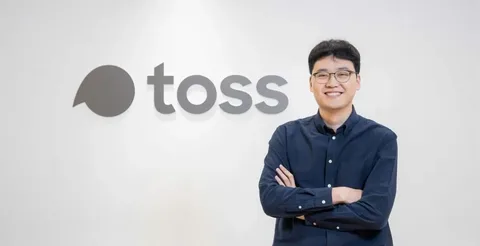
South Korea’s Toss Targets Global Expansion, Eyes Won-Based Stablecoin

South Korean fintech unicorn Toss is preparing a major international expansion, starting with Australia, while also positioning itself to issue a won-based stablecoin once regulations are in place, CEO and founder Lee Seung-gun said on Tuesday.

Founded in 2015, Toss has grown to more than 30 million users in South Korea, showing that a startup can challenge traditional banks and brokers head-on. Lee, a dentist-turned-entrepreneur, said the company’s success at home can be replicated abroad.

“We proved in Korea that a startup can compete head-on with entrenched players. A similar model can work globally, especially in countries where users juggle multiple bank accounts or fintech apps. We want to bring them into one seamless experience,” Lee told Reuters.

Global push begins in Australia

  • Toss has established an Australian unit and aims to launch core services such as peer-to-peer money transfers by year-end.

  • Australia’s fragmented banking system and open-banking rules make it an attractive entry point.

  • Toss is reviewing other markets, with Singapore serving mainly as a regional hub rather than a retail market.

Stablecoin ambitions

Lee confirmed Toss’s intent to issue a digital won stablecoin, pending regulatory approval. South Korea’s government is drafting legislation this year to allow stablecoin issuance under strict oversight and consumer protections.

“We will issue and distribute won-based stablecoin – that I can say for sure,” Lee said, noting Toss is in regular talks with regulators to build the necessary infrastructure.

IPO plans

Toss is also preparing for a U.S. IPO in Q2 2026, targeting a valuation of $10–15 billion, according to earlier reports. If achieved, it would be the largest U.S. listing by a South Korean firm since 2021. Global funds see Toss as one of the few fintechs delivering on the super app model.

Lee emphasized that Toss’s long-term ambition is to become “a global internet company built on financial services”, not just another financial holding firm.

Intel Reshuffles Top Leadership as Products Chief Holthaus Departs

Intel (INTC.O) announced a major executive shake-up on Monday, including the departure of Michelle Johnston Holthaus, the company’s products chief, as CEO Lip-Bu Tan moves to streamline operations and push a turnaround strategy.

Holthaus, a 30-year Intel veteran, previously held several senior leadership positions, including serving as interim co-CEO following the ouster of Pat Gelsinger in 2024. She will step down but remain as a strategic adviser in the coming months.

The restructuring includes:

  • Kevork Kechichian joining as EVP and head of the Data Center Group. Kechichian is a seasoned industry leader who previously held senior roles at Arm, NXP Semiconductors, and Qualcomm.

  • A new Central Engineering Group, to be led by Srinivasan Iyengar, tasked with building a custom silicon business for external clients.

  • Naga Chandrasekaran, Intel EVP and CTO, expanding his remit to oversee Foundry Services.

  • Jim Johnson appointed as GM of Intel’s Client Computing Group.

The leadership reshuffle comes as Intel grapples with a difficult business environment and political pressure. U.S. President Donald Trump recently announced plans for the government to take a 10% stake in Intel, while also calling for CEO Tan’s resignation over alleged conflicts of interest.

Tan’s strategy aims to flatten Intel’s leadership structure, cut jobs, and restore competitiveness as the company struggles to keep pace with rivals in advanced chipmaking.

Volkswagen Commits €1 Billion to AI by 2030 to Drive Efficiency and Savings

Volkswagen announced on Tuesday that it will invest up to €1 billion ($1.2 billion) in artificial intelligence by 2030, aiming to integrate the technology across all areas of its operations. The strategy, revealed at the IAA car show in Munich, is part of the automaker’s effort to remain competitive against rising Chinese rivals and to modernize its electric vehicle lineup.

The German carmaker expects AI-driven initiatives to deliver up to €4 billion in savings by 2035. Investments will focus on:

  • AI-supported vehicle development to shorten model design cycles.

  • Industrial applications to streamline manufacturing.

  • High-performance IT infrastructure to support digital transformation.

For us, AI is the key to greater speed, quality and competitiveness — along the entire value chain, from vehicle development to production,” said Hauke Stars, Volkswagen’s chief IT officer.

Volkswagen is undergoing deep restructuring in its two main markets, Germany and China, as it prepares new electric models and implements cost-cutting programs at home. On Sunday, the company presented its ID.CROSS, a new small electric SUV concept aimed at making EVs more affordable.

The company sees AI as a catalyst for faster innovation and efficiency, positioning itself to better compete in the evolving automotive landscape.