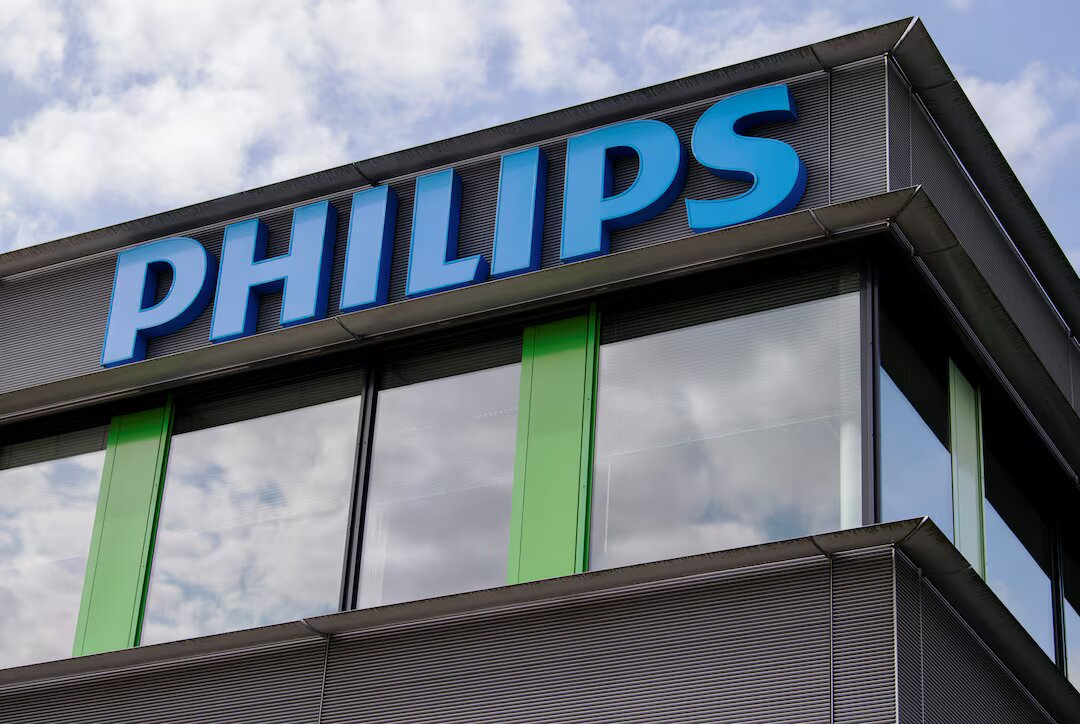
Philips Faces French Criminal Probe Over Sleep Apnea Device Recall

Paris prosecutors have opened a criminal investigation into Philips (PHG.AS) over its 2021 recall of sleep apnea machines, examining potential charges of aggravated fraud and failure to report safety risks that could lead to death.

The recall affected 15 million devices worldwide, including 350,000 in France, after it was discovered that polyurethane foam inside the machines could degrade, releasing particles or gases linked to headaches, respiratory issues, and even cancer risks.

The Paris Public Health division confirmed receiving 104 individual complaints tied to the devices. The probe was formally launched on June 12 after a preliminary inquiry by France’s OCLAESP (Central Office for the Fight against Environmental and Public Health Damage).

Philips stressed that this is not a new investigation, but part of ongoing proceedings initiated in 2023 concerning the lead-up to the recall. The company said the case does not concern products currently sold in France and pledged to cooperate with judicial authorities.

Under French law, aggravated fraud endangering human health carries penalties of up to seven years in prison and €750,000 in fines for individuals, and up to €3.75 million for corporations.

The case adds to Philips’ global legal woes. In 2023, the company agreed to a $1.1 billion settlement in the U.S. related to the same recall. Shares fell nearly 5% in early trading Monday before trimming losses to -1% by 1400 GMT following confirmation of the French probe.

StubHub Targets $9.2B Valuation in U.S. IPO Amid Live Events Boom

StubHub, the ticket resale platform backed by Madrone Partners, is seeking a valuation of up to $9.2 billion in its planned U.S. IPO, the company said Monday. The listing comes after being postponed in April due to tariff uncertainty, making StubHub one of the latest firms to return to equity markets following improved sentiment.

The New York-based firm aims to raise up to $851 million by selling 34 million shares at a price range of $22 to $25 each, with J.P. Morgan and Goldman Sachs leading the underwriting. Shares will trade on the NYSE under the ticker “STUB.”

StubHub has had a winding ownership history: founded in 2000 by Jeff Fluhr and Eric Baker (now CEO), it was sold to eBay in 2007 for $310M before being acquired by Baker’s other venture viagogo for $4.05B in 2020. The company was once valued at $16.5B in 2021, though its current IPO target is well below that.

Despite cautious pricing, some investors suggest the IPO may price higher, given strong demand for live events. Rival Live Nation’s Ticketmaster has seen record ticketing volumes driven by blockbuster tours such as Beyoncé’s “Cowboy Carter.” StubHub’s own revenue rose 3% to $827.9M in the first half of 2024, though net losses more than doubled to $111.8M.

The IPO will test investor appetite for consumer-focused platforms in a market dominated by tech and crypto listings. As IPO strategist Matt Kennedy put it: “The bankers will also try to sell the deal on its valuation, which is below prior expectations.”

If successful, StubHub could capture investor enthusiasm for the booming experience economy, even as regulatory and competitive pressures linger in the ticketing industry.

U.S. Considers Annual Chip Supply Approvals for Samsung and SK Hynix China Plants

The United States is weighing a proposal to require Samsung Electronics and SK Hynix to seek annual approvals for shipping chipmaking equipment and supplies to their China-based factories, Bloomberg reported Monday, citing people familiar with the matter.

The plan, presented by the U.S. Commerce Department to Korean officials last week, would replace the current validated end user (VEU) designations that granted the chipmakers indefinite export authorizations. Those designations are set to expire at the end of 2025.

Under the draft proposal, Samsung and SK Hynix would need yearly approval for specific quantities of restricted tools and materials, adding regulatory steps but ensuring their Chinese fabs can keep operating. The companies are among the largest foreign chipmakers with plants in China, supplying memory chips vital to global electronics.

Reactions in Seoul were mixed—officials expressed relief that a framework for continued operations remains, but concern over the added bureaucratic burden and potential supply chain uncertainties.

The move comes against the backdrop of intensifying U.S.-China semiconductor tensions. Since 2022, Washington has imposed sweeping export controls to curb Beijing’s chip and AI capabilities. The Biden administration had granted waivers to Samsung, SK Hynix, and TSMC to soften the blow to allied companies, but the Trump administration has pushed for tighter oversight.

The situation is further complicated by political strain: Washington revoked prior waivers days after former South Korean President Lee Jae Myung—who advocated a more balanced U.S.-China stance—signed a defense and investment deal with Trump. Recent U.S. immigration raids on Korean firms’ American subsidiaries have also fueled friction.