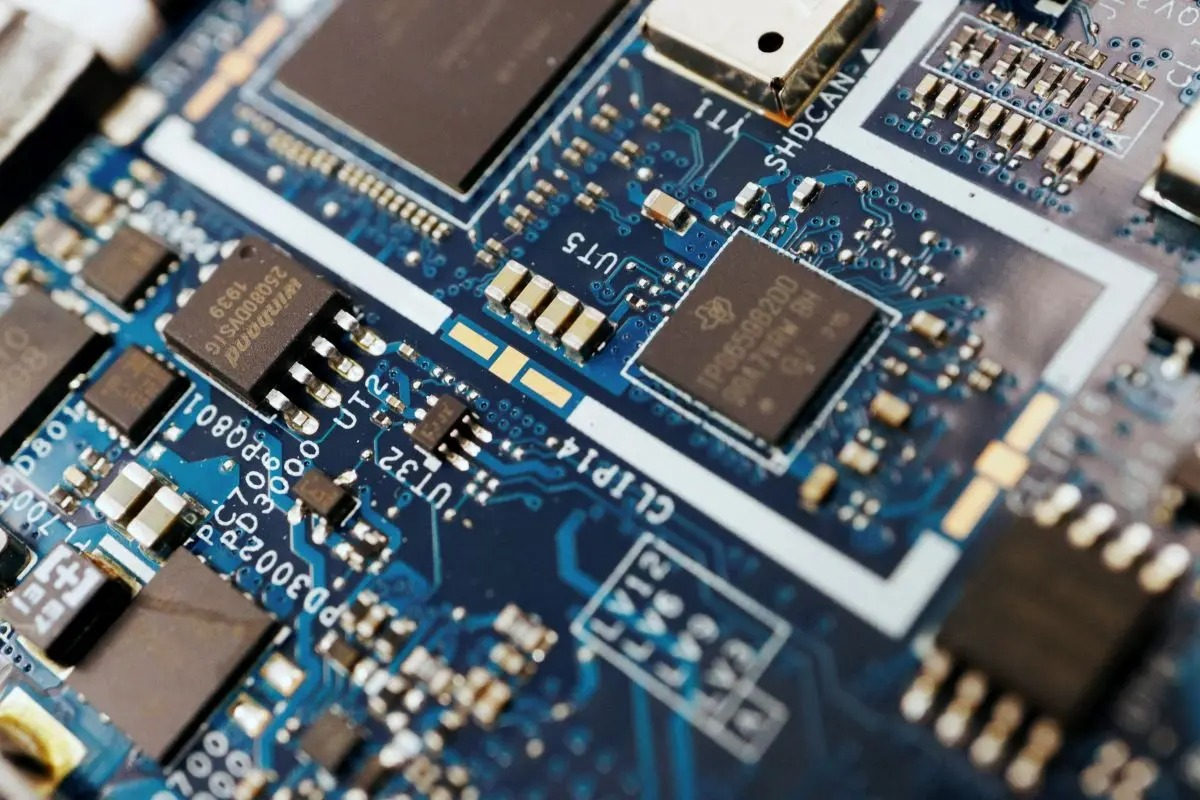
Taiwan Weighs High-Tech Strategic Partnership with the U.S. Amid Tariff Talks

Taiwan is considering the creation of a high-tech strategic partnership with the United States, as Washington seeks greater Taiwanese investment and industrial cooperation, Taiwan’s top tariff negotiator said on Thursday.

Taiwan — home to the world’s leading contract chip manufacturer, TSMC — currently faces a 20% U.S. tariff on its exports and is looking to negotiate a reduction. The initiative comes as both economies explore deeper technological collaboration amid growing global competition over semiconductor supply chains.

Vice Premier Cheng Li-chiun, who heads Taipei’s delegation in the ongoing tariff talks, said she remains optimistic about reaching a consensus with the U.S. on what she called a “Taiwan model” for investment.

“The current negotiation focus is that the United States expects us to expand investments and engage in supply chain cooperation,” Cheng told reporters in Taipei after returning from Washington.

She emphasized that Taiwan’s approach would not involve relocating its core supply chains, but rather expanding production capacity on U.S. soil in strategic sectors. The plan would include export credit guarantees, joint R&D projects, and the co-development of industrial clusters between the two countries.

TSMC’S ROLE AND THE U.S. EXPECTATIONS

While the U.S. has expressed interest in more domestic semiconductor production, Cheng clarified that TSMC was not directly involved in the latest negotiation round. The company, currently investing $165 billion in chip plants in Arizona, continues to keep most of its production operations in Taiwan.

She also dismissed recent reports that U.S. Commerce Secretary Howard Lutnick had proposed a 50-50 chip production split, saying:

“That idea was not raised in our talks, and it is not something Taiwan would agree to.”

Cheng noted that Washington’s priority appears to be strengthening its domestic chip production to reduce supply chain dependence on Asia, while Taiwan’s long-term strategy is to stay rooted at home but expand globally through bilateral cooperation.

INDUSTRIAL PARTNERSHIP, NOT RELOCATION

The envisioned “Taiwan model,” Cheng said, represents a strategic partnership framework—one where the island’s companies would invest in R&D and manufacturing capacity abroad, supported by governmental financial and policy mechanisms, without shifting their operational core from Taiwan.

Neither the U.S. Commerce Department nor the Office of the U.S. Trade Representative has commented publicly on the discussions, which continued as the U.S. government entered a temporary shutdown this week.

With Taiwan’s semiconductor industry playing a pivotal role in the global AI and electronics boom, both Taipei and Washington are looking to balance national security priorities with economic growth.

“Our aim,” Cheng concluded, “is to remain rooted in Taiwan, deploy around the world, and build bilateral strategic cooperation that supports both sides’ technological ambitions.”

Spotify Founder Daniel Ek Shifts Focus from Music to European Tech “Moonshots”

When Daniel Ek launched Spotify in 2006, the music world was in turmoil — piracy was rampant, CD sales were collapsing, and even Apple’s iTunes was struggling to convince listeners to pay per song. Ek, a 23-year-old coder from Stockholm, bet on a radical idea: that streaming, not downloading, would save the industry. Nearly two decades later, Spotify is used by almost 750 million people worldwide, valued at $140 billion, and credited with reshaping how the world listens to music.

Now, Ek says it’s time for his next act. The entrepreneur, who will step down as Spotify’s CEO in 2026, told Reuters that he wants to devote himself to deep technology, AI, and health innovation — sectors he believes can redefine Europe’s role in global tech.

“Big challenges often appear impossible until someone decides to tackle them,” Ek said. “At Spotify, we started with what felt like an impossible idea. Nearly 20 years later, what once looked unreasonable is now obvious.”

Ek plans to focus on early-stage European startups through his investment firm Prima Materia, pledging €1 billion ($1.18 billion) of his personal wealth to fund what he calls “moonshot projects” — companies tackling major problems like climate change, healthcare, and artificial intelligence.

TECH ENTREPRENEUR TURNED HEALTH AND DEFENCE INVESTOR

Ek already has a foothold in those areas. In 2018, he co-founded Neko Health, a preventive health-tech firm focused on early detection through AI scanning systems. The company has raised $325 million to date.

He has also invested in Helsing, Europe’s largest defence startup, valued at $12 billion after securing over $1 billion in funding to develop AI-controlled military systems. Helsing says its technology is used for defence purposes in Ukraine and Europe, not for offensive warfare.

The Helsing investment has stirred controversy in the music world. Bands such as Massive Attack and King Gizzard & the Lizard Wizard have removed their music from Spotify, saying Ek’s involvement in war technology undermines the platform’s artistic mission.

“Music and weapons are not a good mix,” said Simon Dyson, analyst at Omdia, adding that the backlash could become “a distraction” for Spotify’s brand.

Spotify declined to comment directly on Ek’s defence investments.

FROM CODER TO INDUSTRY DISRUPTOR

Raised in a Stockholm suburb, Ek began coding in his teens and built several startups before teaming up with Martin Lorentzon to found Spotify. His model — a mix of paid subscriptions and ad-supported streaming — lured users away from piracy and reshaped the global music economy.

Under Ek’s leadership, Spotify became not just a streaming service but a cultural platform: algorithmic playlists created overnight stars, podcasts expanded the company’s reach, and its subscription model became a blueprint for digital media worldwide.

Ek’s influence extends beyond business. Supporters hail him as the visionary who saved the music industry; critics argue that Spotify’s economics still favor major labels over independent artists. But few dispute his impact.

LOOKING BEYOND SPOTIFY

Ek, now 42, says he will remain executive chair of Spotify, guiding strategy while pursuing his new ventures.

“My co-founder likes to say that the value of a company is the sum of all problems solved,” he said. “Progress often comes from those willing to go against conventional wisdom.”

For the man who turned music into a utility, the next challenge is to turn Europe into a hub for world-changing technology — and perhaps create another “impossible idea” that becomes obvious in hindsight.

Qualcomm Moves to Arm’s Latest Tech to Boost AI Chips and Rival Apple, MediaTek

Qualcomm has adopted the newest version of Arm Holdings’ chip architecture for its next generation of flagship processors, aiming to strengthen performance in artificial intelligence (AI) and better compete with Apple and MediaTek, according to sources familiar with the matter.

The decision represents a significant turning point in the relationship between the two companies after last year’s legal clash, which had raised doubts about whether Qualcomm would continue relying on Arm’s technology. The move is also expected to boost Arm’s revenue, as the company charges more for licensing its most advanced technology.

Arm’s shares rose 5% in regular trading after Reuters reported Qualcomm’s shift to its Arm v9 instruction set — the ninth generation of the company’s computing architecture.

AI PERFORMANCE AT THE CORE

Unlike previous generations, Qualcomm’s new PC and smartphone chips will incorporate Arm’s v9 architecture, which includes several enhancements tailored for AI tasks such as chatbots, image generation, and on-device learning.
Competitors MediaTek and Apple already use the v9 standard, which defines the fundamental instructions a processor can execute and determines compatibility with apps and software.

A Qualcomm spokesperson declined to confirm specific technologies but said the company’s internal CPU design team enables flexibility:

“We chose the instructions that make sense for our customers. That’s the beauty of having our own CPU design team — we can pick and choose the instructions that add value,” the company said.

LEGAL RIFTS GIVE WAY TO PRACTICALITY

The decision marks a pragmatic end to a strained chapter in Qualcomm and Arm’s relationship. The two companies had been locked in a licensing dispute after Arm threatened to revoke a key agreement, though it later withdrew the threat.

Despite the tensions, Qualcomm’s choice to stick with Arm’s latest architecture is seen as a vote of confidence in Arm’s long-term ecosystem.
Jay Goldberg, senior analyst at Seaport Research Partners, called the decision “very positive for Arm,” adding:

“These are companies that were fighting each other. Qualcomm could have gone a very different path here.”

ARM STRENGTHENS ITS POSITION

While Arm faces emerging competition from RISC-V, an open-source alternative architecture, analysts note that RISC-V remains decades behind in maturity and lacks a comparable developer community.

Because Qualcomm licenses Arm’s architecture rather than buying complete chip designs, the exact revenue impact for Arm is uncertain. However, the shift underscores Arm’s enduring dominance in mobile and AI chip design.

As AI workloads increasingly drive hardware innovation, Qualcomm’s adoption of Arm’s newest architecture signals that the next wave of chips will focus as much on intelligence and adaptability as on speed and power efficiency.